Saturday, July 23, 2011

The No-Skip Songs (Part 2)


In Part 1 of the No-Skip Songs, I discussed how technology has changed the way we listen to music. As we've evolved from LPs to CDs to Walkmans to MP3 players, our ability to skip songs has multiplied. And now, in my mid-40's, I hit the Skip button on my iPod a lot. Either technology or age has made me a fidgety, impatient listener.

The No-Skip songs are tunes that consistently hold my attention, and I'm often surprised at which ones. Some I knew as a teen, but didn't consider a favorite then. Some are by artists I barely know. Some of my favorite artists are not represented (close friends will be shocked by the absence of Bob Dylan). But for whatever reasons, right now, these are (some of) my No Skip Songs.

Why 21 songs? My original No Skip playlist was 45 songs. But I cut it down to 21 - specifically to 80 MB - so that it would perfectly form a CD mix. Here we go, in no particular order:

Solsbury Hill [live], Peter Gabriel, Plays Live
There's a handful of songs on this list that I may have liked as a teen, but I get as an adult. We reach crossroads in our life, moments of confusion, and there's nothing purer than the moment of clarity when suddenly we know the right direction. May eagles fly into all our hilltop reveries and show us the way home.

I think that's why Solsbury Hill works better as a live song. Great singers are actors, too, and you can hear the yearning in Gabriel's vocals. He's going home.

Hey Jealousy, Gin Blossoms, New Miserable Experience
Seriously, I have no idea how this song got here. I couldn't name another Gin Blossoms song and have never owned a Gin Blossoms album.

As for the feeling of jealousy, it is completely alien to me. I like it when other guys check out my wife. Damn right, she's with me. Give me Hamlet and Macbeth over Othello any day. But what can I tell you - this song comes on, I ain't skipping.

Redemption Song (live in Pittsburgh), Bob Marley, Songs of Freedom
Recorded shortly before his death, this live version gets me before it even starts. There's a little guitar intro, a joyous shout from Bob, and then, "Yes, this little song is called old pirates, you know, redemption song".

Knowing his body is already racked with the cancer that will get him soon makes the hopeful vocals more poignant.

Tumbling Dice, The Rolling Stones, Exile on Main St.
The Stones in general hold up for me. I have no use for The Who anymore and little use for Zeppelin, or most of the big classic rock bands of my youth. There will always be a place in my heart for them but they are almost always skipped.

But a bunch of Stones song pass the Skip Test. Angie, Gimme Shelter, Can't You Hear Me Knocking. On a larger No-Skip list, they'd be well-represented. In fact, Dice only only edged Knocking on this list because it's shorter, and fit in my 80 MB.

Cry Love, John Hiatt, Walk On
Twenty years ago, an acquaintance made me a mix that changed my listening habits. On one tape I was introduced to Graham Parker, A Tribe Called Quest, and a host of other songs and artists I didn't know.

One of those guys was John Hiatt, and this song provided the ultimate "Who is this guy?" moment. I've since dug deeper into Hiatt, but this remains my favorite.

Thunder Road, Bruce Springsteen, Live 1975-1985
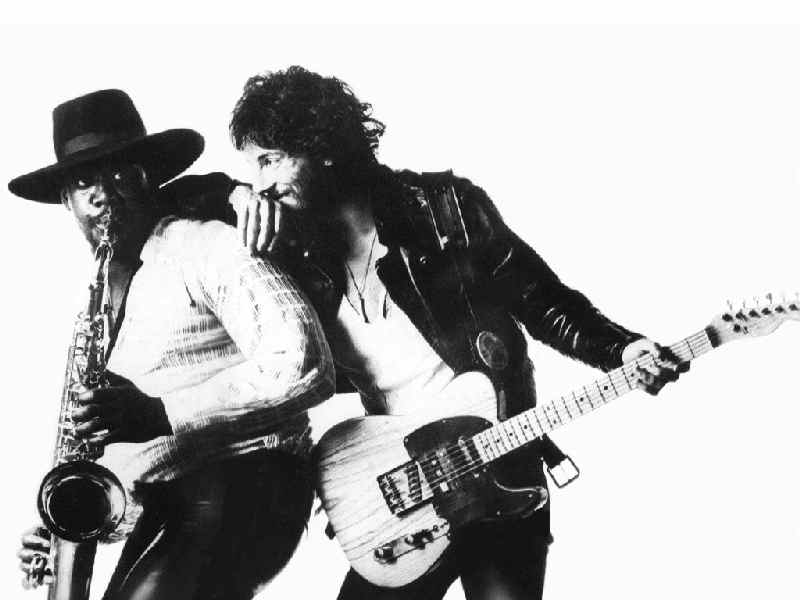
The only song on this list to crack the Top 100 on Rolling Stone Magazine's list of Top 500 Songs of All Time (#86). The album Born to Run has the famous cover shot of a guitar-slung Boss and a sax-blowing Big Man. But this live version from The Boss's 1975 shows at The Bottom Line in New York is a reminder that Springsteen's classic 1975 record was drenched in piano. I wonder if E Street keyboardist Roy Bittan, who was equally spectacular on Dire Straits' Making Movies, is annoyed at that album cover.

Double Trouble, Lynyrd Skynyrd, Gimme Back My Bullets
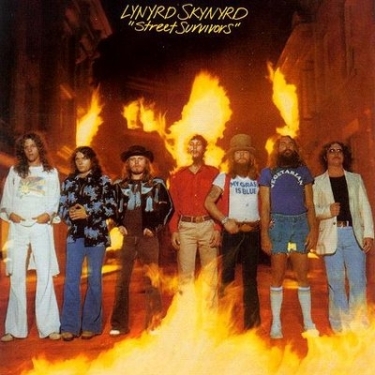
If you have any interest in the depths of my teen obsession with Skynyrd, click here. Suffice to say, I was a hard-core fan. I knew every song on every album, knew the band lineup changes, had the original Street Survivors LP (real fans know what I'm talking about)

But if you asked me in 1981 to name my favorite Skynyrd songs, I'm not sure this would have made the Top 10. In fact, the Bullets album in general spent the least time on my roundtable. But for some reason now, when I hear that great opening guitar intro, I'm hooked.

What'd I Say, Pt. 1 & 2,Ray Charles, Rhino Hi-Five
I think my introduction to Ray Charles was through the Columbia House record club. You old folks remember - 13 albums for a penny. Back before Napster changed everything, the closest you can get to music piracy was joining, quitting, and re-joining Columbia House. And with so many albums to choose from, I'd start picking some old guys with whom I was only vaguely familiar.

Well, Ray Charles' Greatest Hits blew me away. Unchain My Heart became a staple on all my mixes. But somehow I missed this song until the movie Ray, and it assumed an immediate place on my No-Skip list. It's still there.

Even the Losers, Tom Petty & the Heartbreakers, Damn the Torpedoes
If you ask me who my favorite artist is, I'd probably say Bob Dylan or Van Morrison. Favorite band? The Beatles. But if push came to shove - if I was really being placed on the metaphorical desert island and can only choose the collected works of one artist, I just may choose Tom Petty and the Heartbreakers.

Oh, I know, he doesn't have the street grandeur of the Boss or the ragged poetry of Dylan or the lyric mysticism of Van or the revolutionary inventiveness of the Beatles. But damn it, he has a million No Skip songs. I could've chosen any of a dozen, but threw this one on there because hey, even the losers get lucky sometimes.

Rhymes and Reasons, John Denver, Greatest Hits
That's right, John Denver. You got a problem with that? Seriously, put on this song, think about 9/11, and try to skip it.

And Your Bird Can Sing, The Beatles, Revolver
I know what you're thinking. Hey Jude. Let It Be. A Day in the Life. Yesterday. How the heck did this fairly obscure middle-period song get on the No-Skip list?

I'm not sure exactly. But try this on for size: in August 1965, the Beatles released Help! Four months later they released Rubber Soul. And nine months after that, Revolver. 12 months, 3 classic albums. Oh, and ten months after that, Sgt. Pepper's Lonely Hearts Club Band, often considered the greatest rock album ever made.

Compare that to U2, the undisputed rock kings of the 80's. It took them 7 years to release 4 albums (Unforgettable Fire, Joshua Tree, Rattle & Hum and Achtung Baby). Or Bruce Springsteen, who spent 8 years on Born to Run, Darkness, The River and Nebraska.

Of course, greatness isn't measured in number of albums. But the Beatles' albums had 12 - 14 songs on each one, and little gems like Bird are scattered throughout. For some reason, this song represents for me the most extraordinary creative burst of my lifetime, musical or otherwise. Or maybe it's just a cool ditty.


Okay, that's enough for now. Part 3 with ten more songs will be out in less time than it takes an 80s rock star to produce a masterpiece.

Monday, July 11, 2011

Congratulations, Mr. Jeter

I have to admit that even I, a card-carrying Yankee hater and full-fledged member of the "Jeter is Overrated Club", got a kick out of that 5-for-5, dinger for 3k, game-winning RBI performance on Saturday.

It's true that if Michael Kay said "the Captain" one more time, with that mix of teen-girl breathlessness and religious awe that one associates with lunatic cult members, I would have thrown my beer at the television screen.

But at the end of the day, I am a) a reader and writer who loves a great story, and that was an amazing story, and b) a baseball fan who revels in the statistical oddities of the sport. And the idea that Derek Jeter, who had hit a homer in precisely 1 of the previous 132 Yankee games (including post-season) would homer for his 3000th hit, is a statistical oddity of the highest order. Toss in 4 other hits and a game-winning RBI, and you have one of the most improbable days in baseball history. What baseball fan wouldn't love that?

(You buying any of this?)

Anyway, in honor of 3000, I'm linking to my piece entitled Chasing Tris Speaker, in which I make some attempt to estimate Jeter's career hit totals, and explain how important they are to his legacy. The short version is this: Jeter needs 516 hits to catch and pass Speaker, which would put him in the Top 5 all time. That's 171 hits over 3 full seasons, meaning he'd need to stay healthy and reasonably productive through his current contract, and get at least one more season in the bigs.


Wednesday, June 22, 2011

The No-Skip Songs (Part 1)


[This started out as an intro to a list of favorite songs. But the intro grew into a post of its own, so now it's Part 1 of a 3-part piece.]

Music listening has gone through 5 technology phases, sometimes overlapping:

1) Live music (400,000 BC - today)
2) Vinyl records (early 1900s - 1980's)
3) Walkman/Cassettes (1960's - 1980's)
4) Compact Discs (1980's - 2000's)
5) MP3 players (2003-today)

This is a simplification, of course. I skipped 8-track players because, well, they were 8-track players. I've ignored the role of radio and its evolution from AM to FM to satellite to internet. And I'm just winging it on the 400,000 BC thing, on the assumption some early homo sapiens banged some rocks together and liked how it sounded.

My point is this: as a 45 year-old who first got into music in the late-70's, I'm at the perfect age to have experienced every phase of music listening.

I've gone to many concerts, from my first (The Marshall Tucker Band, Nassau Coliseum, October 1981) to my most recent (Eddie Vedder, The Beacon, 3 nights ago).

As a 13-year-old I bought Pink Floyd's The Wall*, tore the shrink-wrap off the LP, put on Disc 1-Side 1-Track 1 (In the Flesh) and listened to the whole album, song by song. I read the liner notes, followed along with the lyrics, and agreed with Rogers Waters that I didn't need no education.

Throughout the 80's I made mixtapes, an arduous process that I took very seriously. I plotted the list of songs, the segues, the length - and then kept two fingers on the record button while I gently laid the needle onto the right song. I named the mixes, and carefully wrote the songs on the case. My college roommates would marvel that I managed my mixtapes with such precision, but couldn't be bothered to pair my socks after (finally) doing laundry.

I'd listen to these tapes over and over, usually on my Walkman. To this day, when I hear the end of REM's Pretty Persuasion, I expect it to be followed by America's Sister Golden Hair Surprise, and that to be followed by the opening drums of Train in Vain by The Clash. Because that's the order they appeared on my very popular Random Hour Mix*.

* This was before I started coining clever names for mixes, such as "Both Kinds" for a country mix. Get it?

And then CDs came. My college housemate, OD, had one of the first CD players on campus, and a modest collection. This was exciting stuff - if for no other reason than it made the making of mixtapes much easier. But the other reason was sound. I know there's this core group of audiophiles who think vinyl is superior, but not my vinyl. My soon-to-be-retired record collection in the late 80's was scratchy, dusty, and sounded like sand in a tuna can.

And now, finally, we get to the real point of this post. In addition to the superior sound, the CD player offered superior navigation. Suddenly, I found myself skipping songs. It was so easy - one button and I can skip right past a song I didn't like. No fast-forwarding, no needle-dropping - two presses, and voila - I can skip directly from Only the Losers to Don't Do Me Like That, without having to listen to Shadow of a Doubt and Century City or having to flip the record. CD players not only changed the sound of the music, it changed the songs I chose to listen to.

And now, of course, we're in the MP3 era. I'm a bit of an iPod junkie. I listen while walking my dog, emptying the dishwasher, waiting on a subway platform. I listen on line at the DMV, while walking to lunch, I listen when spreading mulch in my garden.

I have playlists for all occasions and all musical genres. And of course, I have thousands and thousands of songs.

But here's the thing: even though they are my playlists, my songs - all carefully curated - I still skip songs all the time. Even though Shadow of a Doubt and Century City aren't on the iPod, I still find myself skipping Don't Do Me Like That. (But not Even the Losers; that's a No-Skip song).

All of which is a very long-winded way of saying: here is a list of No-Skip songs. These are the songs that, at this stage of my listening life, I rarely skip. They are not the best songs of all time; they aren't even necessarily my favorite songs. But they are, right now, my favorite No-Skip songs.

But you'll have to wait for Part 2 for that...


Click here for Part 2 of The No Skip Songs


Thursday, May 26, 2011

There Goes Robert E. Lee

An Obscure Lyric Debate, Resolved

So I went to the Rock & Roll Hall of Fame in Cleveland recently.

There is much to quibble with about the Hall. The layout of the galleries is uninspired and doesn’t live up to the promise of I.M. Pei’s architecture. Favorite acts of mine (and I assume anyone who visits) are short-changed or ignored (Van Morrison, Lynyrd Skynyrd, Tom Petty). And unless you’re a guitar buff, once you’ve seen the first few dozen guitars, they all begin to look alike.

But there is some incredibly cool stuff. John Lennon’s Sgt. Pepper outfit, and his handwritten lyrics for “In My Life”. A letter from Pete Townsend circa 1975, talking about this new kid Eddie Van Halen (“He plays very fast, and what a grin. With a grin like that you don’t need taste”). And Mick Jagger’s tongue-in-cheek permission to Jann Wenner, allowing him to name his new magazine Rolling Stone, in return for favorable press coverage in the years to come.

Bottom line: if you’re in Cleveland, love rock & roll, and have appropriately low expectations, you’ll enjoy it.

But my purpose here is not to do a museum review. My purpose is to share with you the resolution of an incredibly arcane, but meaningful to me, lyric debate. A few years back, I wrote a blog post about how rarely and poorly rock & roll lyrics invoke history, and made a friendly swipe at The Band.

Specifically, I wrote:

Think of "The Night They Drove Old Dixie Down" by the Band. A great song (especially the live version) but historically inaccurate:

"Back with my wife in Tennessee,
When one day she called to me,
'Virgil, quick, come and see, there goes Robert E. Lee.'"

I thought, those silly Canadians, Robert E. Lee wasn’t in Tennessee during the Civil War.

Several readers wrote in to correct me, and I carried on a correspondence with one of them afterwards. Virgil isn’t claiming to see Robert E. Lee, they informed me, but the Robert E. Lee, a steamship that worked the Mississippi immediately after the war.

Internet research on the subject was inconclusive, with differing accounts. A close listen to the song is equally inconclusively, as Levon Helm appears to sing “there goes a Robert E. Lee”. That vowel between goes and Robert could be singer’s shorthand for the, or just a bridge sound.

Well, the Rock & Roll Hall of Fame in Cleveland, Ohio, has the answer. Robbie Robertson’s handwritten lyrics are there, and it quite plainly says:

There goes Robert E. Lee

Robbie Robertson, who wrote the song, beautifully evokes the closing days of the Civil War. And he deserves points for surely being the only rock and roller to mention Union cavalry General George Stoneman. But he wasn't talking about a boat.

His character, Virgil Caine, claimed to see Robert E. Lee, the General himself, in the state of Tennessee. And that is simply not possible.


* Hey, I did warn you this post was about an obscure dispute, didn’t I? I was with a colleague from work when I saw the lyrics, and excitedly explained the implications to him. He was smiling at me like I was a lunatic, and trying to convey to the other museum-goers he wasn't with me...

Saturday, April 16, 2011

Forgetting History

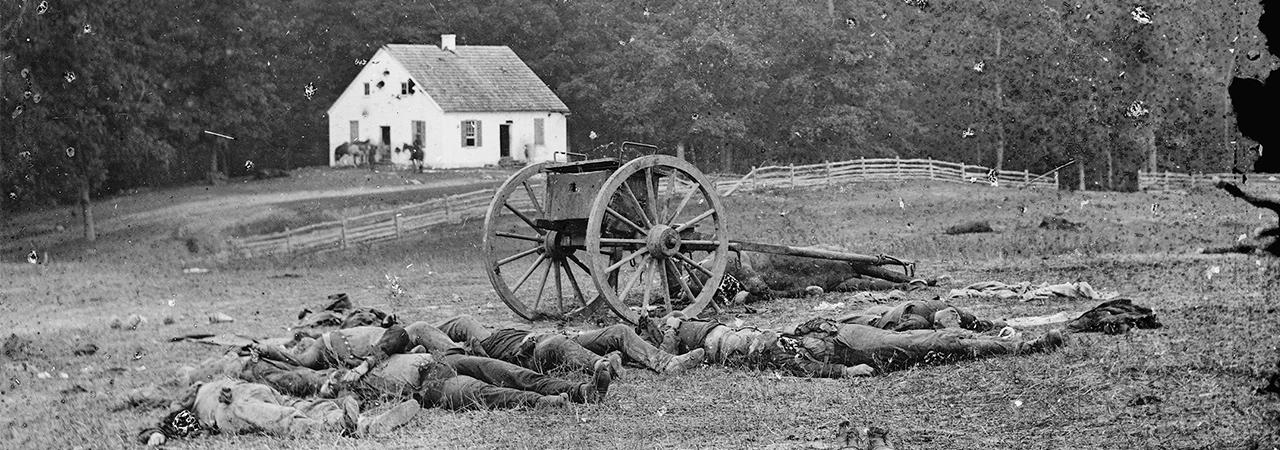
Dunker Church, Battle of Antietam, 1862

150 years ago this week, General P.G.T. Beauregard of the newly formed Confederate States of America gave orders to fire on Fort Sumpter, starting the Civil War.

I don’t consider myself a Civil War ‘buff’, but I am a student of the war. What’s the difference between a buff and a student? A student knows that the 20th Maine under the command of Colonel Joshua Chamberlain held the left flank on Little Round Top at Gettysburg.  A buff knows what weapons they carried, how many rounds they shot, what Confederate regiment they faced, and what Union regiment was on their right.

I’d add that buffs are interested mostly in the military aspects of the war. I am keenly interested in the military history of the war, particularly the major battles and commanders, but am as keenly interested in the political history.

From the debates over slavery in the Constitutional Convention through the vicious Congressional battles in the early 19th century; from the Mexican War through the Abolitionist movement; from the rise of Lincoln to the politics of Emancipation – it is the richest, most complex political story in American history. It is the story that gave birth to who we are today – the better and the darker angels of our nature - as much as the Declaration of Independence and the waves of immigration that followed the Civil War.

But I had a contrary thought this anniversary season. Maybe the remembrance of history isn’t all it’s cracked up to be.

A Long Memory
Americans are often, and justly, criticized for our lack of historical knowledge. One recent survey showed that more Americans knew that Michael Jackson was the composer of “Beat It” than knew that the Bill of Rights was a set of amendments to the Constitution. More than half the respondents to that same survey thought the War of 1812 or the Civil War occurred before the American Revolution.

* when I was in college, I read one of these articles about how ignorant American high school students are about their country. I refused to believe the results and began ambushing my sister’s friends, quizzing them. In one instance, I asked “Who is Walt Whitman?” One of her friends got all excited, saying “I know this one! I know this one! He built shopping malls!” (This is funnier if you know we lived near the Walt Whitman Mall.)

Naturally, our collective national ignorance bothers me. But then I remember who is really good at remembering.

The Irish, for example, have long memories. More Irish, I'm sure, could tell you who* won the Battle of Kinsale in 1602, than Americans could tell you who won Gettysburg.

* The bloody English, that’s who!

They have long memories in the Balkans as well. The Battle of Kosovo, fought in 1389, remains on the minds of many in the Balkans. In fact, Slobodan Milosevic, future war criminal, cited it in an important speech in his rise to power.

And then there is the Middle East. Ask an Arab who the Muslim hero of the Crusades is, and he could probably give you a brief lecture on the life of Saladin. Ask an American who the Christian hero of the Crusades is, and his best guess might be Robin Hood.

And finally, there are the descendants of the Confederacy. The Confederate States of America existed as a country for all of four years. It spent the entirety of those four years fighting a war it lost, a war fought for an ignoble cause, a war that devastated their lands, their economy, and their way of life. The decision of the Southern states to secede from the Union and fight a war that caused the deaths of 600,000 of their countrymen was, by any measure, a catastrophe.

And yet, 150 years later, Confederate flags fly. Confederate leaders are revered – Lee especially, but also Stuart and Stonewall and Forrest. Taken to its comic extreme, you'll occasionally see bumper stickers in the South that say "Hell No - We Ain't Forgettin'!"

And I mutter to myself, maybe you should. Maybe some historical amnesia wouldn’t be the worst thing. In the South, in the Balkans, in Ireland, and especially in the Middle East – it might be time to let the past go and think about the future.


Recommendations: If you don't plan on flying Confederate flags, but want to read one book about the Civil War, that book is James McPherson's Battle Cry of Freedom. On the internet you could do worse than spend some time at Disunion, the Civil War blog at the New York Times. Hat tip to Bamstutz.

Photo credit: The extraordinary photographs from the Battle of Antietam are usually credited to Matthew Brady, the famous Civil War photographer. They were in fact taken by Alexander Gardner, who was in Brady's employ. These photos were shocking to many Americans who were removed from the horror of war, and remain a landmark in the history of photography

Friday, April 8, 2011

A Nod to the Gods

The Appeal of Golf

All tastes are subjective.

If your tastes run to bluegrass, biographies, bratwurst, and brunettes, that’s what you like – and no amount of persuasion will change your preferences to rock and roll, romances, ratatouille, and redheads.

That’s why I never defend Bob Dylan. Many people hate Dylan’s music – or at least, don’t understand his appeal. They acknowledge his greatness as a songwriter, but can’t for a second grasp why any sane person with working eardrums would choose to listen his raspy warble.

I could make a reasoned case for Dylan. I can explain his revolutionary role in American music, play songs from Blood on the Tracks that don’t have the nasally twang of his bigger hits, explain the complex rhyming structure of a masterpiece like "Tangled Up in Blue". I can argue that singing isn’t just about a perfect voice, it’s about acting – and that Dylan’s singing gift is the ability to convey humor, anger, sadness, intelligence, sarcasm, even surrender. I can logically argue that if all we wanted in singing was a perfect voice, opera would rule the charts and rock and roll would only be played on the ass-end of the AM dial.

But if you don’t like listening to Dylan, I can’t persuade you with reason, logic, and facts that you should.

(This post started out as a post on golf, but I'm half-tempted to change gears here and talk about the role of criticism. For what is film, music, literary, or art criticism but the very attempt to persuade others with reason, logic and facts that they should like or not like something? Nah, let’s get back to golf.)

I bring all this up because I got in a conversation with someone recently who was opposed to golf. I mean, really opposed. Morally opposed and emotionally opposed and athletically opposed. He railed on about how it’s not a sport and it’s an expensive time-waster and that the world would be a better place if golfers would spend their time and money on more constructive pursuits.

What a moron.

Okay, that’s not fair; he’s entitled to the things he likes and doesn’t like. But I found myself, against my better judgment, making the case for golf. Or at least, making the case for why he should give it a shot. And I came up with two arguments:

The first, admittedly weaker, argument is that the great and powerful golf. Presidents golf, billionaires golf, movie stars golf. My point isn’t that we should imitate these people, God no. Or even that they are, in fact, great. My point is that these people have options. Barack Obama and Jack Nicholson can do pretty much what they want on weekends, but they mostly choose to golf. And, in the case of Obama and Nicholson, these are not people who grew up at country clubs; they came to golf later in life and fell in love with it. This should say something to the non-golfer. This should say, hmm, maybe I should give this a shot.

But the second, and more powerful argument, is that athletes golf. Michael Jordan has options, too. But more than that His Airness, perhaps more than anyone alive, knows what it is like to perform majestic athletic feats – to soar through the air with grace, ingenuity, and power. To outrun, out-jump, outwit, out-compete and out-everything the opponent. To hear thousands roar in ecstatic approval of his physical prowess.

Well, Michael Jordan spends the bulk of his free time golfing. And it is not just Michael Jordan – seemingly every baseball, hockey, soccer, football, basketball and tennis star on the planet are passionate golfers. Even those like Charles Barkley, who remains committed to this pursuit even though all available evidence suggests he should try an easier hobby, like nuclear fusion.

Why is that? What is the appeal of golf?

Everyone who loves the game already knows the answer to that question. But for those who don't, I'll turn to Ron Shelton, the writer/director of Tin Cup (and, not incidentally, a former minor league baseball player). In the following exchange Roy "Tin Cup" McAvoy (Kevin Costner) explains the golf swing to Molly Griswold (Rene Russo):


At another point in the film, Tin Cup offers a more direct explanation for the appeal of golf: “Sex and golf are the two things you can enjoy even if you're not good at them.”

I explained all this to the moron. Got nowhere. He probably likes Mariah Carey, celebrity self-help books, black licorice and pink Mohawks. There’s no accounting for bad taste.

Wednesday, March 30, 2011

What If?


There are three kinds of baseball teams.


There are teams like the Yankees, Red Sox, and Phillies that, barring catastrophe, are likely to win 90+ games.


There are teams like the Pirates, Mariners, and Diamondbacks that, barring a miracle, are likely to lose 90+ games.


Then there are the What If Teams. The What If teams are those that, if everything breaks right, something magical could happen. The San Francisco Giants were a What If team last year. They were 22-1 odds to win the World Series. Yeah, they had some young live arms, but their best hitter was Aubrey Huff – Aubrey Huff! They finished ten games behind the Dodgers and Rockies in 2009, a lot of ground to make up. The Giants needed a lot of things to break right for a magical season.


And they all did. The young pitchers delivered. They scored just enough runs, mostly at the right time. Minor league prospect Buster Posey came up in late May and hit 18 homers. The Dodgers and Rockies, both of whom won 90+ games in 2009, dropped to the low 80’s. And the Padres, oh the Padres, who were the Ultimate What If team all year, fell apart in September.


I bring this all up because the New York Mets are one of those What If teams.


If Everything Breaks Right

I won’t go into detail here (I did in this post), but look at the Mets’ Ifs.


- If the starting pitching does what it did last year (7th in team ERA; 19 shutouts);

- If K-Rod continues to punch out batters the way he did last year (before punching out his kids’ grandpop);

- If Wright, Reyes, and Bay play like the great offensive players they’ve been most of their careers;

- If young players like Ike Davis, Mike Pelfrey, and Jonathan Niese continue their growth;

- If you get some great performances from unexpected places (my vote is on Chris Young, who I took in the 23rd round of my fantasy draft Sunday night);

- If a new manager - one that doesn’t look like, sound, and manage like a Jazz bassist backing a beat poet in 1968 Greenwich Village basement cafe- can inspire this team

- If all these things happen, well...


But you don’t just need good internal things…it helps if bad things happen to other people. And the Phillies could be ripe for the sort of catastrophe that derails a promising team.


Would I like to have their rotation? Sure. But remember, the Big 3 are over 30, and candles in a birthday cake hit pitchers faster than hitters. And here's some Did You Knows...


Did you know Cliff Lee, before his great October, was 4-6 with a 3.98 ERA as a Ranger?

Did you know that in 2009 Roy Oswalt’s ERA was 4.12

Did you know Cole Hamels’ record the past two seasons is 22-22?

And did you know Roy Halladay’s given name is Harry Leroy Halladay? (I have nothing bad to say about his pitching. Guy is awesome.)


And that’s the pitching vulnerability. It’s on offense where they can have real problems.


Ryan Howard, Team Stud, took a significant step backwards last year. Instead of 45 HRs/140 RBIs he went 31/108. And while he played fewer games, his OPS also dropped, from .931 to .859. He is nowhere near the monster player he was in 2006and his comps on baseball-reference.com aren’t encouraging*.


* If you like baseball stats, one of the coolest features on baseball-reference is the comps – where you can compare players to other players in history.The player most like Ryan Howard, at the same age, in all of baseball history, is Richie Sexson.


But Howard isn’t the problem. Chase Utley’s injury, Jayson Werth’s absence, and Jimmy Rollins’ overall suckiness – the guy’s career has been in a free fall since his undeserved MVP in 2007 – are the problems. That’s a lot of Ifs, but all are possible.


Wouldn’t it be wonderful if they all happened?


And wouldn’t it suck if they all happened…but the Braves had all their What Ifs happen and won the NL East?

Friday, February 25, 2011

Defining Courage


Some of the greatest minds in history have tried to define courage.

Ernest Hemingway said, "Courage is grace under pressure." That is an excellent description of the courage of Captain Chesney Sullenberger, who landed US Airways Flight 1549 on the Hudson River Runway in January 2009. Hemingway was seriously wounded driving an ambulance in the First World War and hunted Nazi subs off the coast of Cuba in a fishing boat in the Second, so he has a notion of physical courage.

But with all due respect to Sully, there is an element missing in his act of heroism. Heroism of the highest order requires putting yourself in harm's way*, but Sullenberger was already on the plane. There was at least an element of self-preservation in his act.

Socrates argued that courage is the ability to distiguish between real and perceived threats, to know which threats should be acted upon and which safely ignored. Socrates, by all accounts, fought bravely in the Peloponnesian War, so we should take him seriously. And far be it from me to disagree with one of the greatest thinkers in history. But still, that seems more like a definition of wisdom than courage.

The Wizard of Oz thought the Cowardly Lion, like Socrates, confused wisdom with courage. "You, my friend, are under the unfortunate impression that just because you run away you have no courage," Oz told the King of the Forest. "But you are confusing courage with wisdom...There is no living thing that is not afraid when it faces danger. The true courage is in facing danger when you are afraid." Hmm, now we're getting somewhere.

And I once had a conversation with my buddy Lucky, a former Marine who served a tour in the First Gulf War. The day of our conversation, a man was being hailed as a hero in New York because he had chased and tackled some maniac who had pushed a bystander in front of a subway train. "It was a brave act", Lucky said, "but he's not a hero." Lucky contended that for him to be a true hero, he would have had to try and save the bystander, not just catch the bad guy.

The Chopper Save
I bring all this up because my friend, Detective Chris Condon of the NYPD, was very much in the news this weekend. The feat of bravery performed by him and his unit in the early morning hours of February 21st was on the front page of the New York Daily News and in newspapers around the world. Chris and his unit mates were interviewed several times on television and were honored at City Hall.

You can find the full story here (and in many other places) but the short version is this:

Two West Point cadets got themselves stranded on the face of Storm King Mountain, clinging to a tree while standing on an 18 inch ledge. The NYPD Aviation Unit was called because they had the equipment and personnel to pull off a daring save. Pilot Steve Browning hovered his helicopter alongside a sheer cliff, 500 feet above the Hudson in 50 knot winds, the rotors perilously close to the cliff face. Chris Condon was lowered on a line, spinning around, onto the ledge. One at a time they rescued the two Cadets, who were by now suffering from hypothermia and returned them to West Point.

Condon, Browning, and the rest of the Aviation Unit met every criteria of heroism imaginable. One, they put themselves in harm's way to save others; and not just any others, but complete strangers. Two, they showed Hemingway's grace under presure (see this Post story on Chris cracking jokes on the ledge). Three, they met the Socratic standard of courage; their knowledge and training made them acutely aware of the risk they were taking, and aware that if they didn't act those boys might not survive the night. And four, they met Lucky's standard; the cadets are safe and sound, even if they are being relentlessly teased at the Point for having to call in the NYPD to save their bacon.

Finally, like Sergeant Salvatore Giunta, the Medal of Honor winner, they have accepted the honors given them with humility and grace.

A toast to these genuine heroes. And Chris, dinner on Mike and I next month so you can clear up any of the details I got wrong in here.

*Lest you think I don't have enough respect for the Captain, I am very aware that he entered the Naval Academy in 1969, the height of the Vietnam War, to become a fighter pilot. Nearly 3,000 American aircraft were shot down in the Vietnam War, so Captain Sullenberger knows quite a bit about putting yourself in harm's way.

Tuesday, December 21, 2010

Finnegan's Revenge

In 2002 Bill Simmons wrote one of his most famous columns, The 13 Levels of Losing, updating it five years later with 3 more categories (one for my 2007 Mets. Ug.) The incredible, devastating, painful, shocking, humiliating, debilitating, mind-numbing, gut-wrenching, soul-destroying loss – no, loss is too weak a word - murder suffered by the New York Giants this past Sunday doesn’t quite fit one of the 16 categories perfectly. It matched eight of them.

XV. Achilles Heel: A fatal flaw is revealed (we knew special teams would cost us eventually)

XIV. Alpha Dog: A stud on the other team is too much (the Mutt-Murderer)

XIII. Rabbit’s Foot: Where seemingly everything goes wrong (let's not relive those 8 minutes)

XII. Sudden Death (no, it wasn’t overtime, but the clock showing zero as DeSean Jackson proved he’s the league’s next wide receiver ASSH0LE* made it feel like it)

XI. Monkey Wrench: Your coach makes an idiot decision (TMQB breaks down Coughlin/Fewell's Quartus Horribilis)

VI. Broken Axle: Where the wheels come off (um, yeah)

IV. The Guillotine: Where even the fan feels like he contributed to the karmic evil (I confess I started thinking through the playoff scenarios with Giants as a 2 seed)

III. Stomach Punch: Where the opponent makes an improbable play and/or your guy screws up (see above, multiple times)

* I don’t usually curse here at FreeTime, but DeSean Jackson – who has clearly learned from TO, Randy Moss, Ochocinco, and other members of today’s wide receiving prima donna community, cannot be described with a lesser word. How is that one position attracts so many individuals so badly in need of a beating?

Yes, the Giants collapse against the Eagles used up 8 of the 16 levels of losing! But you know that here at FreeTime we traffic in Optimism. We’re all about the silver lining, our cup is half full, we look on the bright side, we turn lemons into lemonade – yes, we’re delusional as Martini in One Flew Over the Cuckoo’s Nest!

So I’m going to ask my Giant fan friends to take a step off the ledge…yes that’s it, open the window, yes, c’mon back in the room. Okay, finger off the trigger, put the gun down. Okay? Listen to me. This loss was many horrible things, it contained 8 of the 16 levels of losing all wrapped up in one giant fetid steaming smelly pile of elephant dung. Bu here’s what it wasn’t:

A Level I Loss: That Game
A Level IX Loss: The Full-Fledged Butt Kicking

“That Game” is Simmons’ name for Game 6 of the 1986 World Series. And “The Full-Fledged Butt Kicking” – well you can figure out what that is. (Interestingly, the example he uses for this is the New York Giants 41-0 beatdown of the Minnesota Vikings in the 2001 NFC Championship Game. )

It’s important to remember this is not a Level I loss because Level I losses end seasons. The Giants 39-38 playoff collapse to the Niners in 2003 – a game in which they led by 24 in the third quarter - was a Level I loss. The 23-22 playoff loss to the Vikings in 1997 when the onside kick bounced off Chris Calloway’s chest and the Vikes scored 10 points in the final minute was a Level I loss. They had all the horror of Sunday’s game but no chance at redemption.

Nor was it a Level IX loss. The NFL had a wonderful example of a Full-Fledged Butt-Kicking recently – the Patriots’ 45-3 humiliation of the Jets. When the most common phrase said about your team the following week is “exposed as a fraud”, that’s a tough loss.

But the Giants did not get their butts kicked Sunday. And they did not end their season Sunday. Indeed, they remain well-positioned for a playoff spot.

So as you look for some scrap of optimism to hold onto, think about it this way: if you asked Tom Brady and the Patriots if they would like to face the Jets in the playoffs, that locker room would erupt in cheers. But if you asked Michael Vick to answer in complete honesty whether or not he wants to face the Giants again – indeed, whether he ever wants to be in the same room as Justin Tuck again – I suspect he’d answer like Apollo Creed at the end of Rocky: “Ain’t gonna be no rematch.”

As for redemption…I think we all know what that looks like. A six seed for the Giants, followed by a victory against the Bears in the playoffs, followed by a trip to Philadelphia in the 2nd round.

In these days of sensitivity around football injuries I’ll say what I know all Giants fans are feeling: no matter what happens after that, that loss will be expunged if the Canine Killer and TO's Spawn leave the field on stretchers - not seriously hurt, mind you; just a little shaken up - and the Giants leave it in victory.

Oh, and as for the title of this post...Finnegan is my dog's name. He hates Michael Vick.

Thursday, November 11, 2010

Misunderestimation

The reputations of historical figures are not static things; sometimes they rise and fall, long after that person has exited the world stage.

Thomas Jefferson was revered for a century and a half after his death – he was considered the most brilliant of the Founders, an ideal for all Americans to live by. In 1962, John Kennedy, addressing a roomful of Nobel Prize winners in the White House, said that “This is the most extraordinary collection of talent, of human knowledge, that has ever been gathered together at the White House, with the possible exception of when Thomas Jefferson dined alone.”

But in the past twenty years his stock has taken a beating. Numerous scholarly and popular works of history have compared Jefferson’s contribution in the American Revolution to that of John Adams, and found that perhaps the Sage of Monticello had received too much credit and the Duke of Braintree too little. More devastatingly, the DNA test showing Jefferson did in fact impregnate his slave Sally Hemings was a blow from which his historical reputation may never fully recover.

Harry Truman, on the other hand, has seen his reputation soar. Truman left office in 1953 with staggeringly low approval ratings - his low of 22% "beats" the lowest of Nixon (24%) and Bush (25%). He was seen as something of a folksy bumbler, a nice enough man in over his head. But now, he is widely considered to have been the ideal steward of America’s foreign policy in a post-war world. The twin achievements of the Marshall Plan and NATO helped ease in a half century of (mostly) peace and prosperity. In polls of Presidential historians, Truman ranks as high as fifth, behind Washington, Lincoln, and the Roosevelts.

(The historian David McCullough played a prominent role in both of these shifting reputations, through his biographies of Truman and Adams. He’s the E.F. Hutton of American historians.)

I bring all this up because George W. Bush has returned to our lives. The publication of his memoirs, the continuing measured success in Iraq, and the troubles of his successor has some wondering: can George W. Bush enjoy a Trumanesque revival?

It’s too early to tell, of course, and regular readers of this space know I am loath to make predictions. But I can, perhaps, give you a hint of what conditions will be necessary for a latter-day McCullough, writing in the year 2053, to write a book that will revive Bush’s reputation.

For that hint, we’ll turn to another President – one whose reputation as a great American has held steady: Dwight Eisenhower. In 1946 General Eisenhower was in command of the Allied occupation of Berlin, following the end of the Second World War. Ike was asked by a reporter, how we would know if the Occupation was a success?

Eisenhower said, “The success of this occupation can only be judged fifty years from now. If the Germans at that time have a stable, prosperous democracy, than we shall have succeeded.”

West Germany, of course, was a stable and prosperous democracy within 25 years. In 1990, West and East Germany reunified. By 1996 – fifty years after Eisenhower’s statement, Germany was indisputably a stable and prosperous democracy.

In the early days of the Iraq War, there is no question that the Bush Administration declared Mission: Accomplished too soon. But in the darkest days of the war, around 2005, the war’s detractors claimed defeat too quickly.

Will, in fifty years, Iraq be a stable and prosperous democracy? Forty years? If that democracy is an important part of the antidote to the sickness of radical Islam that infects the Muslim world; if, indeed, the scourge of Bin Laden and terrorism ends up in history’s dustbin along with Hitler and Nazism, will Bush enjoy a Trumanesque revival?

Stay tuned. For a really long time.

Update (6/12/13):  This doesn't mean much in the long run, but Dubya may have started his comeback already.  According to Gallup, his approval ratings today - 4 and a 1/2 years after leaving office, are at 49%.  As the article points out, former Presidents often do better after they go away a while.  But worth noting...

Friday, November 5, 2010

True Believers (and other Election Day thoughts)

In 1999 I made my first – and still only – contribution to a political candidate. I gave fifty bucks to John McCain for his first Presidential run.

McCain’s policies were not in sync with mine – very few voters get to vote for a candidate they agree with on everything – but I was truly seduced by McCain’s honesty, the Straight Talk Express and all that. After eight slippery years with the Clintons, I was kind of desperate for a politician who seemed to have genuine beliefs, and was unafraid to express them even if it hurt him politically. Further, his extraordinary personal story* told me that his integrity was hard-earned.

* Five and a half years in a POW camp. Whenever I see that number – five and a half years is 2000 days– I’m struck by how long a period a time that is, and how much daily personal suffering he endured. And I bitch and moan when my internet connection is slow.

Bill Clinton, I decided, believed in only one thing: Bill Clinton. He was a skilled politician and incredibly smart; and policy-wise I was nearly as comfortable with him as I was with McCain (Northeast Republicans are more like Southern Democrats than Southern Republicans). But I had reached the point where I needed a breather from the Clinton’s Eternal Campaign style of politics. The Clintons, I thought, would do or say just about anything for one more vote. I wanted someone who believed in his positions, not just his electability.

Well, this week’s election marks the 10th anniversary of the period of True Believers. However different George W. Bush and Barack Obama may be, these are two Presidents who believe in their mission.

Bush fervently believed in the global threat of Saddam Hussein and the transformative power of democracy and aligned his Presidency behind that belief, even as the country turned against him. Obama fervently believes in the necessity for national healthcare and the efficacy of stimulus spending and aligned the power of his Presidency behind that belief, even as the country turns against him.

(I could take this analogy a little further. Both were so convinced that invading Iraq/passing healthcare legislation was vital to the national interest that neither was above stretching the truth to ensure it happened. The interesting thing was that the supposedly inarticulate divisive Bush was infinitely more successful at persuading his political opponents and the country at large that invading Iraq was a good idea than the supposedly eloquent and post-partisan Obama has been at selling his policies. Many Democrats voted for the Iraq war resolution and large American majorities supported it, while no Republicans supported Obamacare and a majority of Americans opposed it).

The point is, this whole true believer thing isn’t really working out for us. The war in Iraq proved to be more painful and less necessary than promised. The stimulus bill was the government equivalent of throwing a trillion bucks in the fireplace. And national healthcare – we don’t know what it’s going to be exactly, but we’re pretty certain it’s not going to be what the President promised.

The problem with true believers is that they, far more than practical-minded politicians like Bill Clinton, are victims of confirmation bias. To stay with our current President a moment, the American electorate has been telling the Obama Administration for some time - since at least the stunning election of Scott Brown - that they disagree with his policies. But he won’t be persuaded. He persists in believing that we just don’t understand them, that his only failure was explaining the policies well enough to us (which is kind of ironic, given his allegedly great oratorical skills).

Makes me long for the days of cynical politicians who will do anything for a vote. Slick Willie, where are ya?

Concrete Jungle Where Dreams Are Made
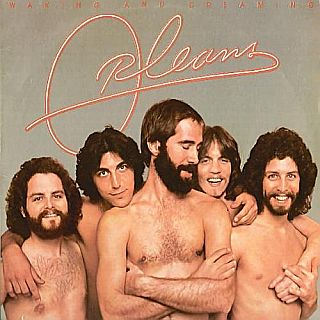
We had an interesting Election Day in my home state of New York. Democrats rolled to landslide victories in the 3 big races (Governor and both Senate seats) but Republicans took 5 House seats. Among the defeated House Democrats was John Hall, the guitarist/songwriter for the band Orleans who had two big hits in the 70’s (Dance with Me and Still the One).

For the first time in my life as a voter I left one column blank. I couldn’t vote for either Andrew Cuomo or Carl Paladino for Governor. I’ve disliked Cuomo since he made his name in politics. He’s a self-righteous screeching moralizer – a pre-scandal Spitzer but without Spitzer’s cunning intelligence. And he’s got his Dad Mario’s faux-populism without the eloquence. Paladino was worse, significantly worse, and would have been an embarrassment to the State. I wish I had the presence of mind to write in a vote for Amare Stoudamire or my dog Finnegan, but I just left it blank.

Another interesting note in New York: Harry Reid’s come-from-behind victory in Nevada was good for the Democrats but bad for New York Democrat Chuck Schumer. Schumer would’ve been Senate Majority Leader had Reid gone down in flames. If that had happened, Schumer would be omnipresent in American politics – it’s said the most dangerous place in Washington is between Chuck Schumer and a camera. Chuckie is such a publicity-hound that he held a press conference a few months ago calling on Apple Computer to fix the antennae problem in the iPhone. Thank heaven for small mercies.

That’s No Salamander
Everybody knows the numbers 6 and 60 – the GOP took six Senate seats and sixty House seats. Less known is the number 680. That is the stunning number of State legislature seats the Republicans won, taking over 18 state legislatures. Close readers of FreeTime, and there are at least 3 of you, know my obsession with gerrymandering. Well, state legislatures control the re-drawing of districts, and according to the Washington Post, “When the next round of redistricting -- the decennial re-drawing of all 435 House districts -- occurs next year, Republicans will have complete control over the process in four times as many House districts as Democrats do, districts that comprise nearly half of the entire House.”

That may be the worst news of the day for Democrats.

Occasionally Right
Mind if I point out a few instances in which I was right?

After Obama's election - when many pundits were proclaiming this was the beginning of an enduring alignment in American politics - I wrote a not-so-fast piece entitled A Sea Change Election. Very few American elections are truly transformative - by my count only three in American history - and it is usually a mistake to overread the results of a single election.

Republicans would do well to remember that now.

I also wrote a couple of pieces (see here and here) arguing that the passionate faith of Obama's followers put unreasonable expectations on him, ones that would be difficult to meet. I think that proved true.

I may have been wrong about a couple things, but you'll have to find those yourself...

Jekyll & Hyde
I’m trying to imagine what the city of San Francisco was like on Tuesday. I’ve spent a lot of time in Frisco* through the years, and it is a freakishly liberal place (I say that with affection for my liberal San Francisco friends, some of whom will read this). It was a sad day for liberals, and SF’s own Nancy Pelosi lost her gavel, of course. But (speaking of freaks) Tim Lincecum and the San Francisco Giants won the World Series! That must have been a seriously bi-polar city this week.

* San Franciscans hate the nickname Frisco, and if you use it you are disdained as an outsider who doesn’t know the city’s ways. But why? It’s a cool nickname – much better than San Fran or SF, and shorter than the full San Francisco. Come on, Friscans, embrace the Frisco!

Tuesday, October 19, 2010

Do Managers Matter?


We humans are stubborn creatures. We form an opinion, grab hold of it, and over time tighten that grip until “changing your mind” becomes nearly impossible. This is true if it is something trivial, like believing defense wins NFL championships, or of life-and-death importance, like believing holistic medicine cures disease better than modern medicine.

When we receive new data about the issue, we filter it through our bias. For example, I can provide reams of data to a “defense wins championships” believer that prove a good offense is as or even more important than a good defense, but he will discard the facts that don’t support his belief, and latch onto the ones that do. “Sure, the Saints scored with more frequency than a rich nerd at a gold digger convention,” he’ll say, “but they didn’t win a championship until Gregg Williams started blitzing like Rommel.”

Cognitive scientists call this “confirmation bias” – we naturally select data that support our existing beliefs, and discard data that refute those beliefs. Think about confirmation bias, and it will change how you look at everything from the Middle East to marital spats.

I bring all this up because I’m changing my mind about a long-held belief, a belief of enormous magnitude: I’m beginning to believe baseball managers matter.


###

Many of you are saying, well of course managers matter (or you’re saying, sheesh, another sports story? I’m outta here). But I’ve always believed managers had a minimal effect on a win-loss record. Take any intelligent baseball fan and side him up with a decent bench coach, and he could do a passable job managing. Write the lineup. Set your rotation. Change pitchers. Talk to the press. Lose arguments with umpires. Spit. Is that it?

I have no doubt I can perform that job with fewer embarrassing blunders than I would as, say, a plumber or biochemist or Federal Reserve chairman or software engineer or submarine sonar officer or sous chef or air traffic controller or ambassador to Norway* . Or, for that matter, football coach, where you need to not only know what Red-Z Omaha Split means, you have to create it, teach it, and decide when to employ it.


* Sidenote: congratulations to the obscure Norwegian politicians who pick the Nobel Peace Prize winner - you didn't screw it up this year! As for the Swedes who give out the Literature prize, I'm still waiting for you to honor Cormac McCarthy or Philip Roth or pretty much anybody with an American passport, but at least you didn't give it to a total obscurity this year.

In fact, I figured (and still do), it is harder to manage baseball in the minors and college where teaching the fundamentals is a big part of the job. I’m reasonably sure Phillies manager Charlie Manuel doesn’t have to tell Chase Utley how to pivot on a double play or Shane Victorino which cutoff man to hit or Ryan Howard to never ever EVER bunt.

And so, for years, I didn’t particularly care who managed my team. What I mostly hoped is he would be entertaining in interviews, like Bobby Valentine.

But here’s the thing: I’m watching these baseball playoffs and, except for the Yankees and Phillies – which are absolutely loaded with talent – I see a bunch of lineups and rotations that aren’t particularly impressive. And yet, these teams are in the playoffs, and my Mets are home again.

The Elements of Winning

I was recently in Minneapolis and had a chance to visit Target Field, the Twins’ new digs. I looked up at the Twins’ lineup and saw Joe Mauer and…well, a bunch of guys few people outside of Minnesota had ever heard of before. Michael Cuddyer has been on my fantasy teams a couple times, and is a pretty good hitter. But this is not an all star team. Justin Morneau missed most of the season with an injury, closer Joe Nathan hasn’t thrown a pitch since spring training. And yet here they were, in first place as usual.

And it got me to thinking about my team, the Mets, who have most of the elements of a winning team, but were once again muddling through a meaningless September:

Established stars
David Wright and Johan Santana are proven superstars. Carlos Beltran missed most of the season, but has been one of the premier centerfielders of his generation.

Up and coming players
Ike Davis had the second best rookie season by a hitter in Mets history. Mike Pelfrey broke through this year, pitching on an ace level most of the year. Jonathan Niese opened eyes all year long.

Unexpected performances from journeyman

Angel Pagan and R.A. Dickey? Did any journeyman hitter/pitcher combination have better unexpected seasons than these two?

Consistently good starting pitching
The Mets threw 19 shutouts this year. They had a team ERA of 3.73, a ¼ run better than the league average, and the 7th lowest in all of baseball.

A reliable bullpen
Francisco Rodriguez’s season ended in disgrace, and he had a few tough blown saves this year. But look closely and you’ll see that he had his best season since 2006, when he finished fourth in the Cy Young voting. His ERA was 2.20, he had a career low walks per nine innings, his WHIP was the second lowest of his career and he struck out an astonishing 3 batters for every one walked. A lot of Mets fan believe he struggled this year, and he had his patches – but those patches were surrounded by multiple weeks and even months of unhittable dominance.

Good baserunning
The Mets led the league in stolen bases. Again. In fact, the Mets have led the league in stolen bases every year since 2004, except for 2008 when they finished 2nd.


Established stars. Up and coming players. Unexpected performances from journeymen. Consistently good starting pitching. A good, occasionally great closer. Speed in the basepaths. The Mets took all of these elements and ended up…79-83.

Ron Gardenhire has been manager of the Minnesota Twins for nine years. In those nine years his team finished 1st six times. In eight of nine the Twins had a winning record. His only losing season was 2007 when they finished with the same mediocre record the Mets finished with this year, 79-83.

Mets manager Jerry Manuel has also managed nine seasons in the majors, with the White Sox and Mets. He had one first place finish. He’s had back to back 4th place finishes with the Mets. And he gives boring interviews.

The Mets just fired Jerry Manuel. Can someone else take this collection of promising talent and bring them to October? As the great Tug McGraw said, Ya Gotta Believe.

Friday, September 17, 2010

Meadowlands Review

I went to Opening Day at the New Giants Stadium and wrote a review of it for the Giants fan site, Homer Jones. Part 1 is here.

Friday, September 3, 2010

Two Updates

1. In The Creative Urge, I talked about how nearly all children have the desire to create art - a desire that withers in adults. At one point I even wondered if the creative urge is, at some level, childish.

Well, I just stumbled upon a quote from Pablo Picasso which captures this beautifully. "The greatest artist in the world," he said, "is an uninhibited child at play." He also said "Every child is an artist. The problem is how to remain an artist."

2. In The Small Dog Manifesto, I gave eight reasons to own a small dog. I recently learned a 9th - many security experts recommend poodles and chihuahuas as watch dogs (not guard dogs). In fact, master burgler Walter Shaw recently said on Oprah that he avoided houses with small dogs.

Both posts are updated.

Tuesday, August 3, 2010

The Creative Urge


The director Tim Burton was on Charlie Rose recently talking about his art show at the Museum of Modern Art. The show is a collection of Burton’s drawings, doodles, and paintings over the years. Rose asked Burton if he started this at an early age:

"Well, like every kid, you know? I think most kids draw. I mean, the fascinating thing to me is by the time a lot of kids are ten years old, they say 'I can’t draw.' And that, to me, was always a very interesting signal about what society does to people. "

It seems kind of a simple observation but it stuck with me. Nearly every kid draws, doodles, colors, etch-a-sketches, paints. But they do more than make pictures. They write and perform dramas and comedies with improvised props and staging (play-acting). They sing and dance, sometimes to their own music and choreography (the school talent show). Heck, they even sculpt (Play-Doh or silly putty or sand castles).

Pablo Picasso made the same observation. "Every child is an artist," he said. "The problem is how to remain an artist." The creative urge, the desire to make art, exists in nearly all children. And then it dies.

Most adults are mere consumers of art. We watch movies and television. We listen to music. We read books. Even the more artistically inclined among us satisfy our urge by reading poetry or going to a museum or a play – but never, God forbid, actually painting a landscape or writing a song or performing a soliloquy from Hamlet.

Why is this? Or to frame it Burton’s way, what does society do to people that kills their creative urge?

Why do we put our crayons away?
A few theories come to mind. One is suggested by Burton when he says kids stop because they say, “I can’t draw”. Like Adam and Eve ashamed to realize they are naked, we get older and realize we aren’t particularly good artists, actors, or singers, and stop out of shame or embarrassment. One can debate whether Burton’s doodles are worthy of an exhibit at MoMA, but he’s clearly a talented man who has had a hugely successful career in the visual arts. Of course he didn’t stop.

Or maybe the less talented among us stop because it’s simply not fun – drawing a stick figure superhero flying through space (a specialty of mine as a child) is plenty of fun when you’re a kid, but the inadequacy of the drawing doesn’t cut it for an adult.

Or maybe we stop because we’re busy. One of the truly wonderful things about being 6 is that you have a lot of free time. When you’re 46, not so much.*

* I named this blog FreeTime because when I would occasionally write and share essays with people I’d often hear “You must have a lot of free time.” Nobody ever says that to people who go to the gym five days a week or watch television every night or play golf every Saturday. But write a blog and people wonder where you ever find the time for such a frivolous exercise.

Or maybe we stop because, to paraphrase Paul’s letter to the Corinthians, when we become adults we put childish things aside. Is there something about art that is childish? Picasso thought so. "The greatest artist in the world", he said, "is an uninhibited child at play."

There is something to all of these theories. But let me try out a new theory on you. Technology killed the creative urge - but it also has the potential to bring it back.

Creative Destruction
You don’t have to go back very far in human history – about a century or so – to discover a time when you couldn’t go to the movies or watch television or even play recorded music. Museums were few and far between – at least, fewer or farther between than now. Books were certainly available but there wasn’t a Barnes and Noble in every town or an Amazon on every desktop. Heck, you couldn’t even go down to Sears to buy a few paintings for your walls.

In the year 1900, if you wanted to be entertained by the arts, you damn near had to create it yourself. Okay, I exaggerate a bit. If you were wealthy individual in a major city you could go to the opera or see a play.

But creative entertainment in the 19th century consisted mostly of whatever you conjured up yourself. Sister Sarah played the piano. Uncle Bob sat around the fire telling stem-winding tales. Particularly educated families would learn and perform scenes from Shakespeare.

But now there is no need for any of that. With a press of the button we can hear Vladimir Horowitz - or Billy Joel - play the piano. I can turn on my television and watch world-renowned actors perform Shakespeare's plays - with special effects that would have astonished the Bard himself.

Technology obviated the need to create art because it brought the world's greatest art - or at least whatever form of art and entertainment we each prefer - to our doorstep. Don't believe me? Click here.

Technically Creative
But I'm starting to think, just maybe, technology could play a role in bringing back the creative urge.

Take this blog, for example. I don't consider FreeTime to be a blog in the way it is usually defined. I don't do an ongoing diary of my life, nor do I focus on any particular topic. In fact, I share very little about myself here.

For me, a "blog" (a word I despise) is merely a publishing platform; a way for me to easily engage in my favorite form of creativity - writing. Technology makes that possible.

In the past year I've watched my daughter discover the wonders of iMovie, Apple's remarkable video editing software. She is ten years old, and is filming and editing short videos with outstanding quality. Technology makes that possible.

Digital cameras and photo editing software have made photography - not just the snapping of pictures but the transformation and curation of those pictures - into something far more artistic than anything the previous generation knew. Technology makes that possible.

Even video games - yes, the dreaded video game, killer of children's minds - may play a larger role in the recovery of creativity. As my 13 year old son plays his assorted games I am aware that he is not simply watching - he is engaging in story scenarios in an interactive way that requires far more imagination than watching any old movie would require.

So take heart, Tim Burton. The curators at MoMA won't go rummaging through our drawers in order to show our doodles to the world's art elite. But maybe, just maybe, more and more of us will break out our digital crayons, and rediscover the artist within.


Monday, June 28, 2010

The Beautiful Game's Flaw

[This is the fifth in an unplanned series called The Volunteer Commissioner, in which I fix broken sports. In previous installments I singlehandedly fixed pick-up basketball, women’s softball, and men’s lacrosse. You’re welcome. Unfortunately, swimming is unfixable.]


Soccer, obviously, isn’t broken. According to ESPN, 147 zantillion people on 64 planets spread over 9 galaxies will watch every single minute of the 2010 World Cup. (And if they’re not watching in further galaxies, I’m sure they can hear those damn horns). Nothing this popular needs the help of the Volunteer Commissioner.

But that never stopped me before.

If you’re a fan of the beautiful game, you probably assume I’m an uncouth, red-necked, barbaric, gun-toting, beer-swilling, pot-bellied ugly American who wants higher scoring games because I'm aesthetically incapable of allowing a sport to slowly reveal its beauty. Well that’s not true. I don’t own a gun.

But my complaint is not the lack of scoring. That’s not to say I wouldn’t mind the occasional slugfest. I love a pitching duel in baseball, where two hurlers trade wits and skills for three hours backed by graceful and acrobatic fielders. But not every frickin’ game. Would it kill these guys to throw out a 6-5 score once in a while?

But still, I’ve learned to appreciate that a goal in soccer is special precisely because it is so hard to achieve.

And it’s not the officiating, though I wouldn’t mind if the officials explained what they’re calling once in a while. The disallowed goal in the U.S.-Slovenia game was so frustrating not just because of the injustice, but because nobody was charged with a crime. Habeas corpus, anyone?

And it’s not the overdramatic flops, though I find it ludicrous to see a player act like they’ve been chest-shot by a high-powered sniper rifle as they graze an opponent’s jersey. When the delightfully named Brazilian star Kaka received a red card for this, I felt the urge to don my Volunteer Commissioner cape.

But I decided that all sports have their own ethics*, and those ethics come from specific places in the sport. In football - I'm sorry, American football - a defensive back is considered wily and shrewd if he can grab a receiver’s shirt as long as he shields it from the referee. So what’s the difference?

* Golfers take great moral pride in the fact that they call penalties on themselves. But this is not because they are at their core more honorable people, but rather that in a sport played over many miles, self-policing is a must; the social mores of the sport grew out of its geography.

No, the flaw in the beautiful game is the ties. Through the first two weeks of the World Cup, nearly 1/3 of all games ended in a tie. The United States nearly advanced to the Sweet 16* without winning a single game. Their opponent in the knockout phase, Ghana, made it through their group without scoring a single non-penalty goal. Get a bunch of ties, and you’re in.

* Yeah, I know it’s not called the Sweet 16. I also am aware that the game is called football and that a 1-1 game is a draw, not a tie. You use your vernacular, I’ll use mine.

I’m willing to concede that there is something about American culture that makes the whole idea of a tie harder to accept. After all, the animating idea of communism and socialism (two philosophies that, like soccer, found more fertile ground in Asia, Europe, South America and Africa than they ever have in the U.S.) is to, as much as possible, create an economic draw among all its participants. Free market capitalism, on the other hand, is built on the idea of winning: if you reward society's strongest contributors, you create the incentive to perform at a high level, which benefits the entire society.

In fact, I think it was Adam Smith who coined the term "A tie is like kissing your sister". Karl Marx, meanwhile, posited that if the owners of the means of production had a 2-1 lead, the officials should allow the proletariats a penalty kick.

So what do we do about this problem? I know that shootouts aren’t the ideal solution, but if they are good enough to settle games in the far more important knock-out phase, why aren’t they good enough to settle them during Group Play? (I have no idea if I’m using the right terminology now…but work with me).

On the other hand, 147 zantillion people disagree with me, so maybe I should shut up.

Friday, June 4, 2010

Something Borrowed

I generally surf the web at lunch, and these two sports-related things both brought me pleasure:

1. A beautiful piece by the great Joe Posnanski about Armando Galarraga's "perfect" game: The Lesson of Jim Joyce

2. This link was sent by KMac in Chicago about Blackhawks fans getting on the bandwagon. I was in Chicago the week they won the Conference Finals (is that what they call it in hockey?) and the city was aflame with Hawk Love. Even the Art Institute had huge Blackhawks banners hanging out front. Anyway, a fun video about fans jumping on the bandwagon:

Tuesday, June 1, 2010

The Slowest Game?

" Don't Shoot!"

Lacrosse bills itself as “the fastest game on two feet”. But if fans of hurling (“the fastest game on grass”), hockey (“the fastest game on ice”), and jai-alai (“the fastest game on earth”) tuned in to yesterday’s NCAA Men’s Lacrosse Final, they can be forgiven for scoffing at this notion. Because the Fighting Irish of Notre Dame slowed the game down so much it could have been sponsored by Sherwin-Williams and called the “Watching Paint Dry” Lacrosse Final.

* All of these sports base their “fastest” claims on the speed of the ball or puck, but none are faster than a badminton shuttlecock, which can travel as fast as 206 mph.

Okay, I’m being unfair. On many levels it was a very exciting game. Notre Dame and Duke traded goals in the game’s opening minutes and the score was close or tied the entire game. A sudden death OT lasted only five seconds, thanks to a thrilling faceoff-scoop-run-and-score by longstick middie C.J. Costabile. And in a sport that has been dominated by a quintet of teams (Johns Hopkins, Syracuse, Virginia, Princeton, and North Carolina have won every title since 1978) the appearance in the Final of two teams who had never won a title is a great thing for the sport.

But still…lacrosse is the fastest growing sport in America (that claim might actually be true) and many people tuned in to ESPN yesterday to see this exciting sport they have heard so much about. Sadly, they were treated to a game that, as announcer Sean McDonough said, looked like a North Carolina Tar Heel basketball game before the shot clock.

Credit Notre Dame for the right strategy, which we’ll dub the Irish Famine. Coach Kevin Corrigan, realizing he had the least talented team in the tournament, slowed the pace of the game down to a crawl, starving the Duke offense of the ball. On nearly every possession, his offense was content to pass the ball around and bleed the clock. They were given multiple stall warnings and half their shots seemed designed to miss, so that instead of turning the ball over their X attackman can race to the back line and reclaim possession. (for lacrosse newbies, when a shot goes out of bounds, possession goes to whatever team gets to the out of bounds spot first)

The result: a 6-5 decision, the lowest scoring title game in NCAA history. And while Notre Dame goalie Scott Rodgers was as good as advertised, let’s not pretend that this game was about defense. This game was about Notre Dame playing keepaway, holding the ball for huge chunks of time doing nothing but playing catch. Duke features the best attack in the country, but Ned Crotty (63 assists this season), Max Quinzani (68 goals) and Zach Howell (51 goals) spent most of the game standing and staring at the other end of the field.

In a showcase moment for the sport, with its popularity at an all-time high and the first finals team from West of the Mississippi, it delivered a snoozer.

Don’t Shoot the Messenger (and if the Irish has the ball, I don’t have to worry about that)
This is not meant as a critique of the sport in general. I played a little lacrosse myself back in the day (with an emphasis on the word “little”). I sat at the end of the bench for a Long Island high school in the early 80’s, and found my way to the middle of the bench (3rd and 4th midfield line) for a Fairfield University club team that dominated New England club lacrosse in the late 80’s.

* I graduated in 88, and from 87 to 89 the Stags went 33-2. In ’93 they went Division I and today are good enough that earlier this year they beat one of the teams in yesterday’s final.

I picked up the game late and wasn’t very good – I scored 3 goals in my entire college “career” - but I loved the sport and still do. Today, lacrosse is wildly popular where I live in Rockland County. My 10 year-old daughter plays, as do all five of my Rockland nephews. My two brothers-in-law coach their sons, and a buddy announces high school lacrosse on MSG.

Lacrosse is a genuinely great sport – one that offers the ideal combination of speed, athleticism, toughness, knowledge and grace. But one has to ask: how many coaches across the country watched a mediocre Notre Dame team – one that was unseeded and went 10-7 on the year – get to within one goal of a title, and think, hmmm? Maybe I’ll slow down my offense next year…

And that would be a terrible thing for the sport.

The Fix
Luckily, FreeTime is here to propose a solution – to fix the problem before it manifests itself. You already know what it is, don’t you? You knew it as soon as you saw the basketball shot clock reference above. It was once said that the only man who could stop Michael Jordan was his own coach at North Carolina, Dean Smith. And basketball as a sport does not benefit if the rules can stop Michael Jordan.

Well, we don’t want to stop Ned Crotty, Max Quinzani and Zach Howell either. The NCAA – the only governing body of the sport that matters – should institute a shot clock immediately. I’ll leave the details up to smarter laxheads than me, but there’s no need to be too aggressive right away. I’m leaning towards two minutes but even three might be fine.

But you also need an intent rule. In other words, you can’t have guys launch shots 10 feet over the goal just to reset the clock.

The sport is at a key moment in its growth. Don’t let the Irish Famine slow it down. Literally.

(Hat Tip to the Rock Star, who suggested this post and served as research assistant.)

[This is the fourth in an unplanned series called The Volunteer Commissioner in which I helpfully point out the flaws in various sports and suggest fixes. Previous installments were The Losers Out Manifesto, Swimming is Boring, and Fixing Softball. And before World Cup fever has passed, look for a piece on soccer.]

Friday, May 14, 2010

King James Redux

In late March I wrote a piece called The Duper Level in which I argued that Lebron James needed the Big Apple to launch himself from mere Superstar to Super Duper Star (The Duper Level). At the end I speculated about how this year's post-season could affect his decision:

"I think the results of this year's playoffs could impact his decision. If, for example, the Cavs choke in the postseason, he may feel he needs to stay and win a title for Ohio. And good for him if he does. But if he wins a ring for Cleveland, and does so over Utah in a 6-game series that gets lower ratings than Conan O'Brien, he just might want to hear what those folks in the Garden have to say."

But here's the thing: when I said "choke in the post-season", I meant an upset in the Finals, not a 6-game ass-whupping in the Conference semi-finals*, one that included multiple blow-outs and the entire world calling into question whether Lebron is the second coming of Karl Malone or Patrick Ewing rather than the Second Coming of the Lord.

* It's May 14th, and the 2009-2010 seasons of Lebron James, Sidney Crosby, and Alexander Ovechkin are over, further proof that making sports predictions is for fools and con men.

This unexpected development could play into the Knicks hands. Here's the Sports Guy:

"See, there was only one way LeBron was leaving Cleveland this summer: if the team fell apart so badly and indefensibly before the Finals that he could get talked into a 'You just need a fresh start with a new team' case. He couldn't leave if they lost in the Finals to Kobe's Lakers; he'd look like a coward. He couldn't leave if they won the title; no great player leaves a defending champ at the altar -- it's never happened before. But if it plays out like this? He could leave. Absolutely. It's conceivable."

Now Bill Simmons knows more about the NBA than all of us combined, but he also predicted* the Celtics would lose in the first round and the Mavericks would go to the Finals. So who knows?

* Simmons is neither a fool or a con man, but makes more wrong predictions per week than most people make in a year. But hey, ssports passion makes us foolish.

I’d like to add one other thing into the mix. Here is what Kevin Garnett told reporters about his conversation with Lebon after the game:

"If I could go back and do my situation over, knowing what I know now with this organization, I'd have done it a little sooner. Loyalty is something that hurts you at times because you can't get youth back."

KG, of course, spent his prime in Minnesota getting booted out of the first round, then came to Boston and won a title. Now, I’m only a world-class superstar athlete in my dreams, so I don’t know about these things. But I bet that the words of Kevin Garnett – somebody who has walked in Lebron James’ high-tops - have more impact than those of agents, sneaker company executives, sports writers, and maybe even the members of your entourage. And what Kevin is saying is, “Get out!!!”

Who knows? Maybe he’ll end up with the Bulls. Maybe in his own heart he needs to stay in Cleveland. I’m not foolish enough to make a prediction.

But the futures market on Knicks season tickets just went up.