A Brief History of Game-Changing Elections
[note: this is an update/re-write/mash-up of two posts I wrote 4 years ago. See here and here for original posts.]
In the aftermath of most elections, there is a debate about its long-term meaning. Specifically: does the outcome of this election mean certain political and demographic forces have aligned in such a way that the victorious party has built an enduring majority and will win many more elections?
Right now, Democrats hope (and Republicans fear) that the reelection of Barack Obama - and the specific demographic conditions that made that reelection possible - are the beginning of sustainable and durable coalition.
But we’ve been here before, haven’t we?
In 2004, George W. Bush won a relatively comfortable victory (at least compared to 2000) and a library’s worth of articles poured praise on Karl Rove, who had seemingly discovered the key to lasting Republican dominance: a passionate organized base that cares about family values. But only four years later, the Republicans lost the White House, and eight years later are in disarray. So much for lasting Republican dominance.
In 1992 Bill Clinton supposedly changed the game. A sax-playing Southern baby boomer who could name all four Beatles beat an old Washington hand who’d fought in WWII, ending 12 straight years of Republicans in the White House. A new era had begun! But by the time a quite tainted but still-popular Clinton left office, the Republicans had taken the House, the Senate, the White House, and the majority of governorships. So much for new eras.
Even the Reagan Revolution wasn’t quite as revolutionary as it’s made to seem. Reagan won an astounding 49 state victory in 1984 and a now-unthinkable 525-13 electoral college victory. You didn't have to be Nate Silver to call that election. But 4 years after the Gipper left office the Democrats had the White House back. So much for revolutions.
Only 3 elections in American history have been truly game changing, in the sense that the victory represented a political realignment that was sustained for decades after. You may have heard of the three gentlemen who won those elections: Thomas Jefferson, Abraham Lincoln, and Franklin Roosevelt.
Thomas Jefferson - 1800
Now that was a messy election. First of all, as brilliant as the Founders were, they hadn’t quite figured out all this electoral college stuff yet, so when Jefferson’s running mate Aaron Burr* technically had as many electoral college votes as Jefferson, he made a play for the White House. It took a while to sort out, but Jefferson eventually took the oath and went on to create a sustainable majority that lasted for decades.
* While in office, VP Burr killed the former Treasury Secretary, attempted to crown himself emperor of Mexico, and got arrested for treason. And people think Biden's a loose cannon!
Jefferson’s Republicans (not the same as today’s) had so thoroughly destroyed their political competitors, the Federalists, that his hand-picked successors (Madison and Monroe) took the White House for 16 more years, and by the time John Quincy Adams, the son of the last Federalist President, took office, even he was a Republican. The Federalist Party was dead.
That was a sea change election.
Abraham Lincoln - 1860
The remarkable thing about this election is that Lincoln's party, the Republicans (this one is the same as today), was fairly new. It grew out of the ashes of the Whig party and ran its first Presidential candidate in 1856. They won their first Presidential election - barely - in 1860. By the summer of 1864 Lincoln's reelection looked unlikely, and the idea of lasting Republican dominance - or even a lasting Republican party - seemed improbable.
But Atlanta fell in early September, assuring Lincoln's reelection. And then what a run the GOP went on. From 1860 to 1932 the White House was virtually the sole property of the Republican Party, as Grover Cleveland* was the only Democrat to win a head-to-head election against a Republican.
* And he did it twice; Cleveland was an outstanding politician, winning the popular vote 3 times despite being named Grover
Can you imagine that today? A new party is formed, takes the White House in less than a decade, and holds it for nearly a century?
Franklin Roosevelt - 1932
Democrats looking for signs of a long fruitful electoral run should start here. FDR came into office much as Barack Obama did: a long period of Republican domination ended with a Wall Street calamity, thrusting a Democrat with profound faith in government action into office. The Democrat is reelected 4 years later, after the passage of huge federal programs and despite a still struggling economy.
In FDR's case, the Democrats went on to win 7 of the next 9 elections (losing only to war hero Eisenhower). It took LBJ's Vietnam catastrophe to end this run.
Is Obama’s Win Sustainable?
Have the Democrats won that kind of election?
When analyzing whether an election has created genuine political realignment, you need to see if the conditions are easy to duplicate. And certain demographic trends, particularly the growing importance of the Hispanic vote, suggest it is possible.
And, as I hope to explore in a later post, the Republicans are out of step with the majority on social issues like gay marriage and abortion, and this situation will only worsen. If the Republicans don't learn how to move to the center on social issues, they are going to have a hard time getting my kids' vote.
But several other conditions will be nearly impossible to duplicate in future elections.
The first is Obama’s charismatic hold on the electorate. He's not quite the rock star he was in 2008, but remains enormously popular, particularly with African-Americans and 18-35 year-olds. That kind of star power comes along very rarely. Reagan had it. Kennedy had it. Its a wonderful thing for a particular candidate to possess, but it is not a quality to build a sustainable majority on.
Can Joe Biden duplicate that in 2016? Hillary Clinton? If you’re thinking Al Gore, remember that while he was briefly the world’s most improbable movie star and the winner of the increasingly ridiculous Nobel Peace Prize, he’s already failed in the role of filling the shoes of a charismatic predecessor.
The second thing the Dems won’t be able to duplicate is the Blame Dubya tactic. A majority of voters in exit polls still blame George W. Bush for our current economic woes. By 2016, the Democrats will own the economy.
And finally, there is this interesting trivial fact: all but 2 reelected Presidents in U.S. history have seen their popular vote percentage increase on reelection. The first, Andrew Jackson, only declined because a 3rd party candidacy won 8% of the vote.
And the second, of course, is Barack Obama. Put differently, it was the weakest reelection win in U.S. history, suggesting voters were saying, "Okay, we'll give you 4 more years. But if things haven't improved by 2016..."
And that the key, isn't it?
It is a very rare thing to build a sustainable majority and it cannot be built on personality. His administrations have to govern with performance.
That's how lasting majorities are built.
Showing posts with label barack obama. Show all posts
Showing posts with label barack obama. Show all posts
Tuesday, November 13, 2012


Thursday, November 8, 2012
The Second Term Blues
This seems a good time to ask: how have modern Presidents fared in their second term?
As it happens, we have a lot of recent history on the subject. With Barack Obama's reelection this week, we have reelected 3 Presidents - Clinton, Bush, and Obama - to consecutive terms for the first time since a trio of Virginians 200 years ago.
From 1800 to 1824 Thomas Jefferson, James Madison, and James Monroe each won and served 2 full terms in office. In fact, 5 of our first 7 Presidents won reelection and had the full 8-year run.*
* To the embarrassment of the Adams family, the only two who lost reelection were John and John Quincy.
A pattern had formed, right? Nope. The next 100 years was a long sad history of lost elections, assassinations, and natural deaths. From 1836 to 1933 only U.S. Grant and Woodrow Wilson served two full consecutive terms in office. Then FDR showed up and went on a DiMaggio-like run, winning 4 Presidential elections (and yes, the Yankee Clipper had his hit streak right smack in the middle of FDR's Presidency).
But once again, Incumbent Power seems to be back in vogue. Which is curious, because second terms have been rough sledding for the past half century.
1964: LBJ & Vietnam

When Lyndon Baines Johnson easily won reelection in 1964, the tiny country in Southeast Asia called Vietnam wasn't a big election issue. By 1968, casualties were soaring, the Democratic Party had splintered into factions, and Johnson bowed out of the race (he was eligible to run again, since his first time was the completion of JFK's term).
1972: Nixon & Watergate

It's hard to imagine now, but in 1968 Richard Nixon won the electoral college vote 520 - 17! He carried 49 states. This was one popular, successful President.
But the seeds of his destruction had been sown - the break-in of the Watergate Hotel occurred 5 months before the election. In 1975, Nixon resigned in disgrace.
1984: Reagan & Iran-Contra
Reagan, too, won reelection in a massive landslide. Like Nixon, he won 49 states and over 500 electoral votes *. His second term is a little harder to judge. He left office still popular, his Vice-President easily won election as his successor, and the Soviet Union's downfall, arguably hastened by Reagan's policies, was only 3 years away.
But the Iran-Contra scandal hobbled this term. The curious part of Reagan's role in this is that his defense - that he wasn't aware of the actions taken by the Defense Department and the National Security Council - was in some ways worse than being guilty. It suggested a level of detachment that possibly presaged the Alzheimer's that was to overtake him later.
* This week, many stupid articles are being written about an 'Emerging Democratic Majority'. As I wrote in 2008, only 3 elections in U.S. history have created enduring majorities (Jefferson, Lincoln, FDR). Nixon and Reagan won much much more decisive reelections than Obama, but their party was unable to sustain the momentum, and there is good reason to suspect the Dems won't either
1996: Clinton & Impeachment

We're now fully into subjects where partisan fevers still run high, so I won't rehash the whole Monica scandal. But I think we can all agree that a term that includes only the second Presidential Impeachment in U.S. history wasn't an unmitigated success.
2004: Bush & Iraq/Economic Meltdown
You remember that one, right?
So, now Barack Obama starts his second term. Excited? Many Republicans believe they already know what will make his term a failure. Massive deficits, 8% unemployment, the pending economic impact of Obamacare, Iran's quest for nuclear power, etc.
But second terms tend to have quite unexpected problems. Most voters had never heard of Vietnam, Watergate, Iran-Contra, Monica Lewinsky, or housing bubbles when they signed up for a second term.
Who knows what this term will bring?
As it happens, we have a lot of recent history on the subject. With Barack Obama's reelection this week, we have reelected 3 Presidents - Clinton, Bush, and Obama - to consecutive terms for the first time since a trio of Virginians 200 years ago.
From 1800 to 1824 Thomas Jefferson, James Madison, and James Monroe each won and served 2 full terms in office. In fact, 5 of our first 7 Presidents won reelection and had the full 8-year run.*
* To the embarrassment of the Adams family, the only two who lost reelection were John and John Quincy.
A pattern had formed, right? Nope. The next 100 years was a long sad history of lost elections, assassinations, and natural deaths. From 1836 to 1933 only U.S. Grant and Woodrow Wilson served two full consecutive terms in office. Then FDR showed up and went on a DiMaggio-like run, winning 4 Presidential elections (and yes, the Yankee Clipper had his hit streak right smack in the middle of FDR's Presidency).
But once again, Incumbent Power seems to be back in vogue. Which is curious, because second terms have been rough sledding for the past half century.
1964: LBJ & Vietnam

When Lyndon Baines Johnson easily won reelection in 1964, the tiny country in Southeast Asia called Vietnam wasn't a big election issue. By 1968, casualties were soaring, the Democratic Party had splintered into factions, and Johnson bowed out of the race (he was eligible to run again, since his first time was the completion of JFK's term).
1972: Nixon & Watergate

It's hard to imagine now, but in 1968 Richard Nixon won the electoral college vote 520 - 17! He carried 49 states. This was one popular, successful President.
But the seeds of his destruction had been sown - the break-in of the Watergate Hotel occurred 5 months before the election. In 1975, Nixon resigned in disgrace.
1984: Reagan & Iran-Contra
Reagan, too, won reelection in a massive landslide. Like Nixon, he won 49 states and over 500 electoral votes *. His second term is a little harder to judge. He left office still popular, his Vice-President easily won election as his successor, and the Soviet Union's downfall, arguably hastened by Reagan's policies, was only 3 years away.
But the Iran-Contra scandal hobbled this term. The curious part of Reagan's role in this is that his defense - that he wasn't aware of the actions taken by the Defense Department and the National Security Council - was in some ways worse than being guilty. It suggested a level of detachment that possibly presaged the Alzheimer's that was to overtake him later.
* This week, many stupid articles are being written about an 'Emerging Democratic Majority'. As I wrote in 2008, only 3 elections in U.S. history have created enduring majorities (Jefferson, Lincoln, FDR). Nixon and Reagan won much much more decisive reelections than Obama, but their party was unable to sustain the momentum, and there is good reason to suspect the Dems won't either
1996: Clinton & Impeachment
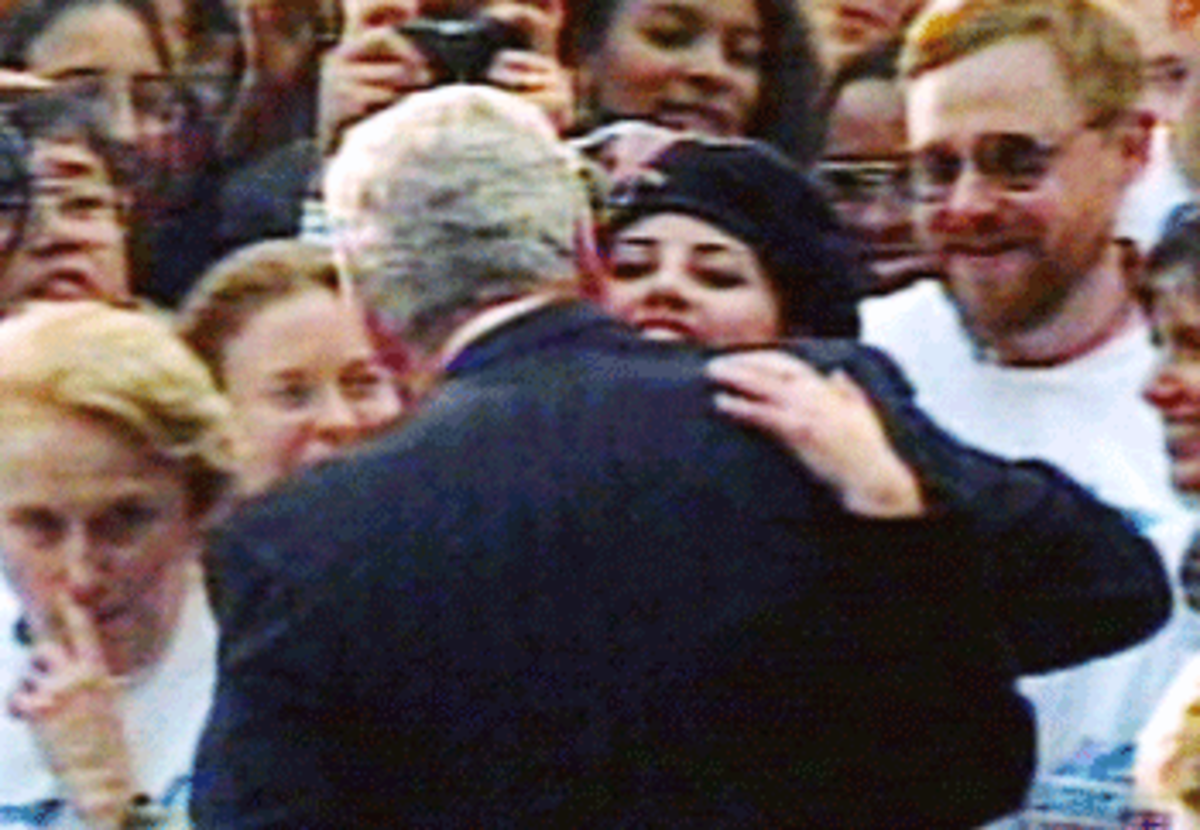
We're now fully into subjects where partisan fevers still run high, so I won't rehash the whole Monica scandal. But I think we can all agree that a term that includes only the second Presidential Impeachment in U.S. history wasn't an unmitigated success.
2004: Bush & Iraq/Economic Meltdown
You remember that one, right?
So, now Barack Obama starts his second term. Excited? Many Republicans believe they already know what will make his term a failure. Massive deficits, 8% unemployment, the pending economic impact of Obamacare, Iran's quest for nuclear power, etc.
Who knows what this term will bring?
Friday, November 5, 2010
True Believers (and other Election Day thoughts)
In 1999 I made my first – and still only – contribution to a political candidate. I gave fifty bucks to John McCain for his first Presidential run.
McCain’s policies were not in sync with mine – very few voters get to vote for a candidate they agree with on everything – but I was truly seduced by McCain’s honesty, the Straight Talk Express and all that. After eight slippery years with the Clintons, I was kind of desperate for a politician who seemed to have genuine beliefs, and was unafraid to express them even if it hurt him politically. Further, his extraordinary personal story* told me that his integrity was hard-earned.
* Five and a half years in a POW camp. Whenever I see that number – five and a half years is 2000 days– I’m struck by how long a period a time that is, and how much daily personal suffering he endured. And I bitch and moan when my internet connection is slow.
Bill Clinton, I decided, believed in only one thing: Bill Clinton. He was a skilled politician and incredibly smart; and policy-wise I was nearly as comfortable with him as I was with McCain (Northeast Republicans are more like Southern Democrats than Southern Republicans). But I had reached the point where I needed a breather from the Clinton’s Eternal Campaign style of politics. The Clintons, I thought, would do or say just about anything for one more vote. I wanted someone who believed in his positions, not just his electability.
Well, this week’s election marks the 10th anniversary of the period of True Believers. However different George W. Bush and Barack Obama may be, these are two Presidents who believe in their mission.
Bush fervently believed in the global threat of Saddam Hussein and the transformative power of democracy and aligned his Presidency behind that belief, even as the country turned against him. Obama fervently believes in the necessity for national healthcare and the efficacy of stimulus spending and aligned the power of his Presidency behind that belief, even as the country turns against him.
(I could take this analogy a little further. Both were so convinced that invading Iraq/passing healthcare legislation was vital to the national interest that neither was above stretching the truth to ensure it happened. The interesting thing was that the supposedly inarticulate divisive Bush was infinitely more successful at persuading his political opponents and the country at large that invading Iraq was a good idea than the supposedly eloquent and post-partisan Obama has been at selling his policies. Many Democrats voted for the Iraq war resolution and large American majorities supported it, while no Republicans supported Obamacare and a majority of Americans opposed it).
The point is, this whole true believer thing isn’t really working out for us. The war in Iraq proved to be more painful and less necessary than promised. The stimulus bill was the government equivalent of throwing a trillion bucks in the fireplace. And national healthcare – we don’t know what it’s going to be exactly, but we’re pretty certain it’s not going to be what the President promised.
The problem with true believers is that they, far more than practical-minded politicians like Bill Clinton, are victims of confirmation bias. To stay with our current President a moment, the American electorate has been telling the Obama Administration for some time - since at least the stunning election of Scott Brown - that they disagree with his policies. But he won’t be persuaded. He persists in believing that we just don’t understand them, that his only failure was explaining the policies well enough to us (which is kind of ironic, given his allegedly great oratorical skills).
Makes me long for the days of cynical politicians who will do anything for a vote. Slick Willie, where are ya?
Concrete Jungle Where Dreams Are Made
We had an interesting Election Day in my home state of New York. Democrats rolled to landslide victories in the 3 big races (Governor and both Senate seats) but Republicans took 5 House seats. Among the defeated House Democrats was John Hall, the guitarist/songwriter for the band Orleans who had two big hits in the 70’s (Dance with Me and Still the One).
For the first time in my life as a voter I left one column blank. I couldn’t vote for either Andrew Cuomo or Carl Paladino for Governor. I’ve disliked Cuomo since he made his name in politics. He’s a self-righteous screeching moralizer – a pre-scandal Spitzer but without Spitzer’s cunning intelligence. And he’s got his Dad Mario’s faux-populism without the eloquence. Paladino was worse, significantly worse, and would have been an embarrassment to the State. I wish I had the presence of mind to write in a vote for Amare Stoudamire or my dog Finnegan, but I just left it blank.
Another interesting note in New York: Harry Reid’s come-from-behind victory in Nevada was good for the Democrats but bad for New York Democrat Chuck Schumer. Schumer would’ve been Senate Majority Leader had Reid gone down in flames. If that had happened, Schumer would be omnipresent in American politics – it’s said the most dangerous place in Washington is between Chuck Schumer and a camera. Chuckie is such a publicity-hound that he held a press conference a few months ago calling on Apple Computer to fix the antennae problem in the iPhone. Thank heaven for small mercies.
That’s No Salamander
Everybody knows the numbers 6 and 60 – the GOP took six Senate seats and sixty House seats. Less known is the number 680. That is the stunning number of State legislature seats the Republicans won, taking over 18 state legislatures. Close readers of FreeTime, and there are at least 3 of you, know my obsession with gerrymandering. Well, state legislatures control the re-drawing of districts, and according to the Washington Post, “When the next round of redistricting -- the decennial re-drawing of all 435 House districts -- occurs next year, Republicans will have complete control over the process in four times as many House districts as Democrats do, districts that comprise nearly half of the entire House.”
That may be the worst news of the day for Democrats.
Occasionally Right
Mind if I point out a few instances in which I was right?
After Obama's election - when many pundits were proclaiming this was the beginning of an enduring alignment in American politics - I wrote a not-so-fast piece entitled A Sea Change Election. Very few American elections are truly transformative - by my count only three in American history - and it is usually a mistake to overread the results of a single election.
Republicans would do well to remember that now.
I also wrote a couple of pieces (see here and here) arguing that the passionate faith of Obama's followers put unreasonable expectations on him, ones that would be difficult to meet. I think that proved true.
I may have been wrong about a couple things, but you'll have to find those yourself...
Jekyll & Hyde
I’m trying to imagine what the city of San Francisco was like on Tuesday. I’ve spent a lot of time in Frisco* through the years, and it is a freakishly liberal place (I say that with affection for my liberal San Francisco friends, some of whom will read this). It was a sad day for liberals, and SF’s own Nancy Pelosi lost her gavel, of course. But (speaking of freaks) Tim Lincecum and the San Francisco Giants won the World Series! That must have been a seriously bi-polar city this week.
* San Franciscans hate the nickname Frisco, and if you use it you are disdained as an outsider who doesn’t know the city’s ways. But why? It’s a cool nickname – much better than San Fran or SF, and shorter than the full San Francisco. Come on, Friscans, embrace the Frisco!
Friday, October 9, 2009
The Stolting Five
Thorbjørn Jagland. Kaci Kullmann Five. Sissel Marie Rønbeck. Inger-Marie Ytterhorn. Ågot Valle.
Do you know who these people are? All of them are Norwegian politicians. All of them at one time or another was a member of Norway’s Parliament, the Stolting. Jagland was even Prime Minister of Norway for a couple years in the mid-90’s.
Oh, and they are also the folks responsible for selecting the winner of the Nobel Peace Prize. (The other Nobel Prizes are selected by various committees in Sweden, but the Peace Prize is selected by a committee appointed by Norwegian Parliament.)
There is going to be a lot of debate about whether or not President Barack Obama should have received the Nobel Peace Prize. Two things that may get lost in the debate, but that I think of central importance, are:
* A prize that is decided by less than half a dozen Norway legislators should not get everyone so excited. Norway has roughly the population of Alabama, and its legislators aren’t exactly major players in world affairs. We shouldn’t care who wins, or who gets passed over, or what it all means. It doesn’t - well, it shouldn’t – mean anything.
* Jagland and his posse aren’t doing Obama any favors. As I’ve written before (see here and here), Barack Obama labors under oppressive expectations and this prize – which is based entirely on expectations and not at all on accomplishment – just adds to those expectations. It shouldn’t (see above), but it does.
Update (10/15): The Norwegian tabloid Verdens Gang reported today that 3 of three of the five members of the Norwegian Nobel Committee had objections to the Nobel Peace Prize being awarded to US President Barack Obama. "VG has spoken to a number of sources who confirmed the impression that a majority of the Nobel committee, at first, had not decided to give the peace prize to Barack Obama." VG said that Inger-Marie Ytterhorn, Kaci Kullmann Five, and Aagot Valle all had objections. Perhaps I should re-name this post "The Stolting Two."
The Nobel Peace Prize is only one of the Nobel prizes under fire. As I wrote back in December, the Nobel Prize for Literature becomes more ridiculous each year (add Herta Muller to a list that doesn’t include Nabokov, Joyce, or Updike). And the brilliant essayist Nassim Taleb is personally (if somewhat quixotically) lobbying the King of Sweden to cancel the Sveriges Riksbank Prize in Economic Sciences in Memory of Alfred Nobel, or as its usually mislabeled, the Nobel Prize in Economics.
So as you contemplate President Obama’s selection, you shouldn’t be angry or elated (depending on your worldview). Apathy is the appropriate response.
Update (10/13): Via Taranto (who also compared Norway's population to Alabama's), a blog post from George Friedman of Stratfor, who goes into greater detail about the Stolting Five, and what Obama's selection means about European politics. First, he says:
"Two things must be remembered about the Nobel Peace Prize. The first is that [Alfred] Nobel was never clear about his intentions for it. The second is his decision to have it awarded by politicians from — and we hope the Norwegians will accept our advance apologies — a marginal country relative to the international system. This is not meant as a criticism of Norway, a country we have enjoyed in the past, but the Norwegians sometimes have an idiosyncratic way of viewing the world."
He argues persuasively that Barack Obama may not end up becoming the President that Europe so fervently hopes for:
"The Norwegians awarded the Nobel Peace Prize to the president of their dreams, not the president who is dealing with Iran and Afghanistan. Obama is not a free actor. He is trapped by the reality he has found himself in, and that reality will push him far away from the Norwegian fantasy. In the end, the United States is the United States — and that is Europe’s nightmare, because the United States is not obsessed with maintaining Europe’s comfortable prosperity. The United States cannot afford to be, and in the end, neither can President Obama, Nobel Peace Prize or not"
Saturday, September 26, 2009
Saving the World
Iran's Nuclear Plant is Obama's First Great Test
When John F. Kennedy was running for President – and in his Senate career before that – he was primarily interested in foreign policy, and generally indifferent towards domestic policy.
There were several reasons for this. It was partly, most biographers believe, to distinguish himself from his powerful father, who had a nearly infallible hand in domestic politics, but blundered spectacularly on the world stage, prepared to surrender Europe to Hitler and Stalin. It was partly, perhaps, because he desired greatness, and Presidents don’t get monuments on the Mall for the passage of domestic legislation. And it was partly because the subject of foreign policy intellectually engaged him in a way that, say, the economy did not.
But it was also because, as he himself put it to a reporter five days after his election, ”because the issue of war and peace is involved, and the survival of perhaps the planet, possibly our system."
Kennedy’s political career spanned the tensest moments of the Cold War, so I believe he was right to think that the most important job of the American President in that time was to avoid nuclear war.
We are now nine months into the Obama Administration, and it’s been a shaky nine months on the world stage. From the serious (last week’s surrender to Russia on the European missile defense) to the symbolic (Scotland’s release of the Lockerbie bomber) to the silly (his gift to Prime Minister Gordon Brown of a box set of American movies that are incompatible with British DVD players), we’ve learned that the world’s problems didn’t go away just because Dubya moved back to Midland.
But it is Iran that is proving to be Obama’s true testing ground. I believe that he has blown every single move so far – but that it is still within his power to make his mark as a statesman.
His first blown move was the announcement, as a candidate, that he would meet with the leaders of Iran, Syria, Venezuela, Cuba and Korea in his first year as President, without preconditions. His rival for the nomination, who is now our Secretary of State, called this announcement "irresponsible and naïve”. Most would agree.
His next blunder was in the aftermath of the June 12 Iranian election. Thousands of Iranians took to the streets to protest the clerical tyranny of Tehran, and hoped for some rhetorical support from the American President. They got very little, very late.
Now comes news that Iran is building a secret underground plant to manufacture nuclear fuel. Since Iran has 300 years reserves of oil, as well as a crumbling economy, we can safely ignore Tehran's claims that the plant is for energy purposes. Iran is obviously making a significant investment in the development of nuclear weapons.
Obama is determined to be the anti-Bush. Bush went to war in Iraq over the belief that Iraq had WMDs - a belief shared by the intelligence services of France, England, and Germany, most of the former Senators in the Obama Administration, and the eponymous members of the Clinton/Gore Administration.
Obama seems determined to act in completely the opposite way with Iran - to, as he put it in his inaugural speech, "extend a hand if you are willing to unclench your fist."
It should be obvious that Iran is unwilling to unclench its fist, and that Obama risks looking like those fools on the rooftop in the movie Independence Day, joyfully welcoming the alien ships to Los Angeles, right up the moment they got vaporized.
But I believe Obama is smart and flexible, and realizes it is now time to be tough - while still maintaining his commitment to diplomacy. The key here is Russia and China, both of whom have been unwilling to look the other way as rogue nations like Iran do what they like, as long as they keep the oil pumping.
If President Obama can somehow unite international opposition to Iran, and back that opposition with meaningful sanctions and the isolation of Iran, he can redeem his current feckless approach. And if he recognizes that his true job is nothing short of saving the world, rather than saving General Motors, he will earn the respect of the world.
Monday, June 1, 2009
The Coffee Klatsch
Way back in, oh, 1993 or so, my company, a San Francisco based magazine publisher, installed an email system. This brought a wonderful improvement to workplace communication – and a new way to gossip and b.s. with co-workers. It was the first truly valuable cyberslacking tool.
Soon, I and three other guys – Cormie, JShin & Stod - began an email conversation, one that that has continued to this day. Early on, we gave ourselves the not-particularly original name of The Coffee Klatsch, and it stuck. By the end of our collective time at this company, we were geographically scattered – to New York, Western Massachussets, San Francisco, and San Mateo, CA. Today, none of us work there. But the email conversation goes on.
(Like the Beatles, we had a fifth member in the early days – two of them, in fact. Snowman was the first, JPoth the second. A few guest players – Billy Prestons, if you will – joined in the occasional thread, but it was mostly the four of us.)
What did we talk about? Well, let’s see…
Baseball – Mets, Giants, and Red Sox; the usage and value of statistics; pre-season predictions; the morality of some kinds of cheating (steroids) vs. others (spitballs); and more
Football – Giants and 49ers mostly, with a bit of Raider love
Women – our co-workers, and in one memorable moment, Jennifer Aniston
Music – all over the board, from Townes Van Zandt to Steely Dan to Billy Joel to the San Jose Symphony
Fiction – a heavy emphasis on Cormac McCarthy, but with many many other authors from Thomas Pynchon to JK Rowling
History – a lot of Lincoln, a strong dose of John Adams, a dash of the Federal Road, and much more
Kids – we have 9 between us
Politics -
Ah, politics. The damn thing nearly cracked up over politics. Politics was always a core issue in the conversation, with our worldviews ranging from Far Left to Center Right. In the 90's, when the country's primary political argument was about the biological nature of that damned stain, we had a lot of fun with political conversation. But the Bush years brought a level of passion and acrimony to politics that hadn’t been seen in this country since the Vietnam War. And as our disagreements heightened over the overall Bush response to terrorism, well, things got tense, and we retreated to the sanctuary of sports and music.
But now it is the dawning of the Age of Obama, the man who promised us a post-partisan world. And I wondered if, perhaps, we could start talking politics again. So we started an email conversation that I thought I’d share with you.
But first, here are the four contributors (I wrote Stod's and my bio; JShin and Cormie wrote their own):
Keatang : Well, this is my blog, so maybe you know me already. Click here for a link to a post that I wrote on the anniversary of FreeTime which gives you an idea of who I am and what I write.
JShin: Cathy to Cormie's Patty, if you go back far enough to remember the Patty Duke Show, i.e., "one pair of matching bookends, different as night and day," ideologically fairly closely planted on the spectrum, but stylistically large lakes -- if not oceans -- apart. Good cop to Stod's crazy cop. I love these guys, but I also love to hate 'em, which I guess makes us good blog fodder.
Cormie: Born comfortable on the left coast, Cormie got angry in the mid 80s and never quite recovered. He left a middle middle finger dangling from a tree on the bank of the Yaquina river in the hopes that George W. Bush would someday take up rafting
Stod: Stod is a writer/editor with one foot firmly planted in the future (he writes about advanced technology from Silicon Valley) and one in the past (he does so in an office piled high with old newspapers). He believes Glenallen Hill is the most underrated outfielder of the 1990’s, and still blames Robbie Robertson for the breakup of The Band.
So anyway, in the next couple of day or so I’ll post the first Klatsch Convo on the exciting topic of: The Federal Deficit! Betcha can’t wait…
Sunday, January 25, 2009
Greater Expectations
[This is a sort-of follow up to a piece I wrote last April called Great Expectations. I started it right after the inauguration but then got distracted by important stuff like Skynyrd pianists and the Super Bowl. I think it's still relevant, though not as relevant as it might have been Inauguration Week. ]
When Barack Obama took the oath of office he did so with the highest incoming approval ratings of any President, at 72%. In a distant second place, at 58%, was Dwight D. Eisenhower.
This is a remarkable thing. Eisenhower possessed, to put it mildly, a stronger resume. He had, you know, led the armies that defeated the greatest evil in the history of mankind (that's a defensible statement, ain't it?). Obama's greatest accomplishment, on the other hand, was the winning of a U.S. Presidential election. Which can't be that hard; after all, George W. Bush did it twice.
The psychology behind this is fascinating but not the subject of this post. I'm more interested in what he does with it. After all, the confidence the American people have placed in President Obama is both a blessing and a curse.
It's a blessing because it gives him enormous political capital, and plenty of room to make mistakes.
The media are so enthralled with him, he could personally chop the fingers off a suspected Al Qaeda operative in the Oval Office on live television, and the New York Times would merely express "slight misgivings". Hollywood is so star-struck he could direct a remake of Howard the Duck with Paris Hilton and Jean Claude Van Damme and he'd be applauded for his artistic integrity. Europe is so smitten he could - hmmm, what would be a terrible thing to a European? Europe is so smitten he could threaten to protect them from Russia with American missiles and they'd actually thank him for it.
But it's not just Hollywood, the media, and Europe. Those high approval ratings show that so much of the country is looking to President Obama to be our next Lincoln, our next FDR. The halo that would have been over Obama's head in normal circumstances has been amplified by the economic collapse. Americans believe we are in one of the great crises in our history and need a Great Man to see us through.
But these expectations are also a curse. As I wrote back in the earlier Great Expectations piece, supporters of Hillary Clinton and John McCain had fairly reasonable expectations for their candidates. But supporters of Barack Obama have wildly unreasonable expectations for their President.
I won't go into all the major problems we're all hoping he can solve - we've been down that road a lot. I'm just very interested to see how he uses these expectations as a political tool to accomplish his goals, while simultaneously trying to avoid the pitfalls of adulation.
It's my read on Obama that he is far more practical and pragmatic than his most idealistic followers. And it's also my read that a lot of Americans are going to cut him a lot of slack.
Policy issues aside, it'll be fascinating to watch him manage these expectations.
Wednesday, January 21, 2009
Inaugural Thoughts for Republicans
Back on Election Day I promised to write a piece called "10 (or so) Reasons that Conservatives Should Lie Back and Enjoy the Age of Obama - or at Least not Move to Australia." Well, it’s Inauguration Day, so it’s time to start this piece…
Why Australia? Well, obviously a conservative isn’t going to move to France, that promised land of Streisands and Baldwins, who are forever promising to leave America in the wake of a Republican victory. But Australia? They speak English, have excellent beer, raised the man who gave us Braveheart and Lethal Weapon, and supported the war in Iraq. It’s the anti-France!
But as wonderful as Australia may be, it's awfully far, and the whole winter in July/summer in December thing would be a big adjustment for us Americans. So I suggest Republicans stay here in America. And I'd like to offer, free of charge, some reasons why distressed Republicans should feel okay about the 2008 election.
1. The Republican Party needed a kick in the teeth. The control of the House, the Senate, and the White House led party leaders to a level of hubris and arrogance that was unacceptable. If, for example, Bush and Company had worked with Democrats on issues that even now Obama supports (like wiretapping), they would have had a far easier time of things. But they had come to believe they could do what they wanted when they wanted how they wanted. This election – not just the Presidential election but the overall ass-kicking the GOP received all over the country – was necessary for the long-term health of the party.
2. More than ever before – wait, that’s not true – more than in recent history, we need the support of our allies. For various reasons, Barack Obama is beloved in much of the world, and this is potentially good for the future success of American diplomacy. The popularity of Obama will provide cover to world leaders, particularly in Europe, who already want to provide more overt aid to America in the fight against radical Islam.
3. Barack Obama does not seem to suffer from the taint of ideology. Many Republicans feared during the election season that he was a radical in moderate’s clothing. And to be sure, his associations with the Reverend Wright and Bill Ayers suggested this was possible. But everything he’s done since his election suggests he’s the person that readers of Dreams of My Father thought he was – an extremely pragmatic man who is supremely capable of thinking objectively and with logic and reason about any individual subject.
4. The only people who seem genuinely unhappy with Obama’s appointments are the far left. This is an encouraging sign.
5. All economies – but the American economy in particular – run on confidence. I’m not quite sure why so many Americans have invested so much confidence in an unproven leader, but we have. That confidence is not enough – by a long shot – for an economic recovery. But it is a prerequisite for it.
6. I have always believed that any responsible person who receives daily intelligence briefings (and thus, knows how dangerous the world is) and is responsible for the safety of the American people, would recognize that there is some gray area between civil liberties and safety. There is not, as he stated in his inaugural address yesterday, "a false choice between our ideals and our safety". Rhetoric aside, Obama has proven me correct. His support of wiretapping, his flexibility on Iraq timetables, and his almost leisurely pace on the “closing” of Guantanamo Bay, suggests that the apocalyptic rants of people like Frank Rich are fine for the New York Times but is not a luxury the occupant of the Oval Office can afford.
7. A while back, Peggy Noonan wrote a column for the Wall Street Journal arguing that Hillary Clinton’s candidacy could be derailed by the quality of her voice. That sounds like a superficial argument, but it is not. Americans live with our President, and it’s important that we like them. Barack Obama, with his transcendent speaking voice and his preternatural calm, is an extraordinarily soothing and likable presence. It’ll be nice to have him around for four years or so.
8. While I'm nervous that most of the governing and banking classes suddenly think state control of business is a swell idea, Obama's economic appointments have definitely leaned more towards the free market thinking of Clintonism than the quasi-socialist claptrap of John Edwards and the editors of The Nation. So my guard is still up on his economic team, but I'm happy so far.
What's that, 8 reasons? That's good enough.
Sure, there’s plenty of reason to be skeptical (click here for 7 in particular). Especially with Reid and Pelosi riding in positions of power. Think about those two long enough and any confidence that Obama inspires ebbs away faster than your 401k.
But this is a week for hope. God knows we need it.
Tuesday, December 23, 2008
Men Without Hats
 Foul ball!
On January 20, 1961, John F. Kennedy was sworn in as the youngest elected President in United States history. As he went through the carefully orchestrated ceremony of the day, he did so hatless. Kennedy believed hats made him look old so he refused to be photographed in one. Considered the most glamorous and sophisticated man in the world, JFK’s bare head was a dagger to the hat industry, whose sales dropped precipitously and never recovered.
That’s how the story has always been told anyway. An entire book was even written about it (Hatless Jack: The Presidency, The Fedora, and the History of American Style). It turns out to be a myth, though, effectively skewered by Snopes.
Still, something happened. Men used to wear hats. Picture large crowds at, say, a baseball game from the first half of the 20th century and every guy’s got a fedora, a bowler, a derby – some kind of stylish headgear. The ubiquity of hats was perfectly captured in a scene from The Big Chill. William Hurt is watching an old black & white movie on TV when Jeff Goldblum asks what’s happening in the scene.
“I think the guy in the hat did something,” drawls a stoned Hurt.
Cut to the TV, showing dozens of 1930’s era guys wearing hats.
Then there was this exchange from Seinfeld*:
Elaine: You should have lived in the 20's and 30's. You know men wore hats all the time then.
George: What a bald paradise that must have been! Nobody knew!
* Seinfeld is to 21st century Americans what the Bible was to most of Western Civilization for thousands of years – the text that provides wise and relevant quotes on nearly every subject.
Government Bailout for Hat Industry?
I bring all this up because we’ve had some nasty weather in New York lately. Snow, sleet, howling wind, freezing rain. And as I walk the city streets I see men in suits coping with the weather in one of four ways:
- Baseball hat
- Wool cap
- Umbrella*
- Bare head
The first two look ridiculous with a suit. The third is overkill. And the fourth is too stupid to merit comment.
* There are, of course, two types of umbrellas. The tiny ones, which aren't much bigger than a hat. And the huge golf umbrellas. I have a message to those guys with the huge ones, the ones that are designed to cover Tiger Woods, his caddy, his golf bag, and the entire 14th green: Everybody hates you.
A handful of us, me included, were wearing wide-brimmed hats. Mine is a brown Indiana Jones-type thing. I get a lot of abuse for this hat, best summed up by my son as I returned from work one evening.
“You wear that in public?” he asked.
But it’s a wonderful thing. It keeps my head warm. The wide brim collects flakes and repels light rain. And in my opinion, it’s rather stylish. All I need now is for hats to come back in style so I can wear it with slightly less embarrassment than I do today.
And there is one man who has the power to bring it back. On January 20, 2009, the glamorous and sophisticated Barack Obama will take office. Will he go bareheaded, a la the mythical Jack Kennedy? Or will he don a snap-brim fedora, tilted at a rakish angle. If he does the latter, look for the comeback of the hat industry.
Now that’s change I can believe in.
Sunday, November 23, 2008
A Sea Change Election?
Probably not
[I know. The day after the election I said I’d write a post titled “10 (or so) Reasons Conservatives Shouldn’t Move to Australia”. But as Luther said to the parking garage attendant in 48 Hours, “I Been Busy!” In the meantime, I’ll write this, yet another post demonstrating how people say all kinds of stupid things when they are unfamiliar with history…]
There has been much commentary these past few weeks about how the 2008 election may represent a political realignment – meaning, the Democrats have assembled a coalition of voters that could make for a sustainable majority. Among Democrats there is hopeful rejoicing while Republicans gnash their teeth and rent their garments*.
* to whom? Libertarians?
But we’ve been here before, haven’t we? In 2004, Bush won a relatively comfortable victory (at least compared to 2000) and a library’s worth of articles poured praise on Karl Rove, who had seemingly discovered the key to lasting Republican dominance: a passionate organized base. But only four years later, the Republicans are in disarray. So much for lasting Republican dominance.
In 1992 Bill Clinton supposedly changed the game. A sax-playing Southern baby boomer who could name all four Beatles beat an old Washington hand who’d fought in WWII, ending 12 straight years of Republicans in the White House. A new era had begun! But by the time a quite tainted but still-popular Clinton left office, the Republicans had taken the House, the Senate, the White House, and the majority of governorships. So much for new eras.
Even the Reagan Revolution wasn’t quite as revolutionary as it’s made to seem. Yes, he won a 49 state landslide in 1984. But remember, Nixon won by similar margins in 1972, and Reagan’s own Veep couldn’t win reelection 4 years after the Gipper left office. So much for revolutions.
True Game-Changers
Only 3 elections in American history have been truly game changing, in the sense that the victory represented a political realignment that was sustained for decades after. Two of them, Lincoln in 1860 and FDR in 1932, I talked about here.
The other – the first, in fact, was Thomas Jefferson in 1800.
Now that was a messy election. First of all, as brilliant as the Founders were, they hadn’t quite figured out all this electoral college stuff yet, so when Jefferson’s running mate Aaron Burr technically had as many electoral college votes as Jefferson, he made a play for the White House. It took a while to sort out, but Jefferson eventually took the oath and went on to create a sustainable majority that lasted for decades.
(VP Burr went on to shoot the former Treasury Secretary, attempt to crown himself emperor of Mexico, and get arrested for treason, all while in office. And people think Cheney is a pushy bastard.)
Jefferson’s Republicans (not the same as today’s) had so thoroughly destroyed its political competition, the Federalists, that his hand-picked successors (Madison and Monroe) took the White House for 16 more years, and by the time John Quincy Adams, the son of the last Federalist President, took office, even he was a Republican. The Federalist Party was dead.
That was a sea change election.
Is Obama’s Win Sustainable?
Have the Democrats won that kind of election? I don’t think so, and here’s why.
When analyzing whether an election has created genuine political realignment, you need to see if the conditions are easy to duplicate. It’s fair to say, I think, that two conditions existed in 2008 that will be nearly impossible to duplicate in future elections.
The first is Obama’s charismatic hold on the electorate. People went absolutely wild for this guy. Not for his ideas, not because of his experience – but something about him personally moved a big part of the electorate.
Can Joe Biden duplicate that in 2016? Hillary Clinton? If you’re thinking Al Gore, remember that while he may be the world’s most improbable movie star and the winner of the increasingly ridiculous Nobel Peace Prize, he’s already failed in the role of filling the shoes of a charismatic predecessor.
That kind of star power comes along very rarely. Reagan had it. Kennedy had it. Its a wonderful thing for a particular candidate to possess, but it is not a quality to build a sustainable majority on.
The second thing the Dems can’t duplicate is the stunning unpopularity of George W. Bush. John McCain may have been the Republican nominee for President, but Barack Obama made it very clear that he was running against some guy named Bush Cheney. Bush Cheney is not running again, together or alone, so that dog can’t hunt again.
So, what will it take for Barack Obama’s election to be the beginning of a great electoral run? Well, success. Obama’s campaign was built on personality and opposition, but it will have to govern with ideas and performance.
And all but the most partisan Republicans hope he succeeds.
Monday, November 3, 2008
Obama Magnus?
What Qualities do Great Presidents Share?
It's finally over. The end of what some have called the longest (certainly), most entertaining (arguably), and most historic (unlikely) Presidential campaign ever.
We’ve spent some of this campaign talking about policy. In fact, those who say that campaigns are all style and no substance these days should relax. We ask our candidates to spell out their policy plans in excruciating detail and they mostly comply. The only thing George Washington and his immediate successors gave the electorate was a grudging admission that they were, indeed, running.
But we spend more time talking about the leadership qualities and past experiences of the candidates, wondering and debating whether each has the necessary qualities to be what our age yearns for – a great leader.
It’s an interesting conversation. But very often we are mistaken about the qualities that are - and aren’t - reliable predictors of greatness.
Common Traits of Great Leaders
It’s not experience. As I wrote a while back, we’ve had great Presidents who lacked experience and weak Presidents who had piles of it.
It’s not the power to unify. The list of our most divisive Presidents is pretty much the same as the list of our greatest Presidents. In fact, with the exception of Washington every great and near-great President has seriously pissed off huge chunks of the electorate. (See here for detail.)
It’s not IQ. George Washington certainly wasn’t dumb, but among the six men usually accorded Founder status (Washington, Adams, Jefferson, Madison, Hamilton, Franklin), GW probably ranked last in intellectual firepower. FDR was famously said to have a first-rate temperament and a second-rate intellect. Lincoln, the 3rd member of the Trinity of Great Presidents, is widely regarded as a genius today – but few people in the 1860’s considered this roughly-educated frontier lawyer to be exceptionally or even marginally smart.
Of our great and near-great Presidents*, only Thomas Jefferson might legitimately be called an intellectual. So while we’d prefer to not have a dunce in the White House, the ability to read and understand Aristotle’s Politics in the original Greek – or even in translated English - is an unreliable predictor of greatness.
It’s not military prowess. Washington won a war and showed courage under fire and was a great President. Grant won a war and showed courage under fire and was a terrible President. Eisenhower won a war and showed courage under fire and was neither great nor terrible.
What about the power to communicate? Ah, now we’re getting somewhere…
Words, words, words…
Winston Churchill was arguably the greatest leader of the 20th century. I’m an admirer of Churchill but read a biography and you’ll be struck by how often he was awesomely, colossally wrong. The debacle of the Dardanelles was Churchill’s gift to the First World War (if you don’t know what I’m talking about rent Gallipoli. Or ask an Australian. Or click here.). During the Second World War, Churchill infuriated American war planners with his insistence on a peripheral strategy, resulting in the quagmire of Italy.
So what made him a great leader? Words. He was right about one big thing – the scale of the Nazi threat and the necessity of destroying it – and he used words to persuade the British people they must, and more importantly could, defeat Germany. This was not obvious to anyone in May 1940, after the fall of France and the escape from Dunkirk of the British Expeditionary Force. The eloquence and force of his oratory is what gave England the courage to stand alone in 1940 and 41, until Japan invited America to the war.
Abraham Lincoln was arguably the greatest leader of the 19th century. I yield to no one in my admiration of Lincoln, but as Commander-in-Chief he got off to a very rough start. He changed generals after every battle and oversaw a war machine that was often corrupt (his first War Secretary resigned in disgrace). He had little to no control over George McClellan, his senior general in the early years of the war. So what’s so great about Lincoln?
Again, words. In the Gettysburg Address, Lincoln articulated for the nation the reason for war, indeed the reason for the existence of the United States. In his Second Inaugural, he spoke with great poetry about the reasons for the horrors of the previous 4 years. And in countless letters and speeches and meetings in between he used words to persuade the North that this cause was worth fighting for.
Words matter.
Obama’s Words
I bring all this up because Barack Obama's meteoric rise from state Senator to the White House was driven mostly by his oratory. Great oratory has several factors. The words themselves, of course, and for modern politicians those words are mostly written by others. But also the grace and power of the delivery.
Obama is at times a great orator, particularly when compared with the the shrill-voiced Hillary Clinton and the stilted speaking of John McCain. He certainly was last night. Further, it is clear that millions of Americans responded with fervor to his message.
This ability to connect with voters, to get the kind of fervent response we saw in this election, shows he may have the raw abilities to be a great leader.
Ah, but what if, unlike Lincoln and Churchill, he's wrong about the great issues of his day? What if his intellect and eloquence are harnessed to failed policies? If you're a fiscal conservative, you can't feel good about Obama's mission to raise corporate taxes and strengthen unions. If you're a national security conservative, you may feel queasy about Obama's plans to close Gitmo, leave Iraq, and chat up Ahmadinejad. If you're a cultural conservative, that crack about bitter Pennsylvanians clinging to guns and religion still sticks in your craw.
But relax. In a few days I'll publish my piece titled "10 (or so) Reasons that Conservatives Should Lie Back and Enjoy the Age of Obama - or at Least not Move to Australia."
* When I use the terms great and near-great, I’m not basing this on personal opinion. Numerous polls of historians have been done in recent years. For an overview of these polls, click here.
Monday, October 27, 2008
That's Not Funny
Quick question: can Jon Stewart survive an Obama Presidency? Indeed, is political humor in general in peril?
For whatever reason, comedians have barely laid a glove on Barack Obama during this eternal campaign.
It’s tempting to blame it all on liberal bias – except that the Clinton Era was a bountiful feast for political humorists. It’s not race – Jesse Jackson, Al Sharpton, and Marion Barry have all been ripe targets for political satirists. It’s not newness – the evisceration of Sarah Palin is proof you don’t have to be around long to be ridiculed. And it’s not lack of material – the audacity to run for President moments after taking the Senate oath combined with the swooning adulation of his fans suggest there is comic gold in Obama’s messianic stature.
[Obama himself has mined the comic possibilities here. In his Al Smith Dinner speech, he said, "Americans have a big choice to make, and if anybody feels like they don't know me by now, let me try to give you some answers. Who is Barack Obama? Contrary to the rumors you have heard, I was not born in a manger. I was actually born on Krypton and sent here by my father Jorel to save the Planet Earth...If I had to name my greatest strength, I guess it would be my humility...Greatest weakness, it's possible that I'm a little too awesome."]
But something – perhaps a little bit each of the above factors – has left the person of Barack Obama a humor-free zone. This is no big deal for the Lenos and Lettermen of the world – they’ll always have Paris (and Brangelina and Britney and so on). But Jon Stewart, Steven Colbert, Keith Olbermann – their entire shows are built on the perceived follies of the Republican Party. When the Democrats run everything, what will these guys do? Supreme Court humor? Harry Reid material? Sarkozy schtick?
Sure, you can always count on some random Congressperson doing something he shouldn't do with someone he shouldn't know in some place he shouldn't be. But not every day. The Bush and Clinton Administrations have provided 16 years of consistent comic fodder - they were the gifts that kept giving.
I should point out that I’ve been wrong about Stewart before. I thought his show was in trouble when longtime producer Ben Karlin left, especially since he had lost so many of his best correspondents (Steve Carell, Steven Colbert, Rob Corddry, Ed Helms). But the show still delivers.
Besides, a few hours after Obama is sworn in*, the first Presidential hopefuls will arrive in Iowa and New Hampshire and the cycle will begin all over again…
* Yes, I’m aware he hasn’t actually won yet. But the premise of the piece is built on that assumption, so go with it…
Tuesday, September 23, 2008
The GOP's Run
The Spanish philosopher and poet George Santayana famously said, “Those who cannot remember history are condemned to repeat it.” I would add that those who cannot remember history are condemned to be baffled by current events.
Take the Presidential election. There is a lot of hand-wringing among Democrats these days. They are mystified – utterly mystified – that the Republican candidate for President is even remotely competitive in this race, despite the widespread belief that the Bush Presidency has been disastrous. They are like Jets fans who can’t understand why, even after Tom Brady got hurt and the Patriots went with some near-sighted high school kid at quarterback, they still lost. (I could probably push this metaphor with a Favre/Obama comparison, but I don’t want to lose my international readers…)
When asked to explain why this race remains competitive, most Democrats have theories that range from the inherent racism of America to the treachery of Republican party operatives. I don’t quite buy into either of these theories but that is a subject for another day.
I will, however, explain why the Obama coronation has been delayed.
If you’re a regular reader of FreeTime, you've guessed my theory will be historical and statistical in nature. It’s really quite simple: in Presidential politics, the United States is Republican.
I was born in 1966, and there have been 10 Presidential elections in my lifetime. The Republican party has dominated those elections, even more than people realize. Here are the stats:
+ Republicans are 7-3.
+ Two of the Republican victories were huge landslides – Nixon in ‘72 and Reagan in ‘84.
+ Two others were near landslides – Reagan in ‘80 and Bush 41 in ’88. In each of these elections the Republican candidate received more than 400 electoral college votes.
+ Democrats, meanwhile, are 3-7.
+ None of those wins were landslides, or near-landslides. The most electoral votes won by a Democrat in my lifetime is 379 (Clinton ’96).
+ In two of those wins – the Clinton elections – the Democrat failed to win 50% of the vote. In fact, if Ross Perot doesn’t win 18% of the vote in ’92, George H.W. Bush likely wins reelection.
+ And in only one of those wins – Jimmy Carter in 1976 – did a Democrat win 50% of the vote. In 1975 Republican Richard Nixon resigned in disgrace, a catastrophe for the Republican party. Still, Democrat Jimmy Carter only barely managed to eke out 50.1% of the vote and a 297-240 electoral college vote.
To sum up: Republicans win every Presidential election, sometimes by wide margins, unless some fluke event (Perot, Watergate) tips it to the Democrats.
The Lesson of ‘32
Of course, things change. From 1860, when Lincoln became the first Republican President until 1932, when FDR took office, the White House was nearly the sole property of the Republican party. During that 72 year period, Grover Cleveland was the only Democrat who won a head to head election against a Republican*. 72 years! That's as long as John McCain has been alive!
How did this extraordinary electoral run end? Calamity struck Wall Street, Democrats took the White House, and held it for 7 of the next 9 elections.
Hmmm...what was it that Santayana guy said?
* A little detail here...Lincoln, a Republican, chose Andrew Johnson, a Border State War Democrat, as his VP in 1864, to prepare for the healing with the South. Upon Lincoln's assassination, Johnson became President. In 1912, Theodore Roosevelt ran a 3rd party campaign against his former VP, William Taft, which lifted Democrat Woodrow Wilson to the White House. Wilson won reelection in 1916. Republicans won the other 12 elections. All of which makes Grover Cleveland's accomplishment one of the great electoral victories in American history.
Update (9/25): I've gotten a few emails about the 2000 election, in which Al Gore out-polled George Bush in the popular vote. The score was 50,999,897 (48.4%) to 50,445,002 (48.4%), but Bush won the electoral vote.
But here's the thing about 2000. Putting aside the Florida debacle and the Supreme Court, the election was essentially a tie. But it shouldn't have been. The Democrats had an outgoing popular President. The country was at peace and seemingly prosperous. The Democratic nominee had an impressive record of public service from the military to the Senate, and was unencumbered by his predecessor's scandal; in fact, he was arguably the most effective Veep in history. The Republican nominee was the formerly ne'er-do-well son of a former President who had only recently entered public office.
The Dems should have won easily, as easily as Reagan's Veep won in '88. Instead, they lost on a questionable call in the bottom of the 16th inning.
Thursday, September 4, 2008
She Shoots...She Scores!!
Back during the 2004 convention season I thought Republicans had one huge overlooked advantage over Democrats: celebrities.
No, not Hollywood celebrities. That peculiar crowd will always provide their dubious support for Democrats. I’m talking about political celebrities. And in 2004, the biggest political celebrities in America were Arnold Schwarzenegger and Rudolph Giuliani, both of whom were principal speakers at the GOP convention in New York.
The Democrats didn’t have that kind of star power. There were the Clintons, of course, but they’d been around a while and Democrats were concerned Bill’s rock-star status diminished their candidate. And there was a little-known freshman Senator from Illinois who made a splash with a stirring speech. But they simply couldn’t match the firepower of Rudy, Ah-nuld, and a still-popular President.
The Republicans got a 5% bounce from their convention, the Democrats a “negative bounce” of 2%, and Bush was reelected.
This year has been different. Every ounce of glamour, celebrity power, media fawning, and rock star status has been tied to the candidacy of that little-known Senator, now the world-famous Barack Obama. Until last night. Last night, a star was born.
Sarah Palin gave a speech that rivals some of the great convention speeches of my lifetime, such as Mario Cuomo in 1984 and Barack Obama in 2004.
Rhetorically, it was nothing special. On a printed page, it wouldn’t stand up against the best speeches of Obama, Clinton or even Bush – whose speech of September 20, 2001 earned its place in history.
But in terms of delivery and political effectiveness, she hit it out of the park. Or perhaps it would be more appropriate to say she slapped it into the net.
In her Wall Street Journal column yesterday, former Reagan speechwriter Peggy Noonan gave the following advice to Palin:
A voter laughing is half yours, and just received a line he can repeat next weekend over a beer at the barbecue or online at Starbucks. Here is a fact of American politics: If you make us laugh we spread your line for free.
Two of Palin's lines last night - "Lipstick" and "the difference between a community organizer and a small-town mayor" - are already being spread by voters for free..
Halftime
We shouldn’t get too carried away here. It might feel like we’re at the 2-minute warning of this Presidential election, but I think it’s more accurate to say that it’s halftime (I know, I’m mixing my sports metaphors…). In terms of time, yes, it’s very late in the game. But most voters have just begun to tune in, and the next two months will be a barrage of debates, advertising and news coverage. There’s a long way to go and the score is very close.
And Sarah Palin has not even begun to be tested on the national stage. Remember that Barack Obama had months to refine his message in Iowa and New Hampshire before the nation began to tune in to every syllable he uttered. Palin will have a big spotlight and an even bigger microphone in her face from day one, and it would be shocking if she doesn't blunder at some point.
Finally, it should be noted that the famous convention speeches of Cuomo and Obama were given in losing causes.
But as Brian Williams put it so very aptly moments after Palin’s speech ended last night, “Game on.”
Tuesday, July 29, 2008
Can 200,000 Germans Be Wrong?
Of course they can. History has already furnished us with an awful example of huge Teutonic crowds cheering wildly for a compelling orator seeking power.

And yet...I can’t get quite get that scene in Berlin out of my head, and can’t help but think that it is good for America.
I’ve been very skeptical of the Obama phenomenon. I read his first book and find him to be deeply thoughtful, intelligent and empathetic. And I’m not particularly bothered by his inexperience. But his policy positions seem to be standard issue Democratic cant rather than a clarion call for change. And the idea of the Democratic Party having dominance over the House, the Senate and the White House makes me want to clutch for my wallet in futile self-defense.
And his most passionate followers? As my friend Peck put it, they’re not voters, they’re groupies.
And yet...
I used to mock one-issue voters, but since 9/11 I’ve become a bit of a one-issue voter myself, at least when it comes to the White House. I am a very firm believer in the huge and towering threat that is radical Islam. I believe many Americans and the majority of Europeans are blindly ignorant of the magnitude of the threat. And I’m pretty much willing to vote – or at least root – for the guy or gal who has the best chance of confronting that threat.
And much to my shock, I’m discovering that the Democratic nominee for President might be that guy.
Oratory & Alliances
Being a great President is, in many ways, mostly about talking. Lincoln was a terrible manager of generals, but he sold the war beautifully – in major speeches, private letters, everyday conversation. His mastery of rhetoric made him a great President.
I was an early and ardent supporter of the war in Iraq. I would not have been if I had known there were no WMDs, but I also believed in the ideological reasons for the war. Call me naïve, but I maintain a profound belief in the transformative power of representative government, and believe it can help heal the illness that plagues the Middle East.
But there were so many times the past few years where I thought, “Damn it – I can sell this war so much better than Dubya!” Obama, whatever else he may be, is an orator – and just maybe he can persuade the people of Europe that the fight against radical Islam is their fight, too.
Here’s the part of his Berlin speech that made me take notice:
An American political leader, speaking those words, in Europe, and being cheered by Germans waving American flags? It’s almost as unbelievable as a guy named Barack Obama becoming President of the United States.
* I’ve shamelessly stolen this italicized asterisked motif from baseball blogger Joe Posnanski. Joe told an interesting story recently. He asked the new Royals manager if he cared what motivated his players. The guy said no – he doesn’t care if the guy is motivated by winning, money, glory, fame, girls, fear – who cares what gets him going as long as he produces? In the same fashion, we may be skeptical about what motivated those German throngs to wave American flags– cult of personality, a dawning realization that they’re at risk, love of socialism, because they think it might piss off George Bush? But who cares? As long as they cheer.
Obama is right: America cannot do this on her own. If European leaders had political cover – the kind of cover that can be provided by large adoring crowds cheering on the American President (I realize I’m getting ahead of myself here) – they could authorize troops to Afghanistan, and which could take pressure off Iraq. Maybe we'll even get that bearded asshole roaming the caves of Pakistan.
Most importantly, we need Europe to stop directing all of their fury at us, and aim it at the lunatic fringe that wants to kill them and destroy their culture.
If that happens, Democrats will take all the credit for a victory in a battle they never wanted and didn't believe could be won. And I won't care one bit.
And yet...I can’t get quite get that scene in Berlin out of my head, and can’t help but think that it is good for America.
I’ve been very skeptical of the Obama phenomenon. I read his first book and find him to be deeply thoughtful, intelligent and empathetic. And I’m not particularly bothered by his inexperience. But his policy positions seem to be standard issue Democratic cant rather than a clarion call for change. And the idea of the Democratic Party having dominance over the House, the Senate and the White House makes me want to clutch for my wallet in futile self-defense.
And his most passionate followers? As my friend Peck put it, they’re not voters, they’re groupies.
And yet...
I used to mock one-issue voters, but since 9/11 I’ve become a bit of a one-issue voter myself, at least when it comes to the White House. I am a very firm believer in the huge and towering threat that is radical Islam. I believe many Americans and the majority of Europeans are blindly ignorant of the magnitude of the threat. And I’m pretty much willing to vote – or at least root – for the guy or gal who has the best chance of confronting that threat.
And much to my shock, I’m discovering that the Democratic nominee for President might be that guy.
Oratory & Alliances
Being a great President is, in many ways, mostly about talking. Lincoln was a terrible manager of generals, but he sold the war beautifully – in major speeches, private letters, everyday conversation. His mastery of rhetoric made him a great President.
I was an early and ardent supporter of the war in Iraq. I would not have been if I had known there were no WMDs, but I also believed in the ideological reasons for the war. Call me naïve, but I maintain a profound belief in the transformative power of representative government, and believe it can help heal the illness that plagues the Middle East.
But there were so many times the past few years where I thought, “Damn it – I can sell this war so much better than Dubya!” Obama, whatever else he may be, is an orator – and just maybe he can persuade the people of Europe that the fight against radical Islam is their fight, too.
Here’s the part of his Berlin speech that made me take notice:
"This is the moment when we must defeat terror and dry up the well of extremism that supports it. This threat is real and we cannot shrink from our responsibility to combat it. If we could create NATO to face down the Soviet Union, we can join in a new and global partnership to dismantle the networks that have struck in Madrid and Amman; in London and Bali; in Washington and New York. If we could win a battle of ideas against the communists, we can stand with the vast majority of Muslims who reject the extremism that leads to hate instead of hope.
This is the moment when we must renew our resolve to rout the terrorists who threaten our security in Afghanistan, and the traffickers who sell drugs on your streets. No one welcomes war. I recognize the enormous difficulties in Afghanistan. But my country and yours have a stake in seeing that NATO's first mission beyond Europe's borders is a success. For the people of Afghanistan, and for our shared security, the work must be done. America cannot do this alone. The Afghan people need our troops and your troops; our support and your support to defeat the Taliban and al Qaeda, to develop their economy, and to help them rebuild their nation. We have too much at stake to turn back now. "
An American political leader, speaking those words, in Europe, and being cheered by Germans waving American flags? It’s almost as unbelievable as a guy named Barack Obama becoming President of the United States.
* I’ve shamelessly stolen this italicized asterisked motif from baseball blogger Joe Posnanski. Joe told an interesting story recently. He asked the new Royals manager if he cared what motivated his players. The guy said no – he doesn’t care if the guy is motivated by winning, money, glory, fame, girls, fear – who cares what gets him going as long as he produces? In the same fashion, we may be skeptical about what motivated those German throngs to wave American flags– cult of personality, a dawning realization that they’re at risk, love of socialism, because they think it might piss off George Bush? But who cares? As long as they cheer.
Obama is right: America cannot do this on her own. If European leaders had political cover – the kind of cover that can be provided by large adoring crowds cheering on the American President (I realize I’m getting ahead of myself here) – they could authorize troops to Afghanistan, and which could take pressure off Iraq. Maybe we'll even get that bearded asshole roaming the caves of Pakistan.
Most importantly, we need Europe to stop directing all of their fury at us, and aim it at the lunatic fringe that wants to kill them and destroy their culture.
If that happens, Democrats will take all the credit for a victory in a battle they never wanted and didn't believe could be won. And I won't care one bit.
Saturday, April 19, 2008
Warriors & Civilians
I am a fan of the counterintuitive. I’m attracted to counterintuitive ideas and intrigued by counterintuitive events and trends.
This election season a fascinating counterintuitive trend will get another test. For four consecutive Presidential elections, the candidate with the superior military background has lost to the candidate with a questionable military background. In three of them, a decorated combat veteran lost to someone who clearly went out of his way to avoid combat.
A quick run-through:
1992
Bill Clinton: No military background; used a variety of methods of avoid being drafted, including reneging on ROTC commitment
DEFEATED
George Bush: Enlisted in the Navy on his 18th birthday; flew 58 combat missions in World War II; won Distinguished Flying Cross, among other decorations
1996
Bill Clinton: see above
DEFEATED
Bob Dole: Enlisted in Army in 1942; served as 2nd Lieutenant in 10th Mountain Division; severely wounded in April 1945; won 2 Purple Hearts and Bronze Star (with “V” for valor)
2000
George W. Bush: served in Texas Air National Guard; probably used connections to avoid being sent to Vietnam; shirked some of his duties with National Guard
DEFEATED
Al Gore: turned down National Guard position; enlisted in Army; served in Vietnam in non-combat role (was a journalist)
2004
George W. Bush: see above
DEFEATED
John Kerry: enlisted in Navy Reserve while at Yale; served as Lieutenant in Vietnam; won Silver Star, Bronze Star, and 3 Purple Hearts
The 2008 election will pit John McCain (Silver Star, Bronze Star, Distinguished Flying Cross, Legion of Merit, Purple Heart, and the most celebrated prisoner-of-war in U.S. history) against either Hillary Clinton or Barack Obama – neither of whom served, but neither of whom went out of their way to avoid military service.
History as a Guide?
A look at Presidential elections makes it difficult to draw solid conclusions. It is true that the most prominent General in many of America's wars made it to the White House: Washington (Revolution), Jackson (War of 1812), Taylor (Mexican War), Grant (Civil War), and Eisenhower (WWII). And in the years after the Civil War and World War II, many Presidents were veterans.
[Sidebar: Civil War histories occasionally have passages like this one, from Bruce Catton's account of the Battle of South Mountain in Mr. Lincoln's Army: "Then the 23rd Ohio came up to help, and the two regiments went storming up the hill, firing as they went. The lieutenant colonel of the 23rd, a promising chap named Rutherford B. Hayes, was shot down, wounded; William McKinley, sergeant in the same regiment, was unhurt."]
But very often, civilians have defeated former officers. John Quincy Adams beat Andrew Jackson in 1824; Martin Van Buren beat William Henry Harrison (whose nickname, Tippecanoe, came from his victory in a battle with Indians) in 1836; Lincoln defeated George McClellan in 1864; and so on.
The most interesting 19th century election is 1852 when Winfield Scott, America's greatest soldier between Yorktown and Fort Sumpter, was defeated by Franklin Pierce. Pierce served under Scott in the Mexico City campaign (Halls of Montezuma and all that), but was wounded when he fell off his horse. In the '52 election he was accused of cowardice in that war, but he still went on to defeat Scott.
What Does It Mean?
It's easy to read too much into this. One might think that after Vietnam, American voters had become so ambivalent about the military that we began choosing draft dodgers over war heroes. But if you look closely at the last four elections, you'll see that is an oversimplication
Bush 41 (certainly) and Bob Dole (probably) would have defeated Bill Clinton if not for the 3rd party candidacy of Ross Perot (US Naval Academy; used connections to renege on his commitment to the Navy).
As befits the agonizing closeness of the 2000 election, the military careers of Gore and Bush 43 probably didn’t seem that different to many voters. Gore was in Vietnam, but his fingers pressed typewriter keys rather than triggers, and Bush flew jets over Texas, which didn't seem so bad after Clinton. Both men were sons of prominent politicians and both wore uniforms, but neither saw combat.
John Kerry was forced to fight off the attacks of fellow Swift Boat veterans who questioned everything about Kerry’s military service. By 2004, Bush's National Guard story was old news, and attempts by 60 Minutes to resuscitate it backfired.
This election is much more of a straight-up race between a genuine war hero and someone who didn’t serve but has no military skeletons in their closet either.
Conclusion
There's no question that a succesful military background is helpful in one's political success. Being at the head of an army that won a war is a huge advantage and being a war hero certainly contributes to a story that resonates with voters. Indeed, the political careers of John McCain and John Kerry are almost unimaginable without it.
But ultimately, military service is just one factor among many when voters make their decisions.
If John McCain goes down in defeat this November, it will keep an interesting trend going. But it will have nothing to do with that trend.Wednesday, April 9, 2008
Great Expectations
Last week I wrote that true conservatism or liberalism is driven by our view of human nature, and the type of government that is best suited to it. I linked to a piece by David Mamet in which he realizes that his view of human nature made him a natural conservative.
In the April 17th issue of Rolling Stone, the musician Dave Matthews gives an interview on Barack Obama in which he shows how many Obama supporters are true liberals, in the sense that they believe Barack Obama can inspire us to change the world. This is in line with the perfectionist view of human nature. Here’s Matthews:
“The most important qualification a candidate can possess is being able to inspire people to want to do things for the country. He makes me feel like it’s possible to change the world…it’s a rare jewel that can move us to be our very best.”
I realize Dave Matthews is not the spokesperson for Obama supporters, but I think his views are representative. Reading this – and many other things like it – makes me realize how high the bar will be for an Obama Presidency. McCain supporters have reasonable expectations for a McCain Presidency. They expect (or hope) that:
- The recession will end at some point (they usually do)
- Troops will stay in Iraq, but the situation will slowly improve
- Diplomacy with our allies will improve
- The Iranian threat will be contained through some combination of stick and carrot
- Dems and GOPers will work together in greater harmony
- US soil will remain immune from terrorist attacks, as it has since 9/11, without the use of torture
Obama supporters, on the other hand, have rather higher hopes:
- The recession will end at some point (they usually do)
- U.S. troop withdrawals from Iraq will begin immediately and have no negative consequences
- America will earn back the world’s respect (Matthews: “Electing Obama will so radically change how the world views us, in a positive way.”)
- Dems and GOPers will work together in greater harmony
- The Iranian threat, if there is one, will be contained through diplomacy alone
- Many more Americans will have their healthcare paid for by the government through tax increases that only affect the super-rich
- The environmental threat will be beaten back without impacting the economy
- US soil will remain immune from terrorist attacks, as it has since 9/11, without torture, Gitmo, profiling, and some sections of the Patriot Act
The point here isn’t that McCain will be a better President. Rather, it’s that expectations for an Obama Presidency are going to be significantly higher. McCain (and Clinton) supporters are hoping for a good President; Obama supporters are expecting a great one.
Obama seems to be a smart politician, so I suspect that we will begin to see a change in his rhetoric – slowly at first, after he wins the nomination, and more aggressively if he wins in November - in order to begin tamping down those expectations.
In fact, if you dig deep into the issues section of his website, you will see that he has left himself wiggle room on most issues.
For example, he promises to have American troops out of Iraq within 16 months, but adds “if al Qaeda attempts to build a base within Iraq, he will keep troops in Iraq or elsewhere in the region to carry out targeted strikes on al Qaeda.” Anyone who has followed things closely knows there is already an organization called Al Qaeda in Iraq. In addition, most of his environmental promises have outcomes that are planned for 2025 or 2050.
My hope? If he is elected, I hope his supporters are right. Greatness does, in fact, come along once in a while, and often from unexpected places.
Saturday, March 15, 2008
Gael-Mheiriceánach
What St. Patrick's Day Means to Me

Saint Patrick’s Day is one of the High Holy Days on our family calendar. Family legend holds that one of our clan has marched in every New York St. Patrick’s Day Parade since the 1920’s, not long after my paternal grandparents arrived here from County Clare. I myself have marched since childhood.
Some people mock the New York Irish and our embrace of March 17th. They say, with the hint of a sneer, that in Ireland they don’t go this crazy about St. Pat’s Day. They note that nobody in Ireland listens to Irish music anymore – that they disdain it as “trad” (i.e. traditional). Or if they’re feeling particularly snide, they’ll take a shot at the creeping Hallmarkization of the holiday, as beers and bagels are dyed green and businesses try to get a piece of the action.
What they are really saying, of course, is that Irish Americans don’t truly understand Ireland, and that our celebration of the holiday is somehow inauthentic. But here is what they don’t understand: on March 17th, we are not really celebrating Saint Patrick, and we are not even celebrating Ireland. We are celebrating Irish Americans and their story, the story of our ancestors. And for the people gathered on 5th Avenue between 44th Street and 86th Streets, we are very specifically celebrating being New York Irish Americans.
My Irish Epiphany
I didn’t realize this for many years. St. Patrick’s Day was just something our family did. I was excited that it got me out of school. I enjoyed walking up 5th Avenue staring at the skyscrapers. It was fun to see the occasional “celebrity” like Ed Koch or Gerry Cooney wearing Irish sweaters. And I loved the soda bread at my grandmother’s apartment in Astoria afterwards.
Then one year in my early 20’s, I wanted to blow off the parade. I was working in the city and began to believe marching was a little ridiculous. It would be more fun to have a late Guinness-soaked lunch with work friends. But I knew how much my Dad cared, and reluctantly headed from my office to the parade.
As I walked over, though, I realized that the city was somehow…different. I’d been working in New York over a year, and it had become commonplace to me. But as I continued my stroll over, though, I noticed the changes. Bagpipes skirled in the distance and the rat-a-tat-tat of drums ricocheted off the skyscrapers. Street vendors barked out their wares. I passed Irish bars, filled at 10:30 AM, resounding with good cheer and good music.
And the faces! Pretty young ones with shamrocks emblazoned on their cheeks; old men with ruddy cheeks ‘neath twill caps; cops and firefighters, in dress blues, with bushy moustaches. And my favorite, Hispanics and Italians and African-Americans and Asians in Irish sweaters or green plastic hats. If you don’t understand the expression “When Irish Eyes Are Smiling”, go to the Saint Patrick’s Day Parade in New York City, and you’ll know.
I realized that on this day, the city again became the magical place of my youth. Magical in a way that Christmastime, with its massive influx of tourists, could never be. This wasn’t about Ireland. Or rather, it wasn’t just about Ireland. It was about being an Irish-American descendant in the greatest city in the world.
"The Golden Door"
And of course America, and New York, is where the Irish came in massive numbers for hundreds of years. In the 2000 census, over 30 million Americans claimed Irish ancestry, 11% of the total U.S. population, and 7 times greater than the population of Ireland. Twenty-three American Presidents, including Washington, Jackson, Grant, TR, and of course JFK can claim Irish ancestry. It's something the Clintons and Bushes share. Our greatest living writer is Irish-American, as is the last movie star, and America's newest sports hero. Even Barack O’Bama’s great-great grandfather, Fulmuth Kearney, comes from Moneygall in County Offaly.
The point is that Irish-American culture isn't just a pale imitation of Irish culture; it is a formidable culture unto itself. It dates back hundreds of years, counts numerous notables among its members, and has a powerful and fascinating history. Many Gael-Mheiriceánach, or Irish-Americans, myself included, have stories of our own family’s emigration, stories that are as powerful to us as creation myths. On Saint Patrick’s Day we are not trying to imitate Ireland – we are being Irish America.
So don’t worry about the differences between the Irish in America and the Irish in Ireland. Instead, take a day off work on Monday, grab the kids out of school, and head to Fifth Avenue in New York to soak in some Irish-American culture.
And one tip…Tullamore Dew looks an awful lot like apple juice, so if you’d like a little nip now and then, grab a Snapple Apple bottle and fill it with the juice of the barley…
Book tip: For years I've tried, without success, to persuade book-loving friends to read Thomas Flanagan's excellent trilogy of Irish history. This blogger does as good a job as any of summing up this excellent trio of novels.
Friday, March 7, 2008
Time After Time

Last week I mocked Time magazine's cover story on George Clooney. This week I notice the cover story is very similar to the first long piece I wrote, The Dubious Value of Experience, in which I argue that experience hasn't been a very useful predictor for White House success.
I think mine is better, but it's possible I'm biased. More interestingly is the accompanying piece, The Science of Experience, in which it is argued that "the number of years of experience in a domain is a poor predictor of attained performance."
Which plays right into my theory that you should hire inexperienced head coaches...
Okay, I think I've patted my back enough for one day...
Thursday, February 7, 2008
In Defense of Divisiveness

A big theme in this year’s election is unity. John McCain, the Republican most beloved by Democrats, and the soothing Democrat Barack Obama, both promise to end the political divisiveness that has plagued our national politics through the Clinton and Bush Administrations.
There is a lot of debate about whether or not they can succeed. But does anyone stop to wonder if, perhaps, unity is such a good thing?
Put differently: has anyone noticed that the list of America’s most successful Presidents is remarkably similar to the list of America’s most divisive Presidents?
The list starts with Abraham Lincoln. Lincoln is widely considered to be America’s greatest President…but he’s got the Divisiveness Crown well in hand, too. Lincoln was elected President on November 6, 1860. He was inaugurated on March 4, 1861. In the 4-month interim between election and inauguration, 7 states seceded from the Union. They were so appalled at the idea of a Lincoln Presidency, they chose to leave the Union and start their own nation. Four more would follow.
Obviously, the divisiveness was more tragic than that. The Civil War ensued from the secession, and 600,000 American lives were lost. That, my friends, is divisiveness of the highest order.
While no other example is that stark, most great Presidents have not had the admiration of their political opponents:
FDR
Franklin Delano Roosevelt led a unified country through the Second World War, but his New Deal policies were fiercely contested by his political opponents through the Depression. As FDR began losing those battles in his 2nd term he unveiled his “court packing” plan – the idea was to simply add 5 new Supreme Court justices.
Republicans and conservative Democrats were disgusted at this power grab, and the Democrats were slaughtered in the mid-term elections of 1938.
Jefferson
Thomas Jefferson was one of the first master practitioners - and victims - of nasty, partisan politics in American history. We know now the Sally Hemings story is true, but that doesn’t change the fact that his enemies hated him so much that they’d print it.
But TJ was no shrinking violet himself – he even secretly financed a newspaper to attack his opponents. The Federalist-Republican feud in the early 1800’s was a vicious back-alley fight that makes today's feuds seem like high tea at Harrods.
Jackson
Andrew Jackson was more despised by his political opponents than even Bush or Clinton could claim. He was even called a murderer – one campaign bill featured a picture of 6 coffins representing men Jackson had executed in court-martials or killed in duels. The attacks on him were so severe he blamed them for his wife’s sickness and death.
Coincidence?
What does all this mean? Is it merely a coincidence that great Presidents inspire the deepest hatred among their political opponents?
Of course not. Greatness only comes to the bold, to those who have and act upon strongly held convictions. Jefferson, Jackson, Lincoln, and Roosevelt were all powerful and effective leaders who had a very strong vision for the United States. They were attacked by those who disagreed. The South, for example, realized that Lincoln's positions on slavery were dramatically different than the wishy-washy compromisers who preceded him.
You want unity? Try Warren Harding on for size. Harding ran on a “let’s all get along” platform. His most famous speech came while running for President, in which he argued for normalcy:
Yawn... But seriously, if you heard Barack Obama give this speech, would you be surprised? (Well, maybe at the use of the words nostrums and equipoise.) Would you nod your head along in agreement?
Harding was immensely popular while in office, but today, historians rank him among our least effective Presidents.
So, the next time you hear one of the candidates tell you that they are going to unify the country, stop to ask yourself if that is all it’s cracked up to be.
Sidebar: McCain may be the Democrat's favorite Republican, but he's the conservative Republican's least favorite Republican. Rush Limbaugh, whom you would assume is dedicating every waking moment to fighting the Clinton Restoration, in fact spends most of his time attacking John McCain. In this respect, McCain is similar to FDR, who sometimes inspired more vitriol from conservative Democrats than from Republicans.
There is a lot of debate about whether or not they can succeed. But does anyone stop to wonder if, perhaps, unity is such a good thing?
Put differently: has anyone noticed that the list of America’s most successful Presidents is remarkably similar to the list of America’s most divisive Presidents?
The list starts with Abraham Lincoln. Lincoln is widely considered to be America’s greatest President…but he’s got the Divisiveness Crown well in hand, too. Lincoln was elected President on November 6, 1860. He was inaugurated on March 4, 1861. In the 4-month interim between election and inauguration, 7 states seceded from the Union. They were so appalled at the idea of a Lincoln Presidency, they chose to leave the Union and start their own nation. Four more would follow.
Obviously, the divisiveness was more tragic than that. The Civil War ensued from the secession, and 600,000 American lives were lost. That, my friends, is divisiveness of the highest order.
While no other example is that stark, most great Presidents have not had the admiration of their political opponents:
FDR
Franklin Delano Roosevelt led a unified country through the Second World War, but his New Deal policies were fiercely contested by his political opponents through the Depression. As FDR began losing those battles in his 2nd term he unveiled his “court packing” plan – the idea was to simply add 5 new Supreme Court justices.
Republicans and conservative Democrats were disgusted at this power grab, and the Democrats were slaughtered in the mid-term elections of 1938.
Jefferson
Thomas Jefferson was one of the first master practitioners - and victims - of nasty, partisan politics in American history. We know now the Sally Hemings story is true, but that doesn’t change the fact that his enemies hated him so much that they’d print it.
But TJ was no shrinking violet himself – he even secretly financed a newspaper to attack his opponents. The Federalist-Republican feud in the early 1800’s was a vicious back-alley fight that makes today's feuds seem like high tea at Harrods.
Jackson
Andrew Jackson was more despised by his political opponents than even Bush or Clinton could claim. He was even called a murderer – one campaign bill featured a picture of 6 coffins representing men Jackson had executed in court-martials or killed in duels. The attacks on him were so severe he blamed them for his wife’s sickness and death.
Coincidence?
What does all this mean? Is it merely a coincidence that great Presidents inspire the deepest hatred among their political opponents?
Of course not. Greatness only comes to the bold, to those who have and act upon strongly held convictions. Jefferson, Jackson, Lincoln, and Roosevelt were all powerful and effective leaders who had a very strong vision for the United States. They were attacked by those who disagreed. The South, for example, realized that Lincoln's positions on slavery were dramatically different than the wishy-washy compromisers who preceded him.
You want unity? Try Warren Harding on for size. Harding ran on a “let’s all get along” platform. His most famous speech came while running for President, in which he argued for normalcy:
"America's present need is not heroics, but healing; not nostrums, but normalcy; not revolution, but restoration; not agitation, but adjustment; not surgery, but serenity; not the dramatic, but the dispassionate; not experiment, but equipoise; not submergence in internationality, but sustainment in triumphant nationality...."
Yawn... But seriously, if you heard Barack Obama give this speech, would you be surprised? (Well, maybe at the use of the words nostrums and equipoise.) Would you nod your head along in agreement?
Harding was immensely popular while in office, but today, historians rank him among our least effective Presidents.
So, the next time you hear one of the candidates tell you that they are going to unify the country, stop to ask yourself if that is all it’s cracked up to be.
Sidebar: McCain may be the Democrat's favorite Republican, but he's the conservative Republican's least favorite Republican. Rush Limbaugh, whom you would assume is dedicating every waking moment to fighting the Clinton Restoration, in fact spends most of his time attacking John McCain. In this respect, McCain is similar to FDR, who sometimes inspired more vitriol from conservative Democrats than from Republicans.
Subscribe to:
Posts (Atom)