Friday, February 12, 2021

Happy Birthday Abe!

And Why the Second Inaugural Address Matters Today


As you may have heard, the San Francisco Board of Education has renamed 44 of its schools, deeming people like Abraham Lincoln, George Washington, Paul Revere, and even Diane Feinstein (!) to be among those who “engaged in the subjugation and enslavement of human beings; or who oppressed women, inhibiting societal progress; or whose actions led to genocide; or who otherwise significantly diminished the opportunities of those amongst us to the right to life, liberty, and the pursuit of happiness”.  

No matter what your political persuasion – and many thoughtful liberals* have criticized this move – it is indisputable that the process was done with little or no regard for historical fact.  Indeed, no historians were consulted on the enterprise, which is how you get the Revere blunder. 

Paul Revere Elementary School will be renamed because of his role in the Penobscot Expedition of 1779.  A gloriously ignorant member of the school board thought this expedition, which was in fact an attack on British naval forces during the Revolutionary War, was an attempt to colonize the Penobscot Native Americans.  They didn’t consult any historians – or even, for that matter, Wikipedia – so Revere: you’re out!

* On Twitter, I wrote “Who would have thought the San Francisco school district would find common cause with John Wilkes Booth, Jefferson Davis, and The Confederate States of America in their hatred of Lincoln?”  Among the 60+ likes and retweets, most were from people who, based on their Twitter profile, lean liberal

I don’t want to dwell too much on this particular controversy.  But if you want to truly understand how broken the process was, I encourage you to read this New Yorker interview with the 30 year-old (!) President of the San Francisco Board of Education.  Her inability to even grasp the purpose of the questions, much less defend the Board’s choices, makes for an awkward read.

But enough of that!  Today is Abraham Lincoln’s Birthday, and while the SFBE may deem his accomplishments unworthy of having a school named after him, he will always be my most inspiring historical figure.  And to honor Honest Abe, the Railsplitter, The Tycoon, the Great Emancipator, I’d like to take a moment to talk about his Second Inaugural Address, as it is a fitting message for these historical times.

###

Everyone knows the Gettysburg Address.  When the Lincoln Memorial was built a century ago its 272 words were etched into the South wall of the Lincoln Memorial, beneath the word ‘Emancipation’.  But across on the North Wall, under the word ‘Unity’, are the 701 words of the Second Inaugural (the 3rd shortest in history; most run 1500-2500 words).

To understand the different political intents of these two speeches, it is necessary to understand the context.  

When Lincoln delivered the Gettysburg Address in November of 1863, the outcome of the Civil War was still very much in doubt.  He was trying to persuade a war-weary nation that the extraordinary sacrifice of this Civil War was worth it.  That “government of the people, by the people, and for the people shall not perish from this earth.”  Yes, it was poetry; but it was first and foremost a political argument, forcefully made.  

But the context of the Second Inaugural was very different.  Delivered on March 4, 1865, the outcome of the war was no longer in doubt.  Confederate armies were in retreat everywhere, and Lee surrendered to Grant at the Appomattox Court House 5 weeks later.  

So Lincoln was looking to the time after the war.  The nation had been through 4 years of brutal war in which 600,000 Americans died.  That is more than all of the American wars from the American Revolution to the Korean War combined.  And since the population of the US was only 30 million, it would be the equivalent of 6 million dying today.  

How could a nation recover from this?  This is the question Lincoln sought to address, and one that perhaps has relevance today.  So let’s take a little tour through this speech, shall we?.  

He opens by acknowledging that things are going well on the military front, while cautioning that it is not over yet (all bold italics mine):

"Fellow countrymen: at this second appearing to take the oath of the presidential office there is less occasion for an extended address than there was at the first. Then a statement somewhat in detail of a course to be pursued seemed fitting and proper. Now, at the expiration of four years during which public declarations have been constantly called forth on every point and phase of the great contest which still absorbs the attention and engrosses the energies of the nation little that is new could be presented. The progress of our arms, upon which all else chiefly depends is as well known to the public as to myself and it is I trust reasonably satisfactory and encouraging to all. With high hope for the future no prediction in regard to it is ventured.”

He then hearkens back to the start of the war:

"On the occasion corresponding to this four years ago all thoughts were anxiously directed to an impending civil war. All dreaded it ~ all sought to avert it. While the inaugural address was being delivered from this place devoted altogether to saving the Union without war insurgent agents were in the city seeking to destroy it without war ~ seeking to dissolve the Union and divide effects by negotiation. Both parties deprecated war but one of them would make war rather than let the nation survive, and the other would accept war rather than let it perish. And the war came.”

And the war came.  The passive voice in the sentence is telling.  He is certainly reminding his listeners that the South was at fault, but by using the passive voice here he is deflecting blame.  He is starting the path towards unity.

Then:

"One eighth of the whole population were colored slaves not distributed generally over the union but localized in the southern part of it. These slaves constituted a peculiar and powerful interest. All knew that this interest was somehow the cause of the war. To strengthen perpetuate and extend this interest was the object for which the insurgents would rend the Union even by war while the government claimed no right to do more than to restrict the territorial enlargement of it. Neither party expected for the war the magnitude or the duration which it has already attained. Neither anticipated that the cause of the conflict might cease with or even before the conflict itself should cease. Each looked for an easier triumph and a result less fundamental and astounding. Both read the same Bible and pray to the same God and each invokes His aid against the other. It may seem strange that any men should dare to ask a just God's assistance in wringing their bread from the sweat of other men's faces but let us judge not that we be not judged. The prayers of both could not be answered ~ that of neither has been answered fully.”

There is not a word about slavery in the Gettysburg Address, even though it was delivered nearly a year after the Emancipation Proclamation.  Lincoln was a latecomer to belief in abolition - he always thought slavery a moral evil, but for him the ‘paramount object of this struggle’ – the goal of the Civil War – was to save democracy, not end slavery.  But now he is addressing the evil of slavery, and noting its roots in the cause of the war.

Here’s the money graf:

“The Almighty has His own purposes. "Woe unto the world because of offenses for it must needs be that offenses come but woe to that man by whom the offense cometh." If we shall suppose that American slavery is one of those offenses which in the providence of God must needs come but which having continued through His appointed time He now wills to remove and that He gives to both North and South this terrible war as the woe due to those by whom the offense came shall we discern therein any departure from those divine attributes which the believers in a living God always ascribe to Him. Fondly do we hope ~ fervently do we pray ~ that this mighty scourge of war may speedily pass away. Yet, if God wills that it continue until all the wealth piled by the bondsman's two hundred and fifty years of unrequited toil shall be sunk and until every drop of blood drawn with the lash shall be paid by another drawn with the sword as was said three thousand years ago so still it must be said 'the judgments of the Lord are true and righteous altogether.'” 

The man knows how to end paragraphs.  And how to draw on biblical imagery during a much less secular time.  He is essentially portraying slavery as our national sin, and the suffering of the war as penance for that sin.  I highlighted the last two sentences in their entirety but "until until every drop of blood drawn with the lash shall be paid by another drawn with the sword" is powerful stuff.

But why am I writing about this today?  Because it’s Abe’s birthday?  Of course.  To counter the idiocy of the San Francisco Board of Education.  Sure.  But it’s really for this, the soaring peroration:

"With malice toward none with charity for all with firmness in the right as God gives us to see the right let us strive on to finish the work we are in to bind up the nation's wounds, to care for him who shall have borne the battle and for his widow and his orphan ~ to do all which may achieve and cherish a just and lasting peace among ourselves and with all nations."

Daniel Day Lewis in Spielberg's Lincoln, delivering the peroration


We live in an angry political time.  Nowhere near as angry, to be sure, as the period before, during, and after the Civil War.  Not even close.  

But Lincoln knew, in his wisdom, that we must "do all which may achieve a just and lasting peace among ourselves and with all nations."

After Lee's surrender, Lincoln, at the beginning of his second term, was ready to lead his nation to healing.  But five days later, on Good Friday, he was assassinated.  If America was blessed to have Abraham Lincoln in office from 1861-1865, it was cursed to have Johnson from 1865-1868.  

Hopefully we do a better job of healing than Reconstruction America.


Thursday, December 31, 2020

The 2020 Johnny Bingo Awards

 It is time once again for the most prestigious, least-anticipated literary award of the year – The Johnny/Bingo Awards!

Most literary awards – the National Book Awards, the Pulitzer Prize, the Nobel Prize for Literature - have, if nothing else, consistency.  They are given out annually.  They have the same categories every year, with moderate changes.  They honor books that came out that year.  They might give a Lifetime Achievement to someone who has managed to produce a lifetime of work but is hopefully still alive.

But remember what Ralph Waldo Emerson – who is not eligible for any of those awards but IS still eligible for a Johnny-Bingo Award - said about consistency:  "A foolish consistency is the hobgoblin of little minds, adored by little statesmen and philosophers and divines."

We have no little statesmen or philosophers or divines on the Awards Committee.  We have only me.  And me has only one rule:

“All eligible books must have been finished by me in 2020. It could have been written by a blind Greek poet in the 8th century BCE or be an unpublished galley hacked from an MFA candidate’s MacBook in a Brooklyn cafe. As long as I read the final paragraph before the calendar turns, it could be a winner.”

Beyond that..the awards change, the frequency is eccentric - heck, I'm not even sure if these are called "The Johnny Bingo Awards", "The Johnny-Bingo Awards", or "The Johnny/Bingo Awards".  

* if you care about the source of the name, go here

On to this year’s winners!


Best Historical Novelist

Bernard Cornwell

According to my book log I’ve read 30 Bernard Cornwell novels since 2001.  Which seems like a lot until you realize that Cornwell has written 60, so I’m only halfway through. In the ten years readers have been waiting for the next installment of A Song of Ice and Fire (aka Game of Thrones) Cornwell has written a dozen novels.

Cornwell has a kind of formula which he deploys across several series: follow a major historical figure over a long period of time, through a fictional character.  

This year I read 3 more books in his Sharpe series, which follows British soldier Richard Sharpe through the Napoleonic wars.   And in the process learned quite a lot about the Peninsular War and the growing martial mastery of Arthur Wellesley, the Duke of Wellington (he's the guy who beat Napoleon at Waterloo, but I'm sure you knew that already).

I also read the first four volumes of The Saxon Chronicles, which is the inspiration for the excellent television series “The Last Kingdom”.  If you want to learn a great deal about the birth of England and the historical importance of Alfred the Great while also enjoying lots of battles, sex, and political intrigue – I highly recommend The Saxon Chronicles and "The Last Kingdom".


Best Book I Didn’t Quite Understand

A History of Western Philosophy*, Bertrand Russell

I bought this book 20 years ago, made an unsuccessful run at it 10 years ago, started it again 3 or 4 months ago…and finished the last page on Sunday.

* If you're wondering how I can spend 3 or 4 months on one book and still read enough books to justify this globally-famous awards platform...I read books the way most people watch television.  I have several going at once.  I might knock off a crime novel in a week but something like this opus I'll read a chapter per morning, most mornings, over months

It’s an overview of, well, western philosophy – from the ancient Greeks to the medieval Christians to the moderns – from Pythagoras to William James.  Huge chunks of it were over my head – especially the parts involving mathematics.

But parts of it were utterly fascinating.  I was completely unaware of how Plato, and later Aristotle, shaped the theology of the Roman Catholic Church.  I was somewhat aware of how Nietzsche influenced Hitler, but less so of how the Romantics influenced Nietzsche.  The path from Byron to Hitler is particularly interesting when you consider Russell was writing in 1943.

I confess to skimming some chapters and skipping others entirely (I figured, since I never heard of the French philosopher Henri Bergson, I could skip that chapter entirely).  And if I had an exam on the book on Monday I’d struggle to pass.  But it was at times utterly engaging and certain chapters went very well with whiskey.


The Book Most Likely to Make My Wife Kick Me Under the Table

I gave this award for the first time last year (see, there is some consistency) and here’s what I said about it:

"There's a certain kind of book - non-fiction, well-written, a colon in the title, and a Big Idea at its heart  - that will make me talk about it for months afterwards.   Eventually, I'm out to dinner with other people and am rambling on for entirely too long about how ancient Romans used memory palaces to commit multi-hour speeches to memory and - thwack! - my wife will deliver a well-placed blow to my shin."

But since the pandemic cut down that whole ‘out to dinner’ thing I’m going to temporarily rename this award the:

The Book Most Likely to Make My Wife Kick Me Under the Table, If There Was a Table, But Since There Wasn’t She Could Only Smile and Nod Along and Hope I’d Shut Up

The winner this year is (drumroll please, Ringo):

The Beatles: The Biography, Bob Spitz

This book is not for the casual fan.  It is an exhaustive history of the Fab Four.  How exhaustive?  Ringo doesn’t even show up until page 127.

But even as a serious Beatles fan I learned so much and my poor wife who…well, I’m not sure how this happened exactly but somehow I managed to fall in love with and marry and spend my life with someone who DOESN’T KNOW WHAT THE BIG DEAL IS WITH THE BEATLES ANYWAY!!!

And, what with the pandemic and all and the seriously depressed social life there weren’t many tables for her to kick me under so I shared with her every single detail of the Beatles that so utterly fascinated me and instead of kicking me she just politely nodded along…

“Did you know the Beatles were the first artist to include lyrics on an album?”

“Did you know the Beatles did the first music video?  You see, they had stopped touring because of the screaming fans and they needed to promote their new music so they invented the video!”

“Did you know that the length of ‘Hey Jude’ was what inspired FM radio to move from a talk radio to a music format?  You see…”

Truly a thrilling read about one of the greatest creative forces ever – where they came from, how they developed their craft, the almost insane innovation in a relatively short period of time, and how they blew apart.  

(and oh my God I can't wait for this)


Best History Book on a Subject I was Embarrassingly Ignorant About

Genghis Khan and the Making of the Modern World, Jack Weatherford

I knew the name Genghis Khan.  I was also aware there was a guy named Kublai Khan.  I kinda sorta knew there were Mongol invasions.  Was pretty sure horses were involved.  And that’s about it.

But Weatherford makes a pretty good case for the second part of his book title.  

Consider this:  under Genghis Khan, the Mongol army conquered more lands and subjugated more peoples in 25 years than the Roman Empire did in 400.  If I may quote the dust-jacket:

"With an empire that stretched from Siberia to India, from Vietnam to Hungary, and from Korea to the Balkans, the Mongols dramatically redrew the map of the world, connecting disparate kingdoms into a new world order."

And his grandson, Kublai Khan, founded the Yuan Dynasty in China.  This new world order connected Asia to the Middle East to Eastern Europe, and allowed for an extraordinary spread of culture.  And it's a rip-roaring story filled with adventure, statecraft, warfare, and some truly epic family strife. 


Best Book(s)That Proves I’m Really Still Just a Nerdy 11 Year-Old

The Thrawn Trilogy, Timothy Zahn

I was 11 years old when "Star Wars" came out.  I loved it.  I saw the next two movies in the theater and loved those.  But then, like most normal people I moved on with my life.  I met people in college who were REALLY into Star Wars – would talk about the different colors of the light sabers and what they meant - and I said, thank God I’m not like them.  

But somewhere along the line I started to, um, become like them.  A big part of it was my son becoming a fan.  We were so excited about "The Force Awakens" that I picked him up at college after his last final sophomore year, and we found a theater between his college and home to see the movie.  We sat on line with headsets on so we wouldn’t hear any spoilers from exiting fans.

This year, thanks to "The Mandalorian" I completed the metamorphosis to full geekdom.  I started watching "The Clone Wars" animated series (in the proper order).  And after Admiral Thrawn was name-checked in the second season of "The Mandalorian" I decided to read The Thrawn Trilogy.

I know it’s Legends, not Canon, and it was occasionally jarring to see storylines in total conflict with the storylines of the sequel trilogy.  But it was still a fun ride.  I’m assuming we’ll see the blue Admiral in season 3 of "The Mandalorian" and I am ready for him.  Of course, by the time that comes out in 2022 I'll have watched all four seasons of "Star Wars: Rebels"...


A Fond Farwell

John LeCarre

As I mentioned last year, I do something I call subject-bingeing.  For example, while reading The Beatles book I subject-binged.  Listened to endless Beatles albums, scoured YouTube for interviews and other clips referred to in the book, watched the movie ‘Help’.  Even dug deeper into the solo careers of the Fab Four (damn those early McCartney albums are underrated).

And it so happened this is the year I binged on John LeCarre – or to be more precise, his most famous character, George Smiley.

I tried to read LeCarre years ago, but I wasn’t ready for him yet.  There was a depth and sophistication so far beyond Ludlum and Higgins and it sailed over my head.  But on a recommendation from a colleague I decided to start from the beginning.  

I read all of the Smiley books, including the early ones where he is sometimes only a minor character.  I read his masterpiece, “The Karla Trilogy”.  I watched the two brilliant BBC mini-series “Tinker, Taylor, Soldier, Spy” and “Smiley’s People”, with the incomparable Alec Guiness*.  I rewatched the “Tinker” movie with Gary Oldman.  And I tried without success to find some of the early movies like “The Spy Who Came in From the Cold”.  I went full Smiley in 2020.

* Both of these series are available for free in their entirety on YouTube

If you are unfamiliar with George Smiley, the easiest way to think about him is as the anti-Bond.  He is not handsome or dashing.  He never shoots a gun.  He never beds a beautiful Russian spy.  There are no gadgets.  His wife constantly cheats on him.  And yet, if Bond and Smiley went up against each other, I have no doubt Smiley would walk away the victor.

John LeCarre was a spy novelist, but his spy novels were literature.  Plots mattered but character mattered more.  The great game of nation-states fighting for their preferred ideology mattered, but the sordid moments of a crumbling marriage mattered more.  And while all this was happening LeCarre was creating a language that future spy novelists would use.  Moles.  Honey-traps.  Pavement artists.  Because LeCarre had actually worked for British intelligence, everyone assumed he was using real lingo – but oftentimes he was a novelist making things up.

Not long after I completed the full Smiley journey, John LeCarre passed away.  RIP to the greatest spy novelist, and possibly the greatest observer of the Cold War, to ever put pen to paper.


Lifetime Achievement Award

Bill Bryson

I bought my first Bill Bryson book – The Mother Tongue: English and How It Got That Way – 30 years ago.  I bought it on a whim but immediately recognized that this guy wrote the way I wish I could.  A seemingly effortless charm, lightly worn erudition, and a wry and optimistic yet not at all naïve worldview.

Here are the first few paragraphs of Bryson I ever read:

"More than 300 million people in the world speak English and the rest, it sometimes seems, try to.  It would be charitable to say that the results are sometimes mixed.

Consider this hearty announcement in a Yugoslavian hotel: 'The flattening of underwear with pleasure is the job of the chambermaid.  Turn to her straightaway.'  Or this warning to motorists in Tokyo: 'When a passenger of the foot heave in sight, tootle the horn.  Trumpet at him melodiously at first, but if he still obstacles your passage, then tootle him with vigor.'  Or these instructions gracing a packet of convenience food from Italy:  'Besmear a backing pan, previously buttered with a good tomato sauce, and, after, dispose the canneloni, lightly distanced between in a only couch.'

Clearly the writer of that message was not about to let a little ignorance of English stand in the way of a good meal.  In fact, it would appear that one of the beauties of the English language is that with even the most tenuous grasp you can speak volumes if you show enough enthusiasm-a willingness to tootle with vigor, as it were."  


I read his travel books, his memoirs, his Shakespeare book, even followed him as he ventured into science with A Short History of Nearly Everything and The Body: A Guide for Occupants.  

Last month, the 68 year-old Bryson did something few writers do: he announced his retirement.  Who knows?  Maybe it won’t stick.  Maybe this will be like The Who announcing a farewell tour.  But for now at seems I need to bid a fond farewell to an author who has kept me company for 3 decades.  

And to thank him for all the words.


Congratulations to all of the winners.  We were going to have a live awards ceremony but due to COVID etc. etc. etc.   

Thursday, September 3, 2020

Tom Seaver, R.I.P.

 Memories of his 300th Win


On July 19th, 1985, Tom Seaver, aged 40 and pitching for the Chicago White Sox, threw a complete game 1-0 shutout against the Cleveland Indians.  It was his 298th win.

I looked at the White Sox schedule (I don’t know how; I didn’t possess a pocket computer with the world’s information on it yet), did a little calculating, and called my college buddy Ken.  We had just met as freshmen the year before, and bonded over the Mets.  

“You know,” I said, “if Seaver wins one of his next two starts, he’ll be going for 300 a week from Sunday at Yankee Stadium.”  Sure enough, after losing his first bid for 299, on Tuesday, July 30th, he beat the Red Sox at Fenway the following Tuesday.  The next morning, we headed to TicketMaster at Sunrise Mall, and bought tickets to the White Sox-Yankee game for Sunday, August 4.

What a glorious day.  

You see, it’s not easy being a Mets fan in Yankee Town.  As the great baseball writer Roger Angell put it, “It is the peculiar fate of Mets fans to live in New York, surrounded by the exuberantly smug hordes of Yankee fans.”  (Despite the fact that I do now have a pocket computer with the world’s information on it, I can’t find the quote, and I’m doing it from memory.  I almost certainly screwed it up.)

I should say that I don’t subscribe to the notion that being a Mets fan is one filled with pain and horror.  At least, not exclusively with pain and horror. Let’s do the math.

- Major League Baseball has 30 teams

- The Mets have been in existence for 58 years

- They have won 2 World Series – a perfectly average rate for a 30-team sport over 60 years

- They have won 5 NL Championships – an above-average rate for a 15 team league over 60 years

The Phillies have also won 2 World Series – but they’ve been around since 1883!  Since the final year of the Roosevelt Administration the Cubs have won the World Series once – and that’s the Teddy Roosevelt Administration.  The Padres, founded like the Mets in the 1960s, display no World Series trophy in their offices.

And the Mets didn’t win any two World Series – they won two of the most famous World Series in history.  Tom Seaver’s Miracle Mets of 1969 are one of the great stories in the history of any sport.  (I always loved the George Burns line from the movie “Oh God”: “The last miracle I did was the ‘69 Mets. Before that you’d have to go back to the Red Sea.”).  And I don’t have to remind Red Sox fans – or any baseball fans – what happened in 86.

I would even argue that the pain of the Mets’ low points have their purpose: namely, that they make the high points so memorable.  For example, find a Yankee fan, and ask him to name the 4 teams the Yankees beat for their memorable Title run between 1996-2000.  Most can’t do it.  The titles blur together.  They’re like heroin addicts, always failing to find the high of that first injection.  

But ask a Mets fan to give you the play-by-play of the 10th inning, Game 6, 1986, and most can do it.  Our highs are made higher by their rarity.  

No, the hardest thing about being a Mets fan isn’t the dry periods, it isn’t the inept ownership, it isn’t even the fact that so many of our promising young stars have their path to Cooperstown sidetracked by drugs, injury, and tomfoolery.  No, the hardest thing about being a Mets fan is Yankee fans.

Anyway, where was I?  Right, Yankee Stadium.  August 4, 1985.

###

The Yankees were good in 1985 because, you know, the Yankees are always good.  They won 97 games that year – which in a pre-Wild Card era was good enough for 2nd place and no playoffs.  

But this was a very unusual day at Yankee Stadium.  It was Phil Rizzuto Day, and all of Yankee royalty was there to celebrate the Scooter.  Yogi Berra and Whitey Ford, Billy Martin and Mickey Mantle.  Joe DiMaggio and – well, shoot I don’t remember who was there.  During the ceremony they brought a cow out to home plate, in honor of the Scooter’s signature phrase.  It was kind of cool and kind of silly – two words you rarely associate with the Yankees, who are very serious about themselves.  I’ve always thought the Yankees were a cross between the Renaissance Church and a publicly-traded bank – regal and boring and powerful and corrupt.

But today, the old-timers were having a grand old time at home plate.  If memory serves the cow even knocked Rizzuto down.  But then, the door to the visitors’ bullpen opened, and the White Sox’ starting pitcher, having completed his warmups, strolled to his dugout.  He wore #41 and the crowd – filled with Mets fans on Phil Rizzutto Day - went wild.

Tom Seaver won his 300th of course.  And being Tom Seaver he did it in style.  He went the distance*.  He won 4-1, matching his uniform number.  He got Don Baylor, a borderline Hall of Famer himself, to fly out for the final out.  He jumped into the arms of another Hall of Famer, Carlton Fisk, to celebrate.  

* He was 40 years old and pitched 9 innings in his 298th, 299th, and 300th win.  Think the game has changed?

I should say that my college friend Ken wasn't the only Ken with me that day.  My brother, a Yankee fan, was there too.  But my brother is not a typical Yankee fan.  Maybe it's because he was born in Flushing.  Maybe it's because he lived with his Mets-loving Italian Nana till he was 7.  Maybe it's because Ed Kranepool was our neighbor growing up.  But he is never obnoxious about being a Yankee fan, he never tortures Mets fans.  He loves the Yankees with a purity that is admirable.  

And some time after this glorious day he presented me with this plaque - the ticket from the game, with some selections from his impressive baseball card collection.  A rare moment of Yankee-Met unity.


(As for college Ken - he lost his ticket from that day and it still pisses him off.)

I was too young for the 69 Mets.  My earliest sports memory is the Pete Rose-Bud Harrelson fight in the 73 NLCS, but I have no memory of the 73 Series.  In October of 1986, I was in London for a semester abroad, and while I have some great memories, including listening to Game 6 on Armed Forces Radio, I mostly missed that Series.  Of 2000, we shall not speak.  And in 2015, I was in the stands at CitiField as the Royals beat the Mets.  

But I'll always have August 4, 1985.  And Mets fan will always have Tom Seaver.  


Monday, June 15, 2020

Tom Terrific Trade Titanic Tragedy

On June 15, 1977 – a date which will live in infamy – the New York Mets traded Tom Seaver to the Cincinnati Reds for – well, just about every Mets fan born before the Ford Administration can tell you who Tom Seaver was traded for.  All together now: Pat Zachry, Doug Flynn, Steve Henderson and Dan Norman.

The trade of a baseball pitcher from one team to another might not technically qualify as a tragedy.   But it certainly seemed like a tragedy to ten-year-old me.  (Besides, I needed a word that began with T to complete my New York tabloid style headline.)

Dubbed The Midnight Massacre, it is one of the most famous trades in baseball history.  But there are two notable aspects of this trade most people miss:

Damned Yankees
In one-town teams like Pittsburgh or Boston, ownership can do just about anything and not worry about fans switching their allegiance.  Heck, the Red Sox don’t just have a city to themselves, they have the entire New England region.  The Sox were able to go nearly a century between titles without losing any fans. 

But in New York people have options.  The Mets traded Seaver on June 15th.  Almost exactly 6 months later, on October 18th, the New York Yankees won their first World Series since 1961.  And they did it in style, as Reggie Jackson hit 3 home runs in Game 6, earning the moniker Mr. October. 

People outside New York think the Big Apple is a Yankee town, but that is not true.  In 1962, the Yankees were the defending World Champions and the greatest team in the history of the sport – maybe any sport.  That year the Mets were born and immediately fielded the worst team in the history of the sport – maybe any sport.

But by 1964 the Mets – who were still absolutely terrible, losing 109 games - were outdrawing the Yankees!  For 12 straight seasons the Mets won the attendance title, until the Yankees took it back in 1976 – the year they returned to the World Series.  A good Yankee team outdrew the Mets until 1984 – when the Mets returned to prominence.  Yankees have held the title since, but the reality is both fans draw well.

But 1977 was a year to switch teams.  The Mets traded the greatest starting pitcher of the post-war years – and the Yankees returned to Yankee domination.  In 1975, the Mets outdew the Yankees by half a million fans.  By 1979, the Yankees were outdrawing the Mets by over 1.7 million.  Mets' attendance dropped so much that Shea Stadium was dubbed Grant's Tomb - for the odious GM (I hate to even type his name) who made the trade. 

Other sports trades may have had worse W-L outcomes, but it’s hard to imagine a trade costing its team lifetime fans like the Midnight Massacre.

Little Red Machine
Of course, there is a 3rd franchise in this discussion:  The Cincinnati Reds.

The mid-70’s Reds were a powerhouse.  In 1976, they swept the Yankees in the World Series.  In 1977, they beat the Red Sox in a classic series.  Accounting for era and ballpark, the 1976 Reds featured arguably the best lineup in baseball history – including 3 Hall of Famers (Bench, Morgan, Perez), the all-time hit king (Rose), and a guy on the verge of the best hitting season of the decade (Foster).  Ken Griffey ranked 7th in OPS in 1976 – heck, their #8 hitter, Cesar Geronimo, batted .307!  This team could hit.

And in June of 1977 they added 3-time Cy Young winner Tom Seaver – giving up none of their superstars in return.  This team would be unstoppable, right?

Nope.  In fact, the Reds missed the playoffs in 77 and 78.  They won the NL West in 79 but got swept by Willie Stargell’s Pirates.  And that was it.  That was the end of the Big Red Machine*.

* They did get gypped in 81, missing the playoffs despite finishing with the best record in baseball.  The strike-shortened 81 season is a good template for sports leagues to avoid as they figure out post-pandemic seasons.  And Seaver got gypped too, losing the Cy Young to Fernando Valenzuela, despite going 14-2 to Fernando's 13-7 - with comparable ERAs.  


But there's a happy ending to this story.  A week before the trade, the Mets drafted Wally Backman and Mookie Wilson.  And on June 15th, 1983, the 6th Anniversary of the trade, the Mets made another trade.  They shipped Neil Allen and Rick Ownbey to the St. Louis Cardinals for Keith Hernandez. 

Three years later, Hernandez, Mookie, Wally, and the rest of the Mets won the greatest World Series ever played.  The demons were exorcised.


Tuesday, March 17, 2020

Books in the Time of COVID-19


A Top Ten List

We can’t go out and socialize.  There are no sports on TV – and thus no fantasy teams to track.  The gyms are emptying.  Hollywood has shut down production.

What will we do with our free time?

There are all sorts of activities to fill the day, of course.  Video games and board games, puzzles and podcasts.  You can learn to juggle or tango or speak Portuguese.   

Or – you can read.  

As a public service I’ve put together a list of entertaining books.   This is not a list for hardcore book readers – or, if you’ll allow me a moment of literary snobbery, it is not a list for people who got the reference in the title of this post.   Most of these books haven’t won a coveted Johnny-Bingo Award.

Rather, it is a list for the casual reader, one who knows the wonderful feeling of a great read but can’t name many authors beyond Grisham, Rowling, Patterson, and King.

Some of these books are light, fun, frothy.  Some are a bit weightier, but still page-turners.

Here we go:

Lonesome Dove, Larry McMurtry
The greatest Western ever written.  Yes, it is long, nearly a thousand pages.  But don’t be daunted by its length.  If you watched 73 episodes of Game of Thrones you can handle a thousand-page book; just treat each chapter like an episode.  And the pages fly by – cattle drives and saloon fights and horse rustlers and Indians and – at the heart of it all, Woodrow Call and Gus McRae, two of the greatest characters in literary history.

Into Thin Air, Jon Krakauer
Let’s move to non-fiction now, and this extraordinary tale of a catastrophic climb of Mount Everest.  

Mild spoiler alert: early in the book we learn a major character doesn’t make it, but even though I’d known this for hundreds of pages I was still shaken when it actually happened.  This is reporting + storytelling at its finest. 

The Killer Angels, Michael Shaara
A thousand pages is too long?  Then warm up with this 370-pager about the battle of Gettysburg.  You’ll bounce all around the battlefield and experience the personal stories from Union cavalrymen and Confederate generals and foreign observers.  You’ll learn about the most important battle in American history but be so captivated the whole time you won’t even notice you’re learning.
  
Positively Fifth Street:  Murderers, Cheetahs, and Binion’s World Series of Poker, James McManus
If you like poker, this is the book for you.  The author got paid by Esquire magazine to go to Vegas and cover a murder trial.  And not just any murder trial, but the murder of Teddy Binion, whose seedy old casino was the original home of the World Series of Poker.  McManus takes his writer’s fee and enters the WSOP.

It’s part murder trial reporting, part memoir of his run in the tourney, part history of poker.  Awesome stuff.

The Winds of War/War and Remembrance, Herman Wouk
Okay, this one’s a big one again.  Not one, but two long books. 

Herman Wouk conveniently places members of the Henry family all over the world during (and before) the Second World War.  If you want to learn all about that global conflict while immersed in a rip-roaring yarn of a family saga, this is your book(s).

Neither Here Nor There: Travels in Europe, Bill Bryson
Your trip to Europe was cancelled.  Want to travel there vicariously with a hugely entertaining and witty writer instead?  Bryson's got you covered.

Who’s Your Caddy? Looping for the Great, Near-Great, and Reprobates of Golf, Rick Reilly
The noted Sports Illustrated wit spent a year caddying with everyone from PGA pros to Vegas golf hustlers.  He caddied for the blind golf champion and Jack Nicklaus.  He caddied for Donald Trump and Deepak Chopra.  He even caddied at the Masters. 

A fun read for anyone who loves golf or used to look forward to reading the back page of SI.

The Myron Bolitar series, Harlen Coben
I read a lot of crime series.  Maybe all of them.  And this isn’t the best one.  It’s not even the 9th best one.   BUT –I have a lot of friends who never read books but only watch sports and listen to sports radio, and this might be the series for you.

Myron is a former college basketball star whose NBA career was derailed by injury.  He becomes a sports agent – and, like those ridiculous 1970s TV series like Hart to Hart where ordinary citizens get involved in crime-fighting escapades - Myron is constantly having to save his clients from some evil villain. 

They are fun and funny and have just enough darkness in them to save them from being too frothy.

The Princess Bride, William Goldman
You’ve seen the movie.  Now read the book!  William Goldman is a screenwriting legend (Butch Cassidy and the Sundance Kid, All the President’s Men) but he wrote TPB as a novel first and a screenplay writer.  And the novel is as charming and delightful as the movie.

The Hitchhiker’s Guide to the Galaxy, Douglas Adams
Read the first 5 pages.  If you love it, you will love all five books in the trilogy (not a typo).  If you hate it, put it down.  This is not for you.


What Not to Read
The Passage Trilogy, by Justin Cronin
This vampire-horror sage about a bat-borne virus that leads to a near-apocalypse…well, unless you’re a masochist, maybe wait on this one.

Happy Reading!

Friday, January 31, 2020

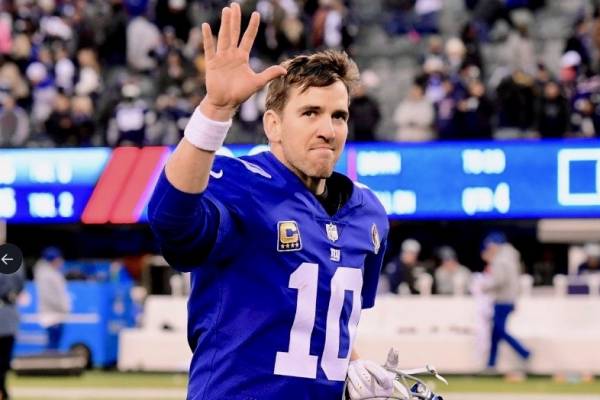
Eli to Canton: An Update

There are two great electoral debates in American life and most approach both with a flawed premise.

The first is the ‘Electoral College vs. Popular Vote’ debate.  (If you want to know about the flawed premise in that debate click here and scroll down to the section titled ‘When You Assume’).

But the far more important one pertains to all conversations about the Baseball and Football Halls of Fame*.

* I’m aware that other sports have Halls of Fame but nobody cares about them.

The flawed premise is this: “Will [insert player name] get into the Hall of Fame?” is a very different question than “Should [insert player name] get into the Hall of Fame?”  But most people elide the question and confuse the issue.

I first wrote about Eli Manning’s chances for the Hall back in January of 2012, while they were still cleaning up the confetti after his 2nd Super Bowl parade.   My attention was solely on the first question:  Will Eli get in?  Obviously a 2nd Super Bowl title and a 2nd Super Bowl MVP put him in the conversation.

But what most people didn’t realize at the time was that his career passing statistics – in particular yardage and TDs – had him on a pace to easily break into the Top 10 all time.  As I wrote at the time:

"When you're talking Halls of Fame…it's essentially a math problem. You look at the numbers, do some projections, and voila' - you can make a pretty good guess at their chances."

I did the math.  I made conservative and aggressive projections, compared those to the last six QBs elected (since all had started their career after 1980), and declared Eli’s Hall chances to be quite good.

Eli Manning’s career is now officially over and all the data is in.  It’s time to reassess the question:

Will Eli Manning get into the Pro Football Hall of Fame in Canton Ohio?

The Good, The Bad, and The Intangibles

The Good
The headline is obvious:  2 Super Bowl wins (and 2 SB MVPs, which many of his critics conveniently forget) and Top 10 rankings in just about every passing statistic.

The stats that matter most to Hall voters are Yardage and TDs.  (If Hall voters gave a flying fig about completion percentage, Chad Pennington would be in the Hall of Fame).   As for Interceptions…well, I’ll get to that later.

Eli finished his career 7th in Yardage.  With Ben Roethlisberger, Matt Ryan, and Aaron Rodgers in striking distance, he could be 10th by the time he’s eligible.  (but he also could be 8th, as Big Ben’s career is in doubt and Rodgers is 10,000 yards behind and turns 37 next year).

He’s also 7th in TD passes, with the same 3 guys trailing him.  They are all hot on his heels and much more likely to pass him*.

* Eli's final numbers fell somewhere between my aggressive and conservative projections.  I projected between 48-71k passing yards; he ended up with 57k.  I projected between 259 and 483 TDs; he ended up with 366.  Not bad, huh?

The next closest active player in both categories is Matthew Stafford, who is quite a way back.  After Stafford the only active player with a shot of passing Eli within the decade is Russell Wilson.

So at the time of voting Eli Manning will likely have those two Super Bowl rings, those two Super Bowl MVP awards, and be Top 10 in the categories that matter most to Hall voters.  He’s in, right?

The Bad
Here’s where we run into some problems.  One problem really.  For most of his career Eli Manning has been a good, but not great, quarterback.

His record, famously, is 117-117.

He’s only made 4 Pro Bowls.  He’s never made All-Pro.  He’s never led the league in anything except interceptions*.

* Though his interception totals are not as bad as many think.  The HoF is jammed with QBs who have more picks and worse INT % than Eli.  He threw more TDs than INTs every season except his shortened rookie year and his one truly terrible season (2013, when he went 18/27; and bounced back with a marvelous 2014 season, throwing for 4400 yards and 30/14 TD/INT ratio)

He never won a playoff game outside those two runs.

When the Hall debate happens for Eli, his detractors will have some good arguments.

The Intangibles
Let's take a moment to discuss how the Pro Football Hall of Fame conducts its voting.  It is radically different from the Baseball Hall of Fame's procedures, and I believe works in Eli's favor.

In baseball, all qualified members of the BBWAA (Baseball Writers Association of America) get a ballot, and can submit up to 10 names.  425 ballots were submitted, and if a candidate is named on 75% of the votes he's in.

But in football, there are only 48 members of the Selection Committee.  They actually get in a room together and talk.   They talk at length about each of the final 25 candidates.  They debate.  They tell stories.  They argue.  It is a sports fan's dream.

This makes sense, because for many football players, statistics are meaningless.  How do you judge an offensive lineman by his stats?  How do you compare the stats of a tight end who could block and a tight end who couldn't?  How do you measure the greatness of a shutdown cornerback?

For the Pro Football Hall of Fame, intangibles matter.  Stories matter.  You see, I was wrong back in 2012.  Election to the Baseball Hall of Fame is essentially a math problem, but in football it's more nuanced than that.

So yes, there will be people in that room talking about Eli's Top 10 ranking in passing yardage and TDs.  And obviously the two Super Bowl wins will be front and center.

But when Eli's critics in the room bring up the interceptions his supporters will be there to say...so what?  Brett Favre threw more picks than anyone else in NFL history.  When an old-timer in the room grumbles about the picks his supporters will point out that Johnny Unitas - Johnny Unitas! - threw more picks than Eli.

When Eli's critics point out his career .500 record, his supporters will remind the room that Joe Namath had a losing record (and 43 more picks than TDs!).  But Joe Namath is in the Hall of Fame because Joe Namath won one of the most memorable Super Bowls in football history.  Joe Namath mattered to the history of the NFL.

And then Eli's supporters will mount their counter attack.

Eli didn't just win two Super Bowls, they'll say.  He won two Super Bowl MVPs.

He didn't just win two Super Bowl MVPs.  He won them against the greatest dynasty this sport has ever seen.

He didn't just win them against the greatest dynasty this sport has ever seen.  He won them in style - throwing two of the most famous passes in NFL history late in the 4th quarter.

He didn't just beat the greatest dynasty this sport has ever seen -twice - he did it at the conclusion of two epic January runs.  The combined records of the 8 teams the Giants beat on the way to its 2 Super Bowls: 108-26. Six of the eight teams were 13-3 or better in regular season.

And as the television informercial announcers say...but wait, there's more!

You think Eli was only clutch in January?  In the regular season, he is ranked 10th All-Time with 35 Game Winning Drives.  That's more than 20 Hall of Famers.  He has more than Bart Starr and Len Dawson combined.  He has twice as many as Steve Young.

Eli elevated every single pass catcher he played with. Look at the remainder of the careers and statlines of Plaxico Burress, Steve Smith, Mario Manningham, Kevin Boss, Jake Ballard, Larry Donnell, Victor Cruz, Hakeem Nicks, Ahmad Bradshaw, and Rueben Randle.   And while it's too early to tell, many observers (including this one!) thought Odell Beckham Jr. would thrive in Cleveland.  Instead his 16-game average went from the ridiculously amazing 106 catches/1485 yards/12 TDs under the supposedly awful late-career Eli Manning to the slightly above-average 74/1035/4 with emerging star Baker Mayfield.

Does toughness matter in the NFL?  Let's not forget those 210 consecutive games started.

And finally, what kind of man was he?  Did he represent the league with class?  Eli Manning played in the bright spotlight of New York City.  He was hammered by the press his first season.  He was hammered by the press and fans most of the 2007 regular season.  He had to live up to the precedent set by an NFL father and an older brother who was the finest quarterback the league has ever seen.  And never, not once, not even for a single moment - not even when he was unceremoniously benched for Geno F#!cking Smith - was he less than the epitome of class.

Right around this time, if one of his supporters think the vote is in the balance, the room will be reminded that in 2016 Eli Manning was the Walter Payton NFL Man of the Year.

These stories will matter in that voting room.

A Few Words for the Morons
Anyone who listens to sports radio knows the world is full of morons.  I have heard some galactically stupid arguments against Eli's induction from these morons, and would like to deal with them now.  I encourage you to read these questions in your best Stupid Sports Fan voice.

What About Joe Flacco?  He had one of the greatest Super Bowls of All Time!
When Joe Flacco wins a second Super Bowl MVP and throws for another 17,000 yards and 150 TDs, I'll write a bunch of words in support of his candidacy.

They should've whistled Eli down before he threw that Tyree pass!
Ah, a New England Patriot fan.  I think my favorite thing about the career of Eli Manning is how he drives Patriots fans out of their minds.  The Patriots have used tuck rules and cameras and deflated footballs and every trick in the book and few ones that aren't in the book, so I think we can ignore them here.

Eli was done after the 2nd Super Bowl.  He just padded his stats after that.
Anybody who says this is either:
a) lying
b) has no access to the internet
c) is too flipping stupid to participate in this conversation. 

From 2014-2017 Eli averaged 4,084 yards, 28 TDs, and 14 picks a season.  The Giants were a truly terrible team in this period - but the only thing that didn't suck was the passing game.

In 2018, his last full season as a starter, he threw for 4300 yards, tossed 21 TD passes against 11 picks, and had the highest completion % of his career.  He had a virtually identical passing season as Tom Brady, who along with his much better coaching staff and teammates won another Super Bowl.

In Conclusion
See you in Canton.  And if anyone knows a Hall of Fame voter, please forward them this post.

Tuesday, December 31, 2019

The Johnny Bingo Awards - The 2010s

My Favorite Books of the Decade


Authors, agents, publishers, and readers: it’s time for the 2019 Johnny Bingo Awards!

Wait, what’s that you say?  I didn’t give out the 2018 Awards?  Or 2017, 2016…jeez, when was the last time I did these things?  2009?!  Well, that’s embarrassing.  I have long mocked the Nobel Prize in Literature for their curious choices, but at least they remember to give out their awards every year (whether the winner shows up or not is another question entirely).

There’s only one option here:  claim it was my intention all along to skip ten years and hand out The Johnny Bingo Awards for the Decade!

These awards have flexible rules.  Indeed there is only one that matters (to which I will make a slight update):

“The Johnny Bingo Award(s) have one judge – me – and one rule: all eligible books must have been finished by me this year decade.   It could’ve been written by a blind Greek poet in the 8th century BC or be an unpublished galley hacked from an MFA candidate’s MacBook in a Brooklyn cafe. As long as I read the final paragraph before the calendar turns, it's eligible.”

I’m going to do this Oscar style: start with some fun awards, then get into the long weird section, and close out with the big ones.  And away we go:

Best Rock & Roll Book
The 2010s brought us a lot of books about classic rock.  I read the “The English Guitarist Memoir Trilogy” (Keith Richards’ Life, Pete Townshend’s Who I Am, and Clapton: The Autobiography).  I enjoyed Pamela Des Barres’ delightful groupie memoir, I’m With the Band.  And Stephen Hyden's Twilight of the Gods was...well, I don't know what it was exactly - part memoir, part classic rock history, but mostly hanging out with a smart and interesting guy who has thought entirely too much about classic rock and what it means to people of a certain age.

But the winner here is The Trouble Boys: The Story of the Replacements.  Bob Mehr’s chronicle of this brilliant but self-destructive band has all the sex, drugs and rock and roll the genre promises.  And it has one of my favorite components of rock books – encounters with other musicians (in particular, the members of REM, who are a steady presence as competitors, counterpoint, and comrades).

It also gave me what I was really looking for: an insight into the creative process.  Townshend’s book does that too, but in a self-consciously intellectual way.  Clapton’s music is ultimately too derivative – his inspiration is other musicians – to provide creative insight.  And Keith Richards, bless his pirate soul, seems to have no earthly idea where the music comes from.

But these drunken nuts from Minneapolis were true artists, and the journey with them was fascinating.

Best Book from a Binge Read
The 2010s brought us binge-watching, and perhaps not coincidentally I did some binge-reading this decade.  Not on authors, but on subjects.

Ben McIntyre’s A Spy Among Friends: Kim Philby and the Great Betrayal sent me down a Cambridge Five Spy Ring rabbit hole.  T.H. White’s Once and Future King inspired a quest to learn everything I could about King Arthur and Arthurian legend.  (Bernard Cornwell’s Warlord Chronicles is a wonderful imagining of how a possibly historical medieval warlord could’ve evolved into the English legend).  And Sherlock Holmes – wow, did I go full Sherlock this decade.   I read every word Sir Arthur Conan Doyle wrote, and numerous non-canon Sherlock books by everyone from Michael Chabon to Caleb Carr*.

*  I highly recommend Graham Moore’s The Sherlockian.  Moore published this exceedingly clever novel in 2010, then four years later won the Academy Award for writing The Imitation Game, starring none other than Benedict Cumberbatch, my favorite on-screen Sherlock.

But my most rewarding binge was on Alexander the Great.   And the winner here is Mary Renault’s Alexander trilogy (Fire From Heaven, The Persian Boy, Funeral Games).   Reading Renault's work alongside more traditional biographies (and a bit of Arrian) makes you wonder how Oliver Stone could have possibly made such a boring movie from such thrilling material.

Sidebar
I read hardcovers, eBooks on a Kindle, eBooks on an iPhone, and I listen to audiobooks.  I consider all of this to be "reading".  For example, I listened to the entire English Guitarist Memoir trilogy on audiobook, which I highly recommend.  Pete Townshend reads his own book, and he comes off as much more self-effacing and able to laugh at himself than I suspect he would in print, where his tendency to pomposity would be more obvious.  And Keith Richards' audiobook is a delightful mess: it starts with Johnny Depp, who must have gotten bored halfway through.  Then a replacement bloke with a cockney accent jumps in.  Then Keith decides, what the hell, I'm gonna read a few chapters!   It's all so...Keith.


Best Stephen King Book Not Written By Stephen King
Upon its publication in 2010, Justin Cronin’s The Passage was immediately compared to The Stand.  Followed by The Twelve and The City of Mirrors, King himself called it “a trilogy that will stand as one of the great achievements in American fantasy fiction.”


Worst Stephen King Book Written By Stephen King
I read a lot of fantasy series this decade.  A Song of Ice and Fire (which you may recognize as Game of Thrones).  All 15 books of The Wheel of Time.  Lev Grossman's The Magicians.  His Dark Materials.  The aforementioned Once and Future King*.

So I thought, hey, Stephen King is one of the great storytellers of modern times.  Let's give his fantasy series, The Dark Tower, a shot.  It must be good.

Spoiler:  It is not good.

*  Arthurian legend is the foundation story of all modern fantasy stories, from The Lord of the Rings to Star Wars to Harry Potter. And let's be clear: Star Wars is fantasy, NOT science fiction.  It has knights and swords and magic and princesses.  Obi-Wan Kenobi is Merlin and Luke is Arthur.  In the prequel trilogy Yoda is Merlin and Anakin is Arthur.  And in the new trilogy Luke is Merlin and Rey is Arthur.  Got it?  Good.  


The Book Most Likely to Make My Wife Kick Me Under the Table
There's a certain kind of book - non-fiction, well-written, a colon in the title, and a Big Idea at its heart  - that will make me talk about it for months afterwards.   Eventually, I'm out to dinner with other people and am rambling on for entirely too long about how ancient Romans used memory palaces to commit multi-hour speeches to memory and - thwack! - my wife will deliver a well-placed blow to my shin. 

Here are the nominees:

The Sports Gene: Inside the Science of Extraordinary Athletic Performance
David Epstein

Moonwalking with Einstein: The Art and Science of Remembering Everything
Joshua Foer

The Better Angels of Our Nature: Why Violence Has Declined
Steven Pinker

Quiet: The Power of Introverts in a World That Won't Stop Talking
Susan Cain

Zealot: The Life and Times of Jesus of Nazareth
Reza Aslan

If you're an introvert and want to understand yourself better OR an extrovert who lives and works with introverts and wants to understand them better, read Quiet.

If you think the age you live in is the worst ever and am open to being proven dramatically wrong, read Better Angels.

And if you really want to get kicked under the table, read Moonwalking. 


Sidebar
I've kept a book log for 19 years, which is how I'm able to do this ridiculous "awards" program.  But I'm sure these awards are suffering from recency bias.  For example, I just read The Passage trilogy  so it's top of mind.  But back in 2012 I read a novel called The Art of Fielding by Chad Harbach.  I remembered loving it.  I remember it was kinda sorta about baseball and college.  I remember it was beloved by critics.  But alas, I don't remember anything else about it.

If I had just read it, it probably would have won a coveted J-B Award.  Alas, it just gets a quick mention here.

Best Books I Didn't Actually Read
Over the course of several Christmases Santa brought me The Landmark Thucydides, The Landmark Herodotus, and The Landmark Caesar.  These are beautiful books, objets d'art, that present ancient historical texts in a setting for non-scholars.

For example, The Landmark Thucydides presents a translation of  The Peloponnesian War, complete with maps and introductions and same-page footnotes.   But it also includes a dozen essays by noted scholars on everything from naval warfare in the 5th century BCE to the structures of Athenian government.

I haven't read all the ancient texts from end to end.  But they are books I pick up, read an essay, read some passages - the Athenians' disastrous invasion of Sicily, the Spartans at Thermopylae - and move on.  Perhaps in retirement I'll really dig into these things.


Best Novel
Let's be clear:  every book in this category is better than The Passage and the Replacements book and pretty much everything else.  A great novel is hypnotic - when lost in its pages you miss train stops and meals and deadlines - the world stops around you.  It makes you think and it teaches you things about humanity and philosophy and morality and history and everything that matters.

As Hilary Mantel, one of this year's nominees said, "A novel should be a book of questions, not of answers." 

The nominees are:

The Son
Phillip Meyer

A Constellation of Vital Phenomena
Anthony Marra

Lincoln in the Bardo
George Saunders

A Visit from the Goon Squad
Jennifer Egan

Wolf Hall
Hillary Mantel

Matterhorn
Karl Marlantes


Since I have a bias for history wrapped up in literature, particularly history that I'm dreadfully ignorant of, the coveted JB Prize goes to Wolf Hall.  The first book in a trilogy about Thomas Cromwell, it stands alongside Robert Caro's biographies as a masterwork about how power is gained and wielded.  And it's a helluva story too.


Best History Book
Let's get right to it:

The Passage of Power: The Years of Lyndon Johnson Volume IV
Robert Caro

Speaking of Robert Caro's biographies...

I assume there are people will read all 4000 pages of Caro's monumental biography of LBJ (he's at 4 volumes and 3000 pages now).  I doubt I'll be one of them.  

But this volume, covering his last years in the Senate through the assassination of JFK and the first tumultuous year of his Presidency, covers a fascinating period of American history told by a master historian.

Gettysburg: The Last Invasion
Allen Guelzo

What elevates this from a good battle history to a great work of history are the dozens, perhaps hundreds, of little stories he tells.   Stories of valor, tragedy, folly, humor.  Stories of generals and privates, but also of the citizens of a Pennsylvania town that was visited for 3 days by an inferno of death.

Among all these portraits and stories emerges a coherent narrative of this enormous battle. 

Paul Revere's Ride
David Hackett Fischer

Sometimes the legend is true.  Sometimes the truth is even more interesting than the legend.

Paul Revere's midnight ride achieved its legendary status thanks to Henry Wadworth Longfellow's famous poem ("Listen, my children, and you shall hear, Of the midnight ride of Paul Revere.")  What followed was a century of revisionists correcting Mr. Longfellow.

But Fischer rescues the true story, and it is a damned good one.   (He did the same thing for Washington in Washington's Crossing and corrects the myth of American's "Puritan founding" in The Seeds of Albion.)

Grant
Ron Chernow

If Robert Caro isn't our finest biographer, perhaps it's Ron Chernow?

I don't expect this book to get the same Broadway musical hit treatment as his 2004 biography of Alexander Hamilton, but it may be a better book - or at least, a more interesting subject.

Grant's reputation doesn't need reviving - and yet Chernow does just that.  He makes you realize he was a greater military strategist than he is often given credit for; nothing like the butcher he is often accused of; and a far better President than historians usually accord him.

And it's a great read taking you everywhere from pre- and postwar Mexico, antebellum California, gilded age New York, a grand tour of Europe - and of course, the great battlefields of The Civil War.


The Guns at Last Light: The War in Western Europe, 1944-45.  Volume 3 of The Liberation Trilogy
Rick Atkinson

When An Army at Dawn, the first volume of Atkinson's Liberation Trilogy came out in 2002, it was clear that the Second World War had found its Bruce Catton.  Just as Catton focused on the Army of the Potomac in his great trilogy (Mr. Lincoln's Army, Glory Road, A Stillness at Appomattox), Atkinson zeroes in on the Allied triumph in Europe.

The Guns at Last Light is the concluding volume of this great work, and is the winner of the Johnny Bingo Award for History.


LIFETIME ACHIEVEMENT AWARDS
Two of my writing heroes passed away this decade.

Tom Wolfe
Tom Wolfe became my writing hero early in college. "Radical Chic and Mau-Mauing the Flak Catchers" opened up my eyes to what non-fiction writing could be. Then I read "The Right Stuff", and all of the pyrotechnics from his earlier work was gone, and its absence made me realize how good the work was - indeed, how one might go about doing this. If you want to write well, forget all of the books about writing; just read "The Right Stuff" and pay attention.

And then he thought, after proving himself as possibly the greatest non-fiction writer of the century, what the hell, he'd write a novel. 500 years from now, when historians and cultural archaeologists want to know what the greatest city in the world was like before the internet changed the world, they need only read "Bonfire of the Vanities".

(If you care about the novel as an art form, read his essay, "Stalking The Billion-Footed Beast".)


Elmore Leonard
Elmore Leonard is almost certainly the writer I've been reading the longest.  I was checking out 52 Pickup and Hombre from the Farmingdale Library bookmobile as a kid.   I read nine of his books this decade - the last one, Fire in the Hole*, in 2013.

*  Hollywood has always loved Leonard.  Hombre was turned into a Western starring Paul Newman.  52 Pickup was a Roy Scheider movie.  And Fire in the Hole is a collection that includes the story that inspired the excellent FX series Justified.   My favorite movie from an Elmore Leonard book is the wildly underrated Out of Sight.

The best way to honor Elmore Leonard is to share with you his ten rules of writing.


  1. Never open a book with weather.
  2. Avoid prologues.
  3. Never use a verb other than "said" to carry dialogue.
  4. Never use an adverb to modify the verb "said"…he admonished gravely.
  5. Keep your exclamation points under control. You are allowed no more than two or three per 100,000 words of prose.
  6. Never use the words "suddenly" or "all hell broke loose."
  7. Use regional dialect, patois, sparingly.
  8. Avoid detailed descriptions of characters.
  9. Don't go into great detail describing places and things.
  10. Try to leave out the part that readers tend to skip.


Well, that's it for the Johnny Bingo Awards.  See ya in 2030.  Happy Reading!


Friday, March 15, 2019

Looks Like the University of Illinois!

Some Thoughts on the College Application Process

As a parent I have been through the college application process twice in the past five years, as have many friends, family, and peers.  I’ve therefore become a collector of theories - theories as to why students get admitted, rejected, wait-listed, early-admitted, blessed with bounteous scholarships or handed retail pricing, and so on at various schools.

Wanna hear them all?

(The names of these theories have been changed, rearranged, flipped, and twisted to protect the innocent and the guilty.   In other words, they have no meaning whatsoever except to me and the person I’m sub-tweeting.)

The Glass Plus Theory
This theory holds that at certain schools, evidence of leadership is paramount.  Sure you have the SATs and the grades, you were a pretty good athlete, and was a member of good standing in the photography club.

But were you the captain of your water polo team?  The president of the photography club?  No?

REJECTED!

The Ice Cream Cone Theory 
So your kid got wait-listed by Michigan State…but received a nice scholarship from the little school with MUCH higher average SAT and GPA scores.  And your kid does not have particularly good SATs and GPAs.  What gives?

This theory holds that the big schools with 40,000 applications lack the time and inclination to lovingly pore over every app.   They run them through an SAT/GPA grinder and out comes the winners and losers. 

But that little school?  They actually care that you volunteered every Saturday at the nursing home.  That you led your Girl Scout troop in cookie sales every year. 

They have discerned, past your numbers, qualities they are looking for at their school.

The Lewispatch Theory
Congratulations!  You are your school’s valedictorian!  You scored a 1600 on your SATs and a 36 on your ACTs!   You’ve won all of your community’s scholarships and your college essay proposed a plausible solution to end the Syrian civil war!   You were captain of the basketball team, president of the photography club, and star of the school play!

You have Ivy League credentials but don’t want to go to Harvard, you want to go to the school 30 minutes away that you’ve loved your entire life.

Your friend, the one with the 1120 SATs who warmed the bench on the football team?  He made it in.  That other kid, currently on probation for a DWI, got wait-listed.  You finally get your letter and…

REJECTED!

This is an actual mostly-true story my friend heard from an admissions director at his alma mater.  Turns out this kid, even though he had been on campus many times, had never registered his presence at the school.   Didn’t do the official tour because he didn’t need to - he knew the school inside out! 

And the school just figured, there’s no way this kid wants to come here.   So why waste a seat on him?

The Ramen Theory
You’ve applied to a very good school – not an Ivy but next level down.  Your SATs are well over the average for this school.   Your grades are right on the average mark.  Easy, right? 

Wait-Listed.

How can this be? 

This theory holds that the admissions folks see a gap between talent and performance.  Hmm, she thinks:  why did this student get these grades with those brains?   If the numbers were reversed – if the SATs were average (for this excellent school) and the grades were well above average, well, that’s the kind of student we prefer!

The Aunt Becky Theory
This is a new one!  Apparently the good spots at the good schools are being taken by the children of Aunt Becky from Full House!

Look, this scandal is delicious, and Americans are mostly tuned in because actors are involved, and if you want to get Americans interested in something it’s important to include people whose job is to pretend to be other people.  But shit like this has been going on for years and we’ve all known it.  We all know seats go to the donors and the legacies and the connected.   Heck, by the time they’ve filled out the slots for those categories, and given the soccer and basketball and fencing coaches all their players, and NOW according to this scandal the fake soccer and basketball and fencing players…well, there’s not a lot of seats left, are there?

And we can be damned sure that this scam artist out in California isn’t the only one of his kind.  Every economist will tell you that humans respond to incentives, and the economic incentives of getting into great schools combined with the love parents have for their children is a force so great it would mow down the Avengers. 

But disincentives are pretty damned powerful, too.  And seeing one of the Desperate Housewives hauled off in cuffs will hopefully prevent future would-be line-cutters and their soccer coach enablers to watch their step.  For a little while anyway.

The Great Gazoo Theory
My bro-in-law summed it all up perfectly.   It’s all a crapshoot and nobody knows anything.

+++

But you know what?  It doesn’t really matter.  MSNBC looked at the CEOs from all the Fortune 500 companies, and guess which school produced the most CEOs?  Harvard?  Stanford?  No, it's the University of Wisconsin, with 13 Fortune 500 CEOs!

The SUNY schools of NY are tied with Yale at 5 each.

And some of you will recognize the title of this post from the movie Risky Business.  Joel Goodson, played by a young Tom Cruise, realizes he's not going to get into Princeton, and will have to settle for the University of Illinois.  Well, guess what?  U of I and Princeton have produced an equal number of Fortune 500 CEOs.

Or as Joel Goodson's friend Miles said, "Every now and then say, "What the f*ck." "What the f*ck" gives you freedom. Freedom brings opportunity. Opportunity makes your future."


Friday, January 25, 2019

The Unanimity Exception

Cooperstown Follows Up The Baines Blunder with The Mariano Mistake

Before I begin, let’s get a few things straight:

  • I fully and firmly support Mariano Rivera’s induction into the Hall of Fame.  He is, without question, the greatest reliever of all time.

  • I understand that a unanimous selection technically doesn’t mean anything.  Harold Baines was on the ballot for five years and never got more than 10% of the vote – but thanks to the Eras Committee (which should be pronounced 'Errors Committee', ba-dum-bump), he will be as much of a full-fledged member of the Hall as Mariano and his 100%.

  • I believe the New York Yankees are the source of all evil in the universe, and I am not to be trusted as any kind of objective source.


That said…

The Unanimous Selection thing is important.  Yes, I know the history, about how Joe DiMaggio didn’t get on till the fourth ballot and how voting was different in Babe Ruth’s day and all of that. 

BUT – things matter because we, collectively, agree they matter.  There is no reason whatsoever that the Nobel Peace Prize should matter.  Over a century ago, the guy who invented dynamite set aside some money and some vague instruction that five obscure Norwegian legislators should give out a peace prize.

Who they pick shouldn’t matter at all.  And yet, it’s arguably the most prestigious prize a human can win because, well, I HAVE NO IDEA WHY IT MATTERS.

It shouldn’t matter.  But it does.  It does because we’ve agreed it does.  

And I can guarantee you that the term “first-time unanimous selection to the Baseball Hall of Fame” is an honor permanently attached to the name of Mariano Rivera.  It will not be attached to the name of Greg Maddux or Tom Seaver or Bob Gibson.  It is how he will be introduced at every speech he ever gives, in every article ever written about him.  It will be in his obituary.  It will be trotted out in every baseball argument about him.  

It matters.

And as great as Mariano is, the idea that this incredibly prestigious honor should go to a relief pitcher, well…


But First, The Good Stuff!

Let’s get all of the good stuff out of the way first.  

Mariano Rivera was the most unhittable pitcher of the modern era.  He has the 13th lowest ERA of all time, and you haven’t heard of most of the other 12 because they pitched in an era when men wore Civil War beards unironically.  There are some legends ahead of him on the list like Walter Johnson and Christy Mathewson, but also such forgotten hurlers as Jack Pfeister and Tommy Bond.  

Those other guys I mentioned above – Maddux and Seaver and Gibson?  They are ranked 234*, 125, and 142.

Nobody born after the invention of the bra has been better at keeping the other team from scoring than Mariano Rivera.*

* I'm using ERA as my uber-stat for this post.  It's the one very valuable stat that traditionalists and saberemetricians can all agree on.  If only hitters had such a stat...

And he was truly otherworldly in the post-season.  Over a decent sample size of 96 games – games in which he was facing generally better hitting than he would in the regular season, his ERA dropped all the way down to 0.70.   Are you kidding me?

This doesn’t happen.  Take Derek Jeter, for example.  Jeter and Mariano are unique in baseball history because they are the only two players to have a very long career spent entirely in the Wild Card era on a team that not only played every October, but often advanced deep in the playoffs.  As a result, their post-season stats amount to just about a full MLB season.

And Derek Jeter, in the post-season, was, well, Derek Jeter.  He hit .310 in the regular season, and .308 in the playoffs.  His OPS was .817 in the regular season, .838 in the playoffs.   Give Jeter credit for maintaining his high performance in the post-season, but he didn’t become a better player.  He was almost exactly the same player.  

But Mariano Rivera got into the playoffs and – I mean – what the hell?  He takes the best regular season ERA since Hoover was President...and shaves 2/3rds of that in the offseason?

My only question is:  how did he throw that cutter with his Superman cape on?

The Dubious Value of Closers

And yet…there is significant, powerful, arguably irrefutable evidence that the Closer is just about the most useless position in all of professional sports.

Now if you're one of those people who rolls your eyes at the truths uncovered by baseball researchers lo these past many years, you should click away from this page.  Here's a crotchety old "get off my lawn" anti-stats piece for you.

Project Retrosheet is an organization that goes back and looks at old box scores, at every inning of every game ever played.  And one thing they learned - I should say, one thing they proved, because we all kind of know this anyway - is that teams with 9th inning leads tend to win those games.

And I mean, they win them all the time, and they win them regardless of what relief pitcher strategies team employ.   Back when guys were starting 65 games and going 40-15, they won 90% of the games.  Back when Goose Gossage was coming in for 3 innings and blowing 1/3 of the save opportunities, they won 90% of the games.  And now, in the age of the 9th inning specialist, they win 90% of those games.

Specifically, for all of baseball history, going back to the days before basketball was even a thing:

- teams leading by one run after 8 innings win 85.7% of the time
- teams leading by two runs after 8 innings win 93.7% of the time
- teams leading by three runs after 8 innings win 97.5% of the time

Do you know what Mariano Rivera's save rate is?  89.1%.  Which is, you know, almost as good as Joe Nathan's.

In just about every game Mariano has ever played, the Yankees were going to win anyway.


But Wait, There's More!

There are, of course, other reasons to wrinkle your brow at a closer getting the unanimity honor.

  • Rivera pitched 1,282 innings in his career
  • Mike Mussina, Rivera's Hall of Fame classmate and Yankee teammate, pitched 3,562 innings in his career
  • Tom Seaver, who used to be able to say he was elected to the Hall of Fame with the highest %, pitched 4,783 innings in his career
When you're only pitching 70 innings per year...when you don't have to go through the lineup 3 or 4 times in one night...it is a LOT easier to be dominant.  That's why Rivera has no ERA titles, despite that tiny ERA; he never pitched nearly enough innings in a season to qualify*.

  *  Last year, Jacob DeGrom won the ERA title, posting a glittering 1.96 ERA over 217 innings.  But this guy you never heard of, Blake Treinen, had a 0.71 ERA for the Oakland A's.  He pitched only 80 innings, a total Rivera only reached once as a reliever


Want more proof that closer is kind of an easy gig?

Terrible starters become great closers (like, um, Mariano Rivera; turns out having just one pitch isn't particularly useful for a starter).

Mediocre starters can have epic seasons as closers (see Isringhausen, Jason).

And legitimately good-to-great starters like Dennis Eckersley and John Smoltz?  Tell them they only have to pitch one inning a couple times a week, and they set records.

Some Trivia!

- Who is the only closer in major league history to blow a Game 7 World Series lead in the 9th Inning?

- Who is the only closer to blow two saves as their team blew a 3-0 lead in a Championship series?

Okay, now I'm just being a jerk.  But also making a point.  Mariano Rivera mowed people down in the post-season, but he wasn't perfect.  In fact, he was 42 of 46 in save situations which is 91.3%.  It's very good.  But 5 closers in baseball last year had better save %'s.


In Closing
So everyone enjoy this year's Hall of Fame induction ceremonies, where the inductees will be:

- One guy who only pitched 70 or 80 innings a year
- One guy who didn't play defense
- One guy who never got more than 10% of the vote while eligible
- Two guys who would never have gotten in with their Wins totals if not for the impact of advanced metrics on voting

Meanwhile, the greatest pitcher of all time and the greatest hitter of all time will be denied entry once again.  But that's a subject for another day.